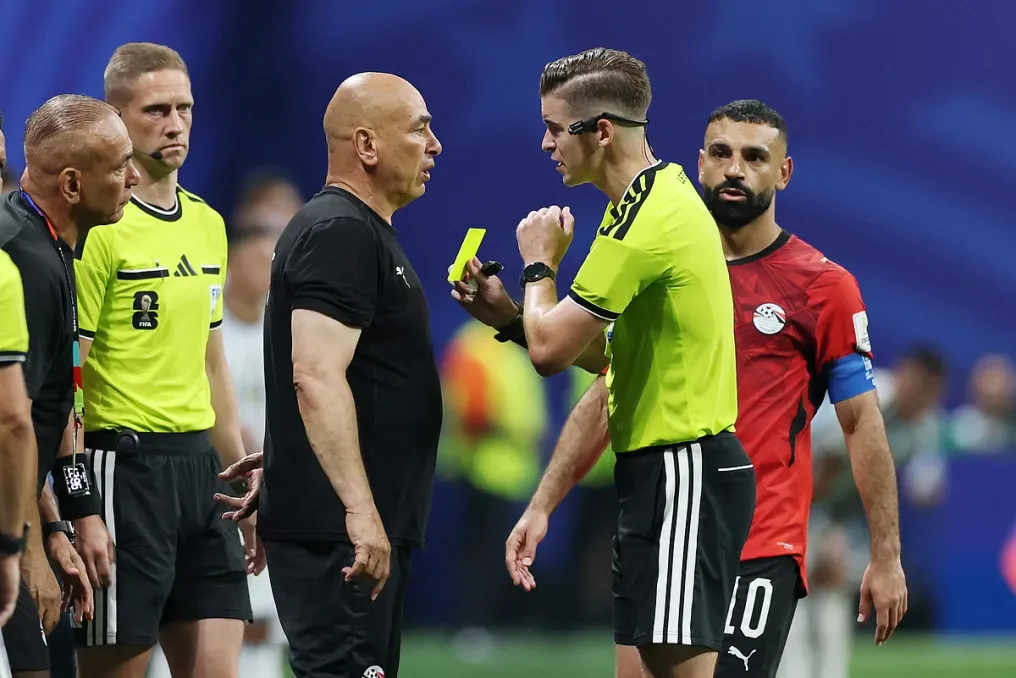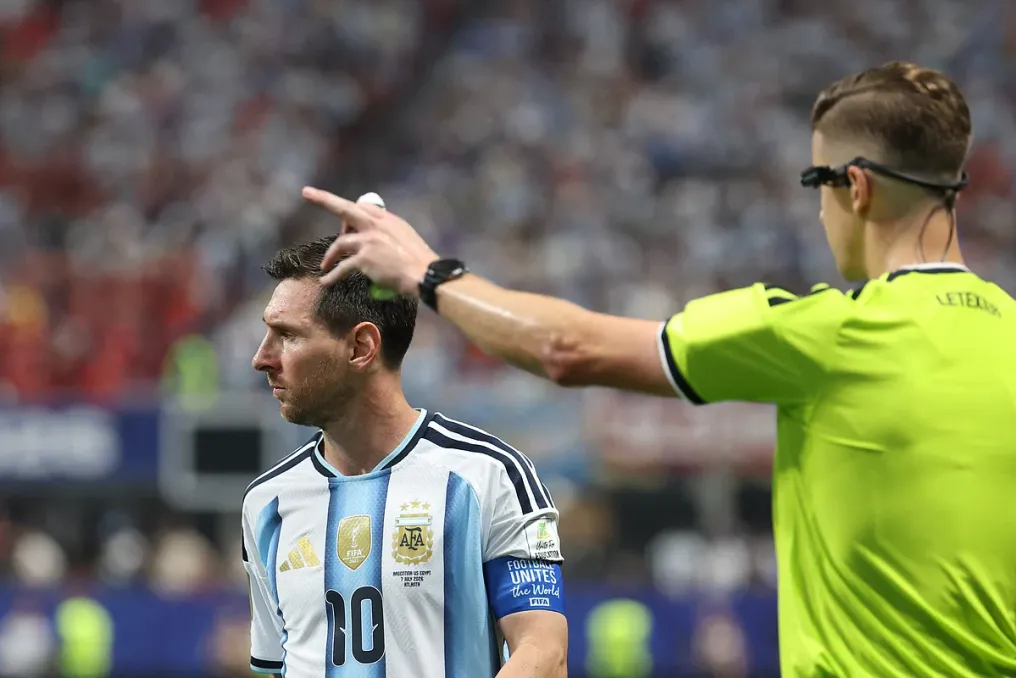
During the intense World Cup match between Egypt and world champion Argentina on Tuesday, July 7th, many fans viewed the Egyptian team's defeat as a result of referee decisions and the VAR system, rather than poor player performance.
During the intense World Cup match between Egypt and world champion Argentina on Tuesday, July 7th, many fans viewed the Egyptian team's defeat as a result of referee decisions and the VAR system, rather than poor player performance.
The Egyptian team was extremely dissatisfied with several controversial decisions made against them, including the annulment of a second-half goal and a red card shown to a coaching staff member after a goal was scored. This controversial moment was not the first time VAR had been the center of discussion in the tournament hosted by the USA, Mexico, and Canada.
Previously, in the Iran versus Egypt group stage match, VAR disallowed a late Iranian goal due to offside during the build-up. Furthermore, in the England versus Ghana game, the African team took a penalty after a tackle in the box, but VAR did not overturn the referee's decision.
The Video Assistant Referee (VAR) system is a tool to support officiating, allowing for the checking, review, and correction of clear and obvious errors during a match. This system was introduced by FIFA, the global governing body of football, and is used in over 300 competitions worldwide to ensure the correct outcome in critical situations.
According to FIFA statements, the use of VAR first occurred at the 2018 FIFA World Cup in Russia, marking an important milestone in the development of football officiating.
During each match, a specialized group of video referees (VARs), based in the Video Operations Room (VOR), can communicate directly with the head referee via an audio system. The VAR system is applied only in relation to five types of situations: goals (including build-up infringements), penalty decisions (including build-up infringements), red card incidents (including clearly incorrect second yellow cards), cases of mistaken identity, and clearly incorrect awarded corner kicks, if the decision can be changed immediately without delaying the resumption of play (this was added for use in the World Cup).
The VAR team continuously monitors the match, checking every key incident related to the relevant situations without interrupting the game. If a potential clear and obvious error is detected, the referee is notified and either receives evidence to make the actual decision or is called onto the field for a Review Off-Field (OFR) in cases requiring assessment and subjective judgment. The final decision always remains with the referee.
In the match against Egypt, Mostafa Zico's goal was disallowed when the team was leading 1-0; VAR intervened to notice a foul on Argentine player Lisandro Martínez much earlier in the attack. The conflict did not end there: during the attack that resulted in Enzo Fernández's winning goal, Egyptians believe they should have been awarded a penalty for Alexis Mac Allister's tackle on Hamdi Fathi. Many other decisions by French referee François Lattesse were sharply criticized by the Egyptian team.
Egyptian coach Hossam Hassan stated that his team was 'cheated' out of the right to qualify for the World Cup quarter-finals and criticized the referee's decisions throughout the game. After the match, in an emergency press conference, Hassan spoke of a lack of respect or fair play, announcing his decision to boycott the remainder of the World Cup as a result. He emphasized: 'This is my own way of speaking out. I don't want to speak nicely and talk about bad luck. Today we were unfairly cheated, we suffered injustice.'
Hassan also sharply criticized FIFA and its current president Gianni Infantino, claiming he had ruined the game. He told BeIn Sports: 'Maybe they wanted to keep the world champions in the tournament. Maybe they wanted Messi to stay in the race.'
After the match, Argentina's coach Lionel Scaloni did not comment on the criticism from Egyptian representatives regarding the referee's decisions or how VAR managed the game. Instead, he insisted that he never felt like the game slipped away from Argentina, despite the two-goal deficit for almost 80 minutes. He noted: 'I always felt the game was on our side. Besides the result, I don't think the team played badly. We had chances.'
Scaloni highlighted that the performance on Tuesday marked a significant improvement compared to the previous round, where Argentina needed 120 minutes to beat Cabo Verde 3-2, and the team showed signs of vulnerability in a tough physical test. Scaloni also praised his 39-year-old captain Lionel Messi, who missed a penalty in the first half and was seen crying after inspiring a comeback goal and assist. Despite the controversies, Argentina managed a stunning comeback during the game, reducing the deficit from 2-0 to 3-2 in approximately 13–14 minutes of playing time.
The coach of the Egyptian national team, Hossam Hassan, stated on Tuesday that he would no longer follow the World Cup, blaming his team's painful exit from the tournament following the match against Argentina on refereeing errors.
In the last Round of 16 match against reigning champion Argentina, the Egyptians were leading 2-0 with only 11 minutes left in the game, which presented a chance for one of the big surprises at the World Cup. However, they conceded three goals in the final minutes and were eliminated from the tournament.
The team was demoralized by the impressive comeback inspired by Lionel Messi, but Hassan insisted that his team played better. During the press conference, he announced: 'I am going home and will not watch any more matches of the tournament.'
Hassan expressed dissatisfaction with the course of the game, stating: 'What happened to us was unfair. We should have received a penalty, but the goal was disallowed, and I don't know why it was disallowed.'
Egypt's goal was scored by Mostafa Zico in the 62nd minute, but VAR review showed that there was a foul by the Egyptians in the build-up to the goal. Furthermore, they demanded a penalty at the end of the match after a push on Hamdy Fathi, which intensified their anger when Argentina scored the winning goal in the 92nd minute.
Hassan emphasized that even if the goals were the result of mistakes, 'the biggest mistake is not getting what you are entitled to from those who make decisions,' adding that his press conference consisted of many complaints. He noted that he hates defeats, especially those that seem unfair, and advised fans not to be upset because they wanted to bring them joy.
Nevertheless, the coach pointed out positive aspects: 'What pleased me was that my players followed the game plan in many instances and worked excellently.'
At the start of the game, Egypt demonstrated an unexpectedly attacking style, which differed from Hassan's usual tactics based on tight defense and seeking counter-attack opportunities. This approach helped them gain an early advantage, and the heroic performance of goalkeeper Mostafa Shoubair ensured the team maintained the lead until halftime.
Hassan also expressed satisfaction with the players' efforts, noting that most of them play in the Egyptian domestic league, unlike many players from other national teams who are based in Europe in professional settings. He added that despite having predominantly local players, apart from Mohamed Salah and Omar Marmoush, they were able to compete with any team.