As South Africa faces serious energy challenges, innovative methods for electrifying transport are emerging that do not depend on the national power grid.
As South Africa faces serious energy challenges, innovative methods for electrifying transport are emerging that do not depend on the national power grid.
For a long time, one of the main criticisms of electric vehicles in South Africa was how to electrify transport if Eskom could not provide a stable power supply. However, this assumption is mistaken, as the future of electric mobility is increasingly independent of the centralized grid.
The energy transition in South Africa is accelerating, but the infrastructure needed to support it is not keeping pace with the rate of development. This tension between the rapid growth of renewable energy and the network's ability to absorb and distribute it is becoming one of the defining infrastructural challenges for the country.
At the heart of this problem is the concept of grid inertia. Traditional coal-fired power plants use large rotating turbines that, in addition to generating electricity, stabilize the grid through their physical momentum, absorbing sudden fluctuations in supply and demand. Unlike them, wind and solar generation do not possess such inertia because their output depends on the weather, not on electricity needs.
As renewable capacity is added to the grid, this physical buffer decreases. The grid becomes more dynamic and complex to manage, requiring significant investment in system balancing technologies, energy storage, and transmission infrastructure.
In South Africa, investments in this area have not kept up with the rapid expansion of renewable generation. Nevertheless, this should not slow down the energy transition, but rather prompt careful consideration of infrastructure design and placement. The task has shifted from producing renewable energy to delivering that energy where it is needed.
Despite the existence of a significant and growing base of renewable generation, transmission limitations continue to delay new projects, network modernization lags behind demand, and investments in grid infrastructure do not match investments in generation. This creates a structural barrier that will take years to resolve.
Even with substantial capital investment, restoring and expanding the transmission infrastructure across a country the size of South Africa does not happen instantly. Until then, renewable projects will face limitations related not to production, but to the movement of electricity.
The issue of grid inertia is real, and solving it requires continuous investment in system management, energy storage, and transmission. However, waiting for a perfect grid before implementing necessary infrastructure economics would be a mistake.
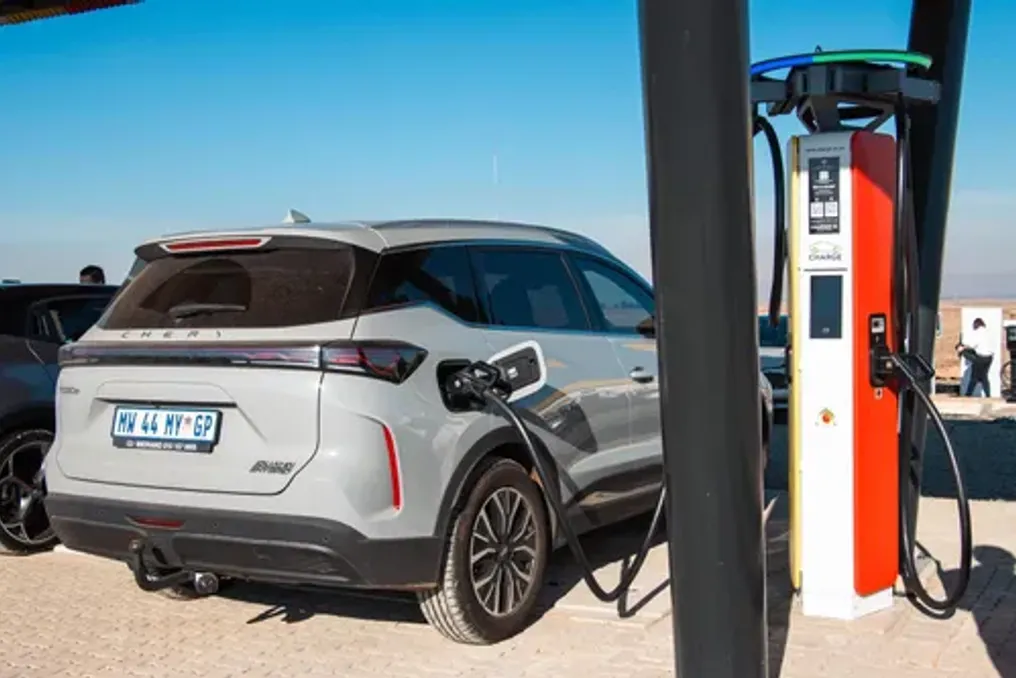
The company CHARGE realized this reality early on. It is creating a national network of EV charging stations along major transport corridors in South Africa, such as the N3 and N1. It was quickly understood that building around the existing grid is often a more practical solution than building within it.
The scale of CHARGE's projects requires reliable and cost-predictable power supply at each site. In many places, the grid simply cannot guarantee such certainty. Each CHARGE site represents a microgrid operating autonomously from Eskom, using solar generation, battery storage, and fast-charging infrastructure.
This autonomous operation eliminates the need for grid connection, transmission issues, and vulnerability to grid stress risks. Real demand is already visible: in the first month of operation at N3 sites (from May 19 to June 18, 2026), CHARGE infrastructure produced 7470 kWh of locally generated energy, without any draw from Eskom.
Approximately one JAC truck, charged from 10% to 100%, consumed 104 kWh, and six vans on the same route used a total of 305 kWh. These early figures demonstrate that demand for electric transport is already forming, and the infrastructure must be ready to scale this demand.
This points to a different approach to energy infrastructure in South Africa: generating electricity directly at the point of consumption—on farms, along corridors, or in logistics centers. This significantly reduces the need to transport energy over hundreds of kilometers of transmission infrastructure, allowing energy to be produced, sold, and delivered locally.
This shift is not just about electric vehicles; it is linked to localizing energy production, strengthening energy security, and retaining more value within the South African economy. The South African fuel market is valued at approximately 500 billion rand annually, and a significant portion of this is attributed to imported diesel transport. Every liter replaced by local solar energy means money saved in the South African economy, preventing emissions, and reducing the burden on both imported fuel and the national grid. Thus, the transition to electric mobility holds both environmental and economic significance.
Decentralized, autonomous infrastructure can become a long-term competitive advantage for South Africa. This is particularly important in a country with limited transmission capacity, as few nations combine abundant solar resources with the ability to generate transport energy exactly where it is needed. The future of South African energy will be built not from the center outwards, but from points of consumption, such as industrial zones, logistics hubs, and transport corridors, one site at a time.
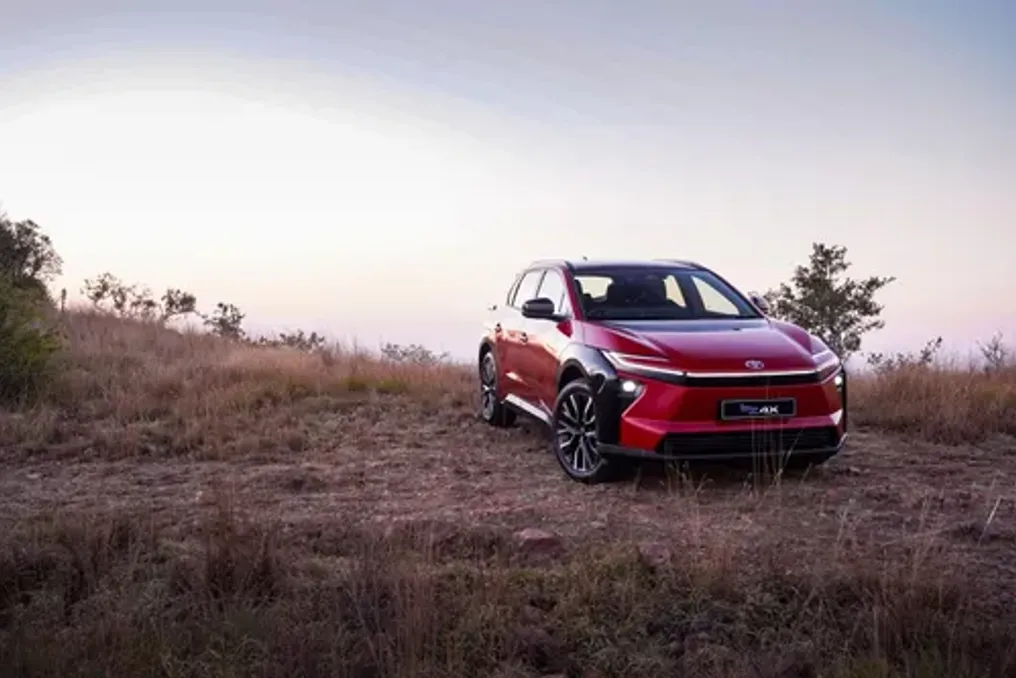
Toyota has expanded its local range of electrified models by releasing the all-wheel-drive bZ4X and the new bZ4X Touring version. These models mark the brand's debut in the country with fully battery electric vehicles (BEV).
Recently, the authors conducted a test drive of both vehicles in the Mpumalanga region. Although Toyota already has significant experience with hybrid models such as the Corolla Cross Hybrid and RAV4 Plug-in Hybrid, these two new cars represent the first SUVs designed from scratch as electric, indicated by the 'bZ' (beyond zero) prefix.
Both vehicles are built on the specialized electric e-TNGA architecture. The standard bZ4X model is positioned as a premium family SUV for daily driving, while the larger Touring version targets buyers who require more cargo space and higher performance for long trips and outdoor activities.
Both versions share a base length of 2850 mm, but the Touring is 140 mm longer and 70 mm taller than the standard model. Furthermore, the Touring has increased ground clearance—216 mm versus 200 mm for the bZ4X, and the extended rear overhang provides a larger trunk volume.
The bZ4X utilizes Toyota's latest front-end design called 'Hammerhead,' which features slim LED headlights, smooth body surfaces, and an LED strip across the entire rear width. The Touring looks more rugged thanks to redesigned bumpers, more pronounced lower cladding, raised roof rails, and a thicker rear LED strip, emphasizing its more adventurous character. Nevertheless, the authors noted that while the front end is eye-catching, the rear end does not make the same impression.
Both models come equipped with 20-inch alloy wheels as standard. The range includes two all-wheel-drive options: the bZ4X and the larger bZ4X Touring.
Toyota has designed the cabin around a concept it calls the 'Activity Hub.' It features a clean dashboard layout and a spacious interior made possible by the dedicated EV platform. A dominant new 14-inch touchscreen multimedia display with crisp graphics is present, alongside a 7-inch digital instrument cluster located high in the driver's line of sight.
The authors observed that at a certain steering wheel height, this might obstruct a direct view of the instrument cluster. Other standard features include a cable-operated shift-by-wire selector, wireless smartphone charging, heated front seats and steering wheel, leather upholstery, a panoramic glass roof, power tailgate, and a premium JBL audio system. The interior materials, trim, and fittings were rated as absolutely premium with high visual and tactile quality.
Both models use Toyota's latest lithium-ion battery technology, but with slightly different capacities. The bZ4X is equipped with a 73.11 kWh battery pack, while the Touring has a larger 74.69 kWh battery. Both batteries feature liquid cooling and battery preconditioning to enhance charging efficiency and longevity.
The bZ4X develops 255 kW of power through its dual-motor all-wheel-drive system and accelerates from 0 to 100 km/h in a stated 5.1 seconds. The Touring increases the output power to 334 kW, achieving 0 to 100 km/h acceleration in 4.3 seconds and a top speed of 180 km/h. Toyota forecasts a range of 456–481 km for the bZ4X and 462–487 km for the Touring. However, during long journeys, the expected mileage will likely be around 400–440 kilometers, depending on the level of regeneration.
Both vehicles support AC charging up to 22 kW and fast DC charging, allowing the battery to charge from 10% to 80% in approximately 30 minutes. Charging cables for home and public AC charging are included in the standard configuration.
Wireless Apple CarPlay is standard, along with an integrated navigation system and Toyota's latest infotainment system. However, Android Auto does not support wireless connection and requires a cable connection to the driver's console. The authors consider this a drawback, as many competitors and lower-priced brands offer this feature.
Drivers can use the 'Hey Toyota' voice assistant to control selected vehicle functions. Both models are also equipped with Toyota X-Mode traction control, with settings for snow/mud and deep snow/mud, a low-speed crawl control system for off-road movement, and a hill descent assist system for steep slopes. As mentioned earlier, the cabin is designed around the 'Activity Hub' concept.
As an electric all-wheel-drive vehicle, it demonstrates very sharp acceleration, which can unexpectedly startle passengers, especially in the Touring. This characteristic proved useful when overtaking numerous heavily loaded trucks in Mbombela, White River, and Hazyview. Deceleration involves energy regeneration depending on the set mode.
Tire noise is audible inside the cabin on gravel roads, but there is astonishing silence on smooth sections. The steering is light yet provides adequate feedback, and the low center of gravity allows for easy cornering. The seats are very comfortable and provide good lumbar support, hugging the driver tightly in turns. The overall feel of the car is balanced, and all elements combine perfectly, ensuring pleasant handling and comfortable driving. On a short gravel section, the bZ4X easily overcame ruts and landslides thanks to the all-wheel-drive system and increased height.
Both models are equipped with the latest Toyota Safety Sense 3.0 package. This suite includes collision prevention with pedestrian, cyclist, and motorcyclist detection, adaptive cruise control, lane keeping assist, emergency steering assist, road sign recognition assist, parking assist braking, blind spot monitoring with safe exit assist, adaptive high beams, and advanced parking capable of automatically maneuvering the vehicle in parking spaces.
In conclusion, Toyota has not been unfairly criticized for not focusing exclusively on BEVs, despite statements claiming it is the only way forward. The company patiently maintains a diversity of powertrains, including internal combustion engines, mild hybrids, plug-in hybrids, BEVs, and hydrogen. Consequently, the bZ4X represents a well-designed and refined SUV that adds another element to the company's arsenal, setting it apart from many other vehicles.
The price of the Toyota bZ4X is R1,182,800, and the Toyota bZ4X Touring is R1,317,700. Both models come with a six-year service plan for 90,000 km, a three-year vehicle warranty for 100,000 km, and an eight-year high-voltage battery warranty for 160,000 km.
The minister stated that India's transition to electric mobility goes beyond simply replacing one technology with another; its goal is to form a sustainable industrial ecosystem. This ecosystem is intended to strengthen the manufacturing sector, generate green jobs, and support Prime Minister Narendra Modi's vision of achieving Viksit Bharat by 2047.
During his speech, the minister emphasized that while accelerating this transition, the focus must remain on the principles of green growth, creating sustainable infrastructure, transparent governance, and a circular economy, which will ensure long-term environmental stability.
These comments were made during the opening of a conference titled 'Electric Mobility: Building India as an Electric Mobility Hub for Viksit Bharat,' organized by the Associated Chambers of Commerce and Industry of India (ASSOCHAM). Minister Yadav also noted that the government has implemented a series of reforms aimed at simplifying environmental clearances, digitizing approval systems through the PARIVESH portal, optimizing compliance requirements, and promoting ease of doing business, all without compromising environmental protection measures.
He added that these reforms facilitate faster investment attraction while ensuring responsible development. The minister believes that for an innovative ecosystem to be created that allows India to become a global hub for clean mobility, industry, policymakers, and institutions must work together. He concluded that India is capable of becoming a world leader in sustainable production, green mobility, and climate-conscious development, as ecology and economy must develop in parallel through joint efforts.