As technologies eliminate barriers in daily life, human behavior is transforming, yet society and organizations often react to these changes only after the fact, once behavioral shifts have already occurred.
The Shifting Start of Curiosity
Over the past two years, the source from which human curiosity originates has subtly changed. This happened without grand presentations, parties, or widespread discussion among leaders. Instead, many people, including the author, began asking AI assistants questions even before they sought specific information or consulted friends or accountants.
Search engines accustomed users for decades to entering queries into a search bar. When these systems began providing answers, often in the form of bulleted lists, the starting point of inquisitiveness shifted.
Frictionless Technologies
This pattern is similar to what was observed with the advent of smartphones. People did not make a collective decision to abandon paying for international calls or the need to carry separate cameras, maps, and newspapers; the technology simply continued to remove obstacles.
Over time, calls turned into data, cameras became phones, and maps and weather forecasts became applications. The author noted that he recently managed to create an application in just 15 minutes because other methods did not allow for quick access to necessary information, and this solution seemed completely ordinary to him—something he could not have imagined in 2019.
Repeatedly, behavior changed first, and the realization that society had self-organized around a device in one's pocket came much later. This raised the question: what will happen if the interface itself disappears?
Scenarios are being considered where public gatherings become Large Language Models (LLMs), and the next stage will not be based on a screen but implemented through glasses, voice, or perhaps a neurocomputer interface.
Breakthrough in Neurotechnology
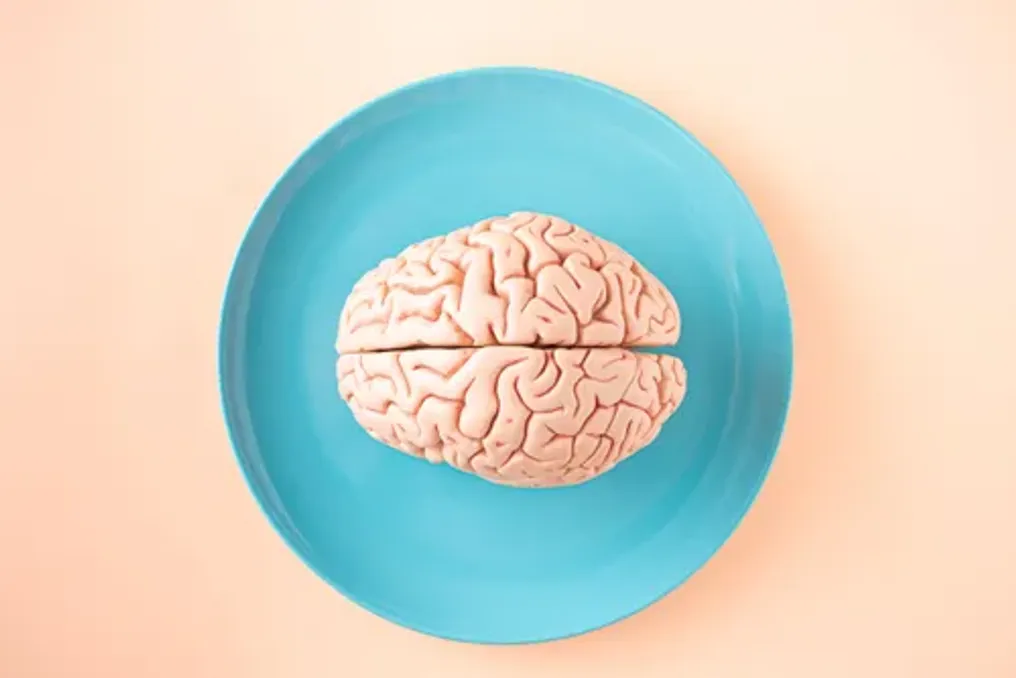
A recent example in this field is Neuralink's announcement of developing a method to implant electrode arrays into the brain without damaging the protective membrane. This effectively simplifies a surgical procedure that previously required serious medical justification.
Identifying the Pattern
At first glance, these events seem unrelated, but a clear pattern emerges within them. The author suggests that we misunderstand how technology changes society. We tend to wait for a revolution, one dramatic moment, but instead, gradual removal of minor obstacles occurs—obstacles no one deems sufficient reason to react to—until the old norm vanishes without a trace.
Journalism did not suddenly begin competing with LLMs; rather, years were spent optimizing for search engines and adapting to understandable algorithms. Then the direction changed without permission, and the skill required to capture attention also changed.
Neurocomputer interfaces will not become commonplace due to a single breakthrough like the one made by Neuralink. More likely, they will become as common as most things—step by step, until the operation ceases to seem extraordinary, and we start debating the consequences rather than the possibilities.
Call for Timely Regulation
The author writes about this not because he considers technology dangerous, but because he has seen the potential of these breakthroughs. His personal experience of his brother losing the ability to walk after a car accident motivates his desire for the success of neurocomputer interfaces, as his mother always hoped for a miracle.
However, it is precisely the desire for their success that dictates the need to engage in boring, understated work now: defining data ownership, access to it, and the legal framework, while decisions remain small and quiet, rather than large and urgent.
These concerns are not hypothetical. Researchers are already studying the ethical and social implications of neurocomputer interfaces, touching upon issues of consent, privacy, cognitive freedom, and ownership of neural data.
It is important that the order of systemic changes matters. Innovations develop independently of institutional reflection; people change their behavior, and institutions notice this and begin discussing what has already happened years later.
The Role of AI Stewards
Bartěk Ogonowski, one of the founders of Levra, spoke about the necessity of becoming stewards of AI. The author emphasizes that this responsibility begins not after the technology is released, but at the moment of its quiet alteration of surrounding systems—before lawsuits and public condemnation.
The theoretical delay is confirmed by examples: South Africa's POPIA law does not recognize neural data as a separate protected category. Since the law was written before the emergence of modern neurocomputer interfaces, gaps in interpretation arise, and the data may fall under existing protections, such as medical or biometric information.
The author believes that we cannot wait for lawsuits or data breaches to decide that a signal received directly from the brain requires more protection than an email address. Regulation that follows scale means adopting rules after the technology has already established its norms.
Need for Proactive Governance
We need to change our approach: instead of waiting for the widespread adoption of technologies, we should ask questions about the impact on society at early stages, when rules are easier to shape than to rewrite.
Innovations should not slow down, but governance must not lag by years. There is a concept of 'anticipatory governance' that must be viewed as a practical necessity, not just an academic idea.
Now is a favorable time to participate in changing systems and human behavior to positively influence future societies, although we rarely vote on ultimate boundaries, we can have a part in this, instead of one day discovering that they have already shifted.