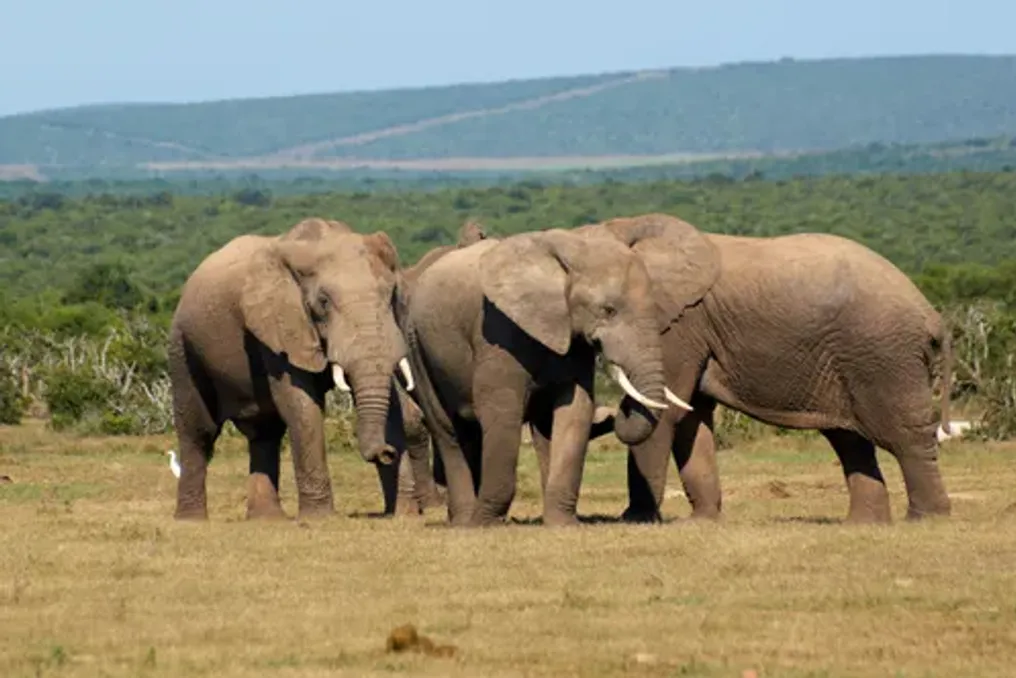
Provincial governments in South Africa are insisting on the mass slaughter of around 2000 elephants, viewing it as a quick solution to financial problems, which has drawn global condemnation and strong resistance from scientists advocating for humane methods.
Conservation Crisis Context
A recent scene featuring a procession of giant elephant puppets through the Cape Point bush became a central element of a new short film commissioned by Humane World for Animals South Africa. This film is a desperate attempt to draw public attention to a serious political threat—the imminent danger of mass elephant destruction being re-debated by provincial and national authorities.
Threat and Government Arguments
More than two thousand wild elephants may face potential culling in the Madikwe North West reserve and various KwaZulu-Natal hunting grounds. Officials from the provincial administration claim that populations in the region have become unsustainable. However, leading scientists and wildlife conservation charities firmly refute this assertion, pointing to decades of bureaucratic inertia and aggressive commercialization of wildlife.
Historical Background and Current Situation
The specter of systematic extermination raises old wounds in South Africa's environmental history. Large-scale state culls officially ceased in 1995 following an intensive global moratorium. Before this ban, over 14,500 elephants were systematically destroyed in Kruger National Park alone using lethal injections and high-caliber weaponry, provoking severe international censure.
Today, the country is once again on the brink of reversing these measures. Critics argue that the sudden policy shift is driven by the inability of provincial budgets, as regional administrations are interested in profitable commercial opportunities related to legalized animal slaughter.
Calls for Humane Solutions
Dr. Audrey Delsink, a recognized elephant biologist and Senior Wildlife Director at Humane World for Animals South Africa, stated: 'We call for a complete end to the idea that elephants should be mass slaughtered in South Africa.' She emphasizes that transitioning to lethal methods is both scientifically unfounded and morally outdated, given her 25 years of experience studying and implementing non-lethal solutions.
Delsink notes that elephant numbers do require management due to the restriction of their natural habitat by human expansion. Nevertheless, she insists that the issue must be approached with compassion and respect for animal welfare, especially because proven humane alternatives exist. She added that the giant puppets are intended to evoke an emotional connection in viewers to these majestic, intelligent creatures who are individuals possessing intrinsic value.
Criticism and Scientific Data
The pressure towards culling is heavily criticized as a sign of managerial failure rather than ecological necessity. The charity points out that the primary causes of human-wildlife conflict are poor infrastructure management, damaged fences, and deliberate sabotage, which prevent elephants from containing themselves while following their natural migratory instincts.
Dr. Delsink sharply criticized regional conservation bodies, noting that non-lethal methods existed for decades, but many provincial governments remained inactive for years. She argues that these very governments are now pushing for culling as a quick and brutal way to resolve their own inertia and secure income sources due to funding shortages. She warned that South Africa should not abandon decades of animal protection by returning to mass elephant extermination.
Modern Population Management Methods
Currently, there are about 44,000 elephants living in South Africa, with approximately 35,000 within the protected boundaries of Kruger National Park, and the remaining 9,000 distributed across small fenced reserves. Furthermore, the African savanna elephant is officially listed on the IUCN Red List as an endangered species. Humane World for Animals believes that lethal methods should remain an absolute last resort, as modern scientific data convincingly demonstrates that non-lethal interventions are more sustainable and effective in the long term.
The organization supports three main areas of modern humane elephant management, including immunocontraception—a highly effective, safe, and reversible vaccine administered to wild females to regulate fertility. Dr. Delsink, in collaboration with the University of Pretoria Veterinary Population Management Laboratory, led this program for a quarter of a century, successfully vaccinating over 1800 elephants in 50 reserves. The other two areas include creating and protecting natural corridors for the safe dispersal of overcrowded herds into neighboring habitats, as well as actively expanding existing protected ecological sanctuaries to provide these large mammals with necessary physical space.