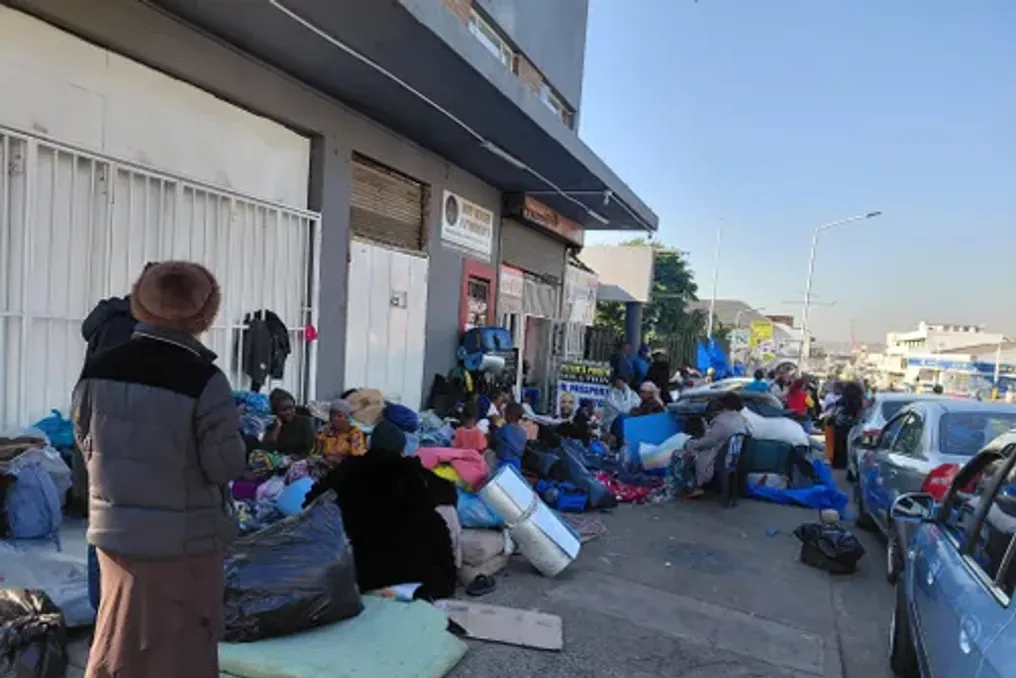
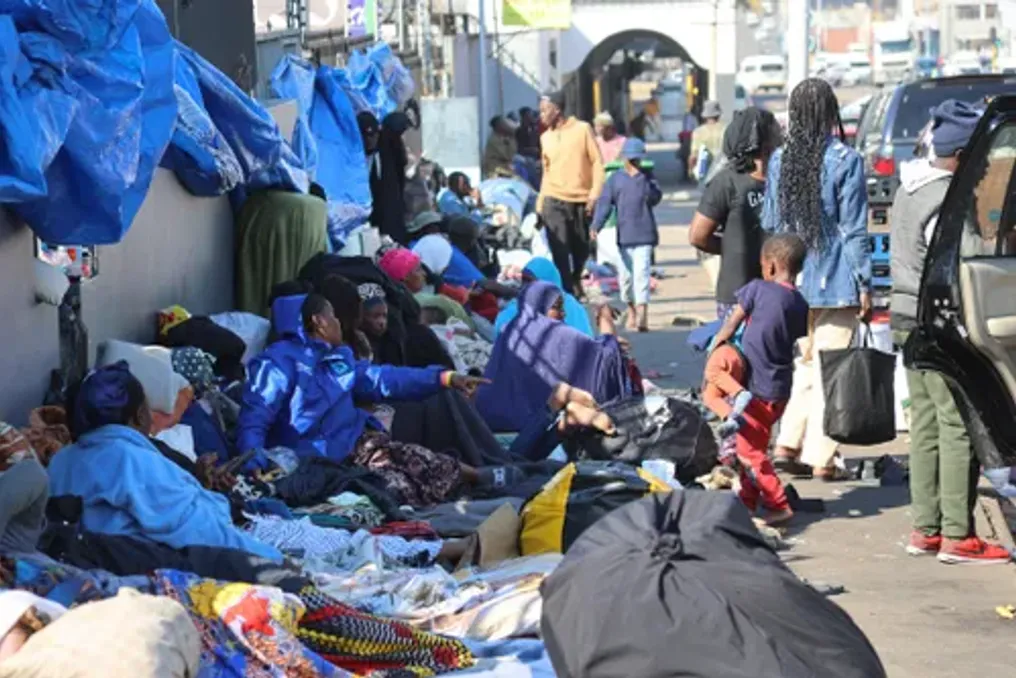
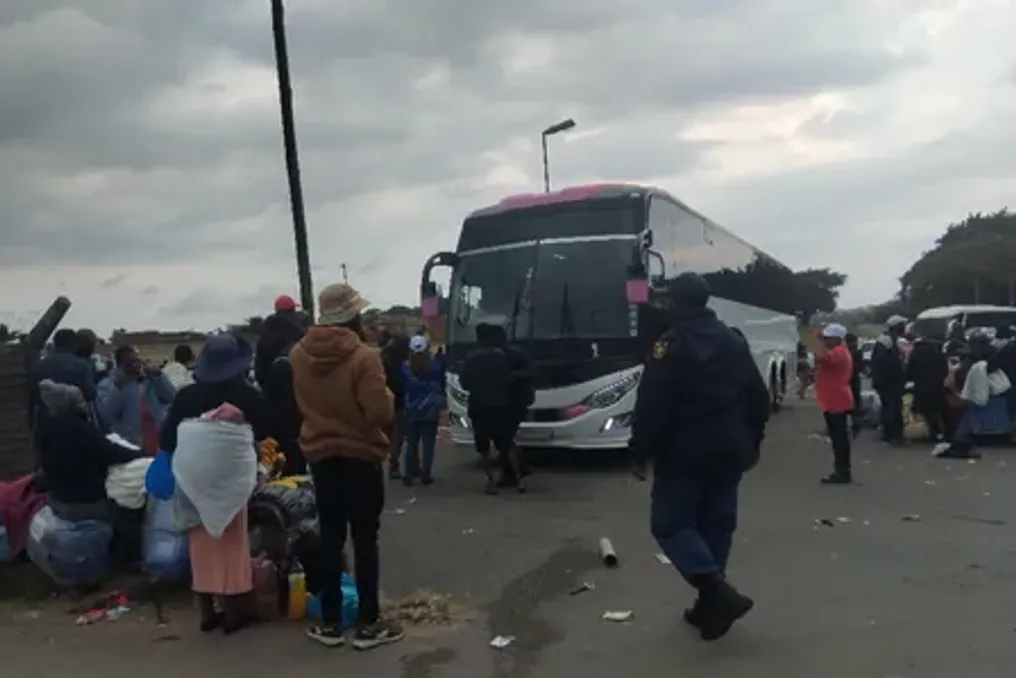
Refugees in Durban are forced to live on the streets, striving to find protection and shelter under extremely difficult circumstances. For almost two months, they have been camped on sidewalks near the Department of Home Affairs Refugee Reception Centre at Che Guevara (Moor) Road, huddled together to withstand the cold and the threat of violence.
Origins and Living Conditions
These individuals come from various countries, including the Democratic Republic of Congo (DRC), Burundi, Ghana, Sudan, Tanzania, and Uganda; some Malawian citizens later left the area. The refugees attempted to seek protection but were expelled by Durban police under rubber bullet fire and did not receive assistance at the Diakonia Centre for two days. Subsequently, they were taken to the Department of Home Affairs, where checks revealed that only two out of 457 people were undocumented.
Refugee Stories
Princess Adjei, 33, originally from Ghana, arrived in South Africa as an infant and grew up here. She recounted being attacked both at home and at her workplace. Adjei stated that most of her family had left, leaving her with her son. Her grandmother, who lived in South Africa, returned home but passed away after watching the events on television.
Adjei lost all her belongings in a beauty salon she owned in the Industrial Area after a group robbed it, leading to the closure of her business. She has been unemployed for two months. She also mentioned that after the Etkutwini municipality mayor, Cyril Shaba, advised them to return to their communities, they did so, but were attacked again, forcing them back onto the streets.
Life on the street proved difficult and unsafe, as it included children, pregnant women, and elderly women. Adjei noted that people fall ill daily but cannot access hospitals because they are refused admission, and children do not attend school due to refusal of enrollment.
Integration Challenges
She explained that many arrived in South Africa fleeing wars in their home countries, making them refugees. Upon arrival, they were issued documents allowing them to stay in the country. Children among the refugees face daily problems such as illness and lack of access to education. Adjei emphasized that all of them are unemployed, and since they have no place, they cannot pay rent, forcing them to sleep together on the street. She added that the number of such people is constantly growing. Even at night, in the rain, they sleep pressed closely together.
Adjei mentioned that a group tried to attack them on June 30th, but private security and the police helped protect them by blocking access. Leanne Sefu, 25, from the DRC, arrived in South Africa at the age of three. Two months ago, her landlord evicted her and her two-year-old daughter from South Beach. Sefu stated that life on the streets is hard due to constant illnesses, such as severe flu from sleeping in the cold.
She also shared that despite having documents permitting her to work and study, she cannot find employment in South African companies because she is perceived as a foreigner. Sefu noted that even within the community, people tell her they are unwanted, and she is turned away everywhere.
Calls to Action
Refugees from various African nations are uniting in the fight for safety and a better future. Bishop Raphael, one of the leaders, expressed bewilderment over how the government is handling the issue of migrants and refugees. He stated that they are refugees who came here seeking safety because their countries failed to provide them protection. Raphael noted that the government must act in conjunction with UNHCR, as refugees fall under the umbrella of the 1951 Refugee Convention, and currently, people do not trust the South African government, trusting only UNHCR.
Raphael reported that there were initially about 630 people, but the number has decreased to approximately 183. However, since June 28th, people have started flocking there from all corners (Bizanah, Emanzimtoti, North Coast, South Coast) in search of safety.