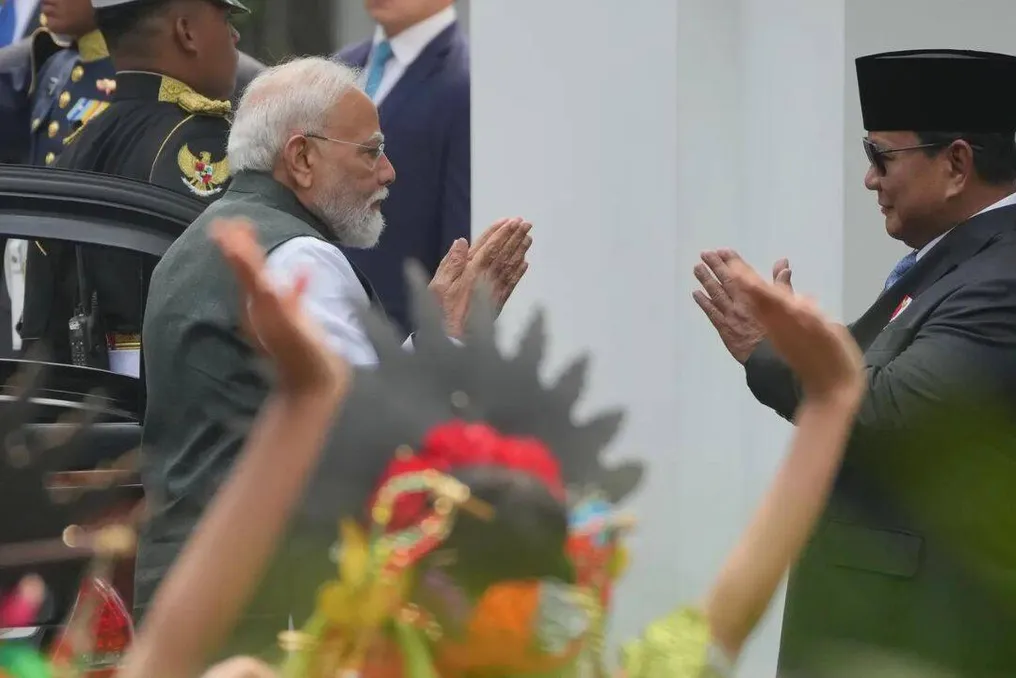
Prime Minister Narendra Modi's visit to the UNESCO-listed Prambanan Temple in Indonesia signifies a broader diplomatic approach that increasingly places India's shared civilizational heritage at the center of its engagement with Asia.
India's Civilizational Diplomacy
Over the last twelve years, the Modi government has actively supported the restoration and preservation of ancient temples, archaeological monuments, and cultural sites in various countries. This has become a pillar of India's soft power and regional diplomacy, utilizing heritage as a key element.
India has supported the preservation of monuments reflecting centuries-old cultural, religious, and civilizational ties, from Southeast Asia to the Persian Gulf. Many of these projects have been realized through grant aid, archaeological cooperation, and bilateral agreements, strengthening ties with partners and protecting shared heritage.
Examples of International Projects
One of the first steps was cooperation with Vietnam, where a Memorandum of Understanding was signed in 2014 for the restoration of the Mỹ Sơn Sanctuary, a UNESCO World Heritage site. This Hindu temple complex, once the spiritual center of the ancient Champa kingdom, is considered one of the most important Hindu monuments in Southeast Asia. Conservation work under the bilateral agreement was led by the Archaeological Survey of India.
In Myanmar, in 2017, India signed an agreement to restore monuments damaged by the 2016 earthquake in the Bagan archaeological zone, which is also a UNESCO World Heritage site. This restoration covered 12 historical pagodas and the famous Ananda Temple, one of Myanmar's most revered Buddhist monuments.
Following the devastating earthquake in Nepal in 2015, India launched one of its largest overseas heritage preservation initiatives. As part of a reconstruction package worth 50 million US dollars, work was carried out to restore 28 cultural heritage sites, including the historic Seto Machhindranath Temple and the Buddha Nilkantha Dharamshala Temple.
Heritage Preservation in South Asia
India has also played a significant role in preserving the Angkor heritage complex in Cambodia. Starting in 2022, conservation work expanded to key monuments such as Ta Prohm, Angkor Wat, and Preah Vihear, helping to preserve one of the greatest centers of Indianized civilization outside of India.
In Laos, in 2024, India completed restoration work at the Wat Pho Temple, a UNESCO World Heritage site. This nearly thousand-year-old Shiva temple remains one of the oldest surviving symbols of the Sanatana civilization in Southeast Asia.
The Modi government has also expanded cultural cooperation with Bangladesh, where India helped restore the historic Ramna Kali Temple in Dhaka, which was destroyed during Pakistan's 'Searchlight' operation in 1971. The temple was grandly reopened in 2021, marking the restoration of one of Bangladesh's most important Hindu shrines.
Furthermore, India funded the reconstruction of the nearly three-hundred-year-old Joy Kali Mata Temple in Natore through grant aid. Support for the restoration was also provided to the Anandamoyee Kali Mata Mandir and Ramakrishna temples, contributing to the preservation of important centers of Hindu faith in Bangladesh.
Projects in the Persian Gulf and Africa
In Sri Lanka in 2015, India signed an agreement to restore the historic Tirukkeeswarar Temple, one of the island's five ancient Pancha Ishwarams dedicated to Lord Shiva. This project was implemented with support from a grant of 326 million Sri Lankan rupees.
During his landmark visit to Bahrain in 2019, Prime Minister Modi inaugurated the reconstruction of the two-hundred-year-old Shrine of Shrinathji in Manama. This project, valued at 4.2 million US dollars, preserved one of the oldest Hindu temples in the Persian Gulf region and demonstrated India's growing cultural engagement beyond South Asia.
Prime Minister Modi's visit to the Prambanan Temple in Indonesia complements this broader civilizational expansion. Although Prambanan itself was not restored by India, the visit underscores New Delhi's growing emphasis on strengthening diplomatic ties through shared history, culture, and heritage.
Over the last decade, heritage preservation has become an important aspect of India's foreign policy, complementing strategic, economic, and defense partnerships. By restoring temples and historical monuments across Asia, India seeks to strengthen age-old civilizational ties while deepening goodwill and cultural cooperation with partner states.