China's semiconductor equipment component industry is reaching a critical stage of development. This growth is driven by increased demand stemming from the expansion of artificial intelligence infrastructure, the ramp-up of domestic wafer production, and geopolitical pressure on supply chains.
Achievements in Component Localization
ACM Research (Shengmei Shanghai) demonstrated the first systemic level of verification for a fully localized semiconductor equipment supply chain, assembling two semiconductor equipment processes using exclusively domestic components.
The drive to use internal components is dictated by several factors. The demand for AI computing extends from HBM memory and GPUs to inspection, power management, and advanced packaging equipment. SEMI forecasts that investments in 300mm memory equipment will exceed $50 billion by 2026.
Growth of China's Manufacturing Capacity
China's wafer manufacturing capacity has grown from 2% of the global volume in 2000 to 17% in 2020. SEMI expects China's share to reach one-third of the global volume by 2030. In the 22-40 nm node, China's share is expected to be 37% in 2026 and 42% by 2028.
Concurrently, tightening US export restrictions on critical equipment and components make securing supply chain safety a vital task.
Acceleration of Localization Among Manufacturers
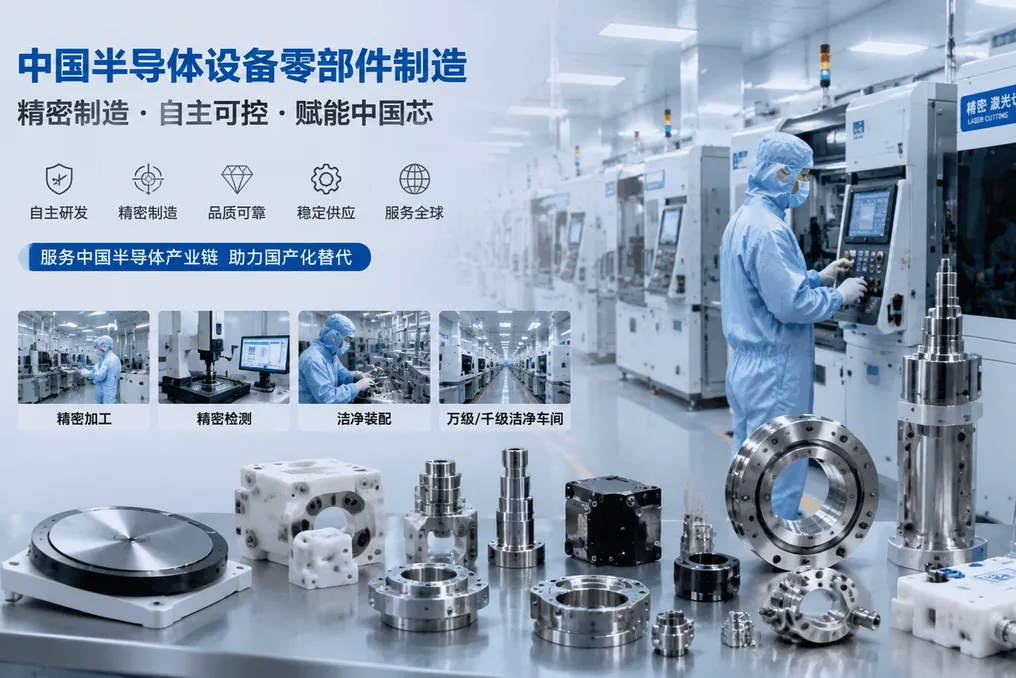
At ACM Research's Lingang facility, capabilities for verifying all process categories have been implemented, including cleaning, electroplating, photoresist coating, tube furnaces, and PECVD processes. Critical standard components such as magnetic rotary pumps, heaters, and filters have achieved significant success in full localization.
ACM Research is not the only player: major Chinese equipment manufacturers, including New Kailai, AMEC, Piotech, and Hwatsing Technology, are actively accelerating the localization of components.
Target Categories and Partners
Key component categories include quartz parts (localization rate over 10%), RF generators, vacuum pumps (5-10%), valves, and rings for edge processing. Foxconn Precision completed validation with customers and began mass production of gas distribution wafers and special coatings, planning to focus on heating wafers and valves in 2026.
Siconix, one of the few domestic manufacturers with the full capability from 'crystal growth to finished silicon electrode,' supplies etching equipment to market leaders such as AMEC and NAURA. Feilihua, a supplier of quartz materials certified for Applied Materials, Lam Research, and Tokyo Electron, meets the highest certification standards, which typically require a qualification cycle of 2–3 years.
Global Expansion of Chinese Manufacturers
Chinese component manufacturers are beginning to expand their presence in the global market. Foxconn Precision gained access to international clients through investments in Compart Systems. Siconix supplies major Japanese and Korean silicon component manufacturers who work with Samsung, SK Hynix, Intel, and TSMC.
This dual strategy, combining 'following equipment' and 'independent expansion,' allows Chinese component manufacturers to transition from simple import substitution to global export.