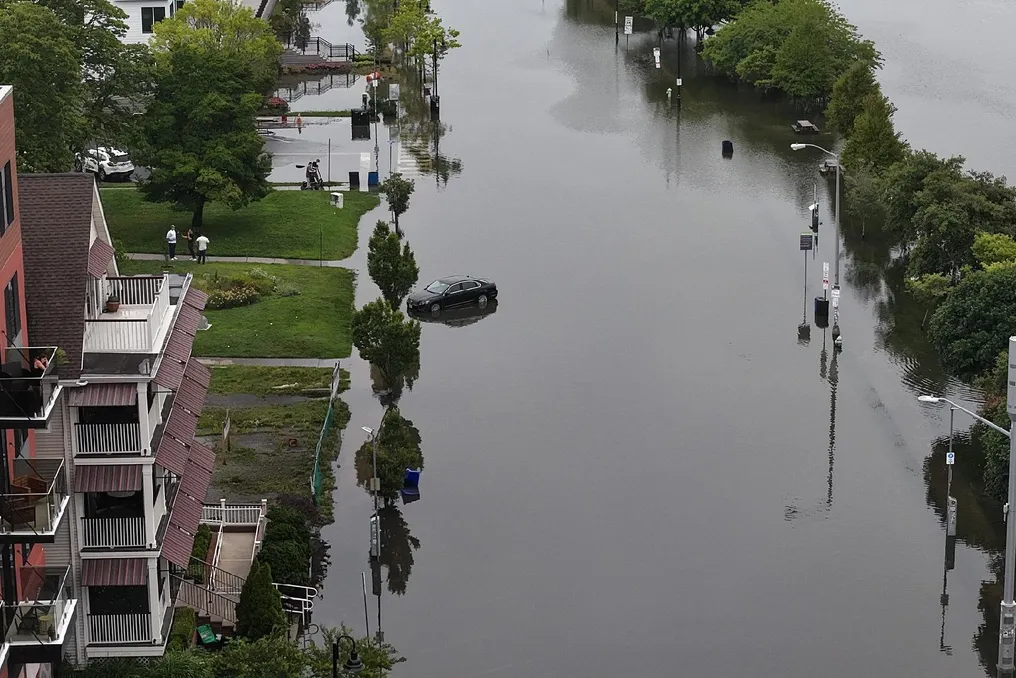
During the summer period, many regions around the world experienced an increase in extreme weather events. Western Europe faced a 'heat dome,' South Asia endured prolonged severe heat, and Southeast Africa suffered from incessant heavy rains.
Challenges for Humanity
These climatic anomalies create an increasingly complex survival problem for all of humanity. According to an online poll conducted by CGTN, 83.1% of participants believe that extreme weather has become a real threat to all of humanity, and the only correct path is joint responsibility among countries.
Statistics and Concerns
According to the World Health Organization, approximately 489,000 people died annually due to high temperatures between 2000 and 2019. Furthermore, according to the World Meteorological Organization's website, human activity-induced climate change has increased the probability of complex extreme weather events since the mid-20th century.
Within the survey, 83.3% of respondents noted a noticeable increase in the frequency and intensity of global extreme weather events in recent years. Moreover, 74.7% believe that the growing frequency of extreme weather seriously threatens human safety, while 82.7% consider that extreme weather has ceased to be merely a local natural disaster, transforming into a universal environmental problem affecting all people.
Solutions to the Problem
Faced with numerous difficulties, the world requires solidarity and cooperation. In the context of global climate governance, no one can remain unaffected. The poll revealed that 72.6% of respondents view the promotion of emission reductions and carbon limits, as well as increasing climate adaptability, as a key factor in preventing risks.
Furthermore, 92.3% are confident that global climate cooperation requires not only financial support but also the exchange of experience in disaster prevention and early warning resources, as well as the transfer of climate technologies.
Role of Developed Countries
The international community must also promote technological innovation and industrial transformation through cooperation, ensuring free access to high-quality green products and technologies for all countries, especially for a large number of developing nations. In this regard, 85.9% of respondents believe that developed countries bear historical, legal, and moral responsibility for climate change.
Overall, 88.7% believe that developed countries should assist developing countries with climate technologies to strengthen their resilience and ability to respond to climate change. Additionally, 81.1% believe that assisting developing countries in bridging the development gap is an important step in preventing climate change from becoming a security threat.
The poll was published on CGTN platforms in English, Spanish, French, Arabic, and Russian. Within 24 hours, 8,035 internet users participated in the voting, sharing their opinions.