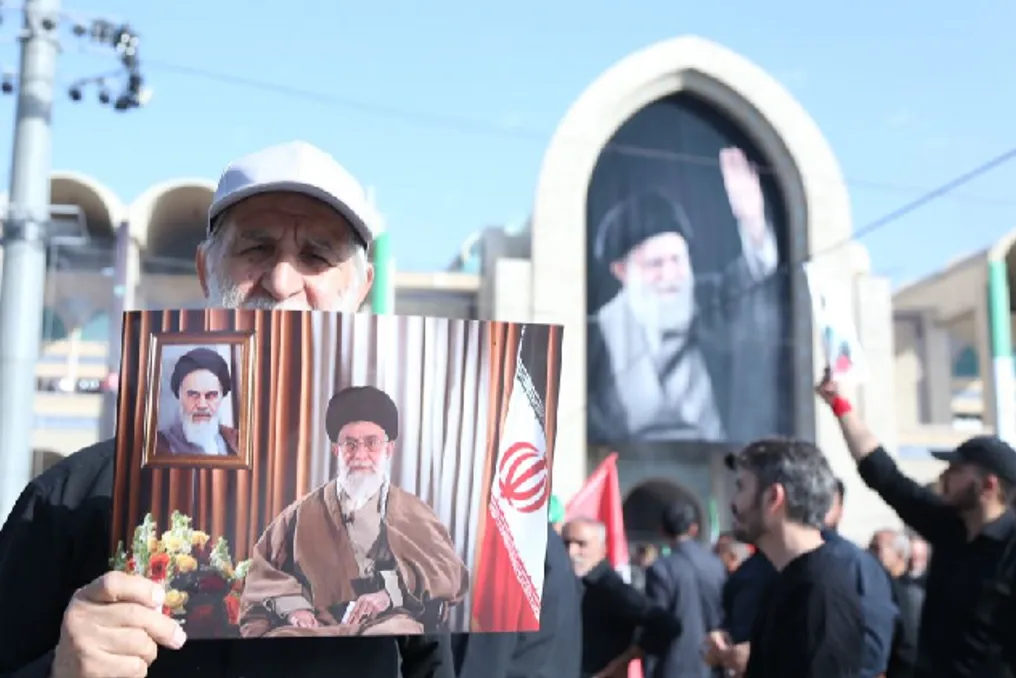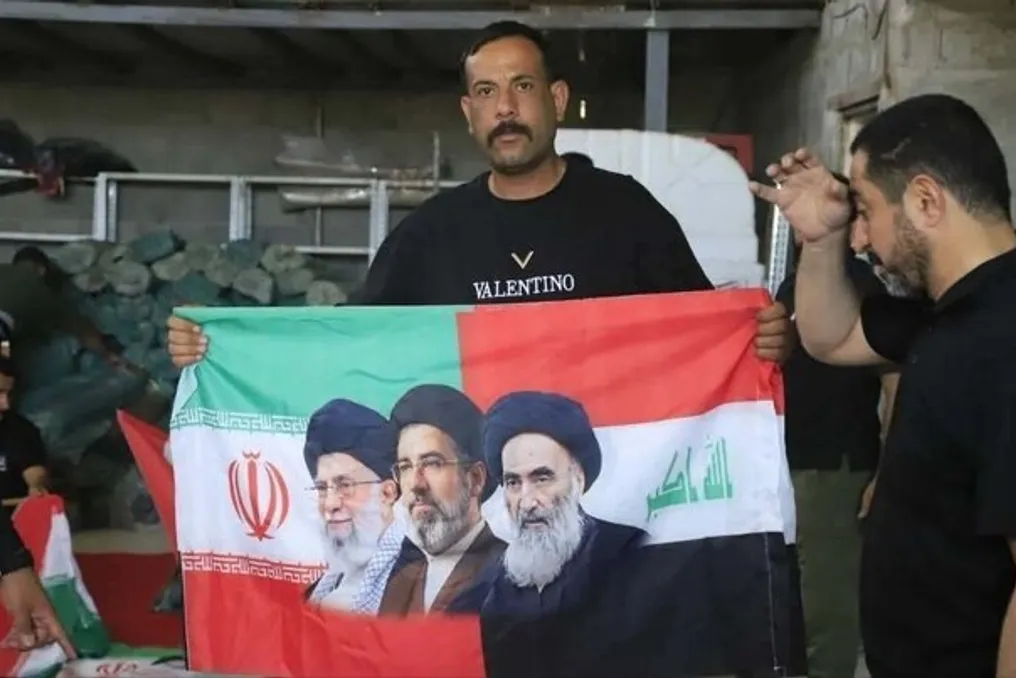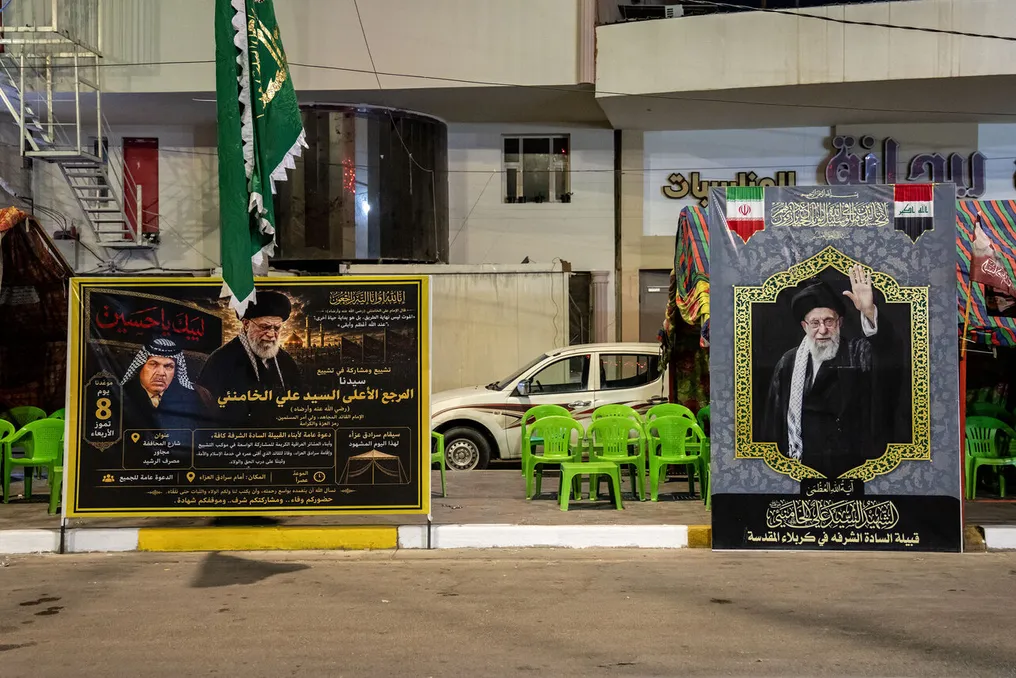
The farewell journey for the martyr and leader of the Islamic Revolution, Ayatollah Sayyed Ali Khamenei, entered a new phase on Tuesday when his body left the holy city of Qom and headed to Iraq. Millions of people are planning to gather in the holy cities of Najaf and Karbala there to bid him a final farewell before his burial in Mashhad.
Expansion of Mourning to the Regional Level
The events that took place in Tehran three days ago, when an unprecedented procession with a huge crowd from all over Iran passed, have transformed into a regional farewell. This reflects the deep spiritual, religious, and historical connection between the peoples of Iran and Iraq. For many mourners, this farewell has ceased to be limited by national borders, becoming a shared expression of grief felt in the holy places and streets associated with the history of sacrifice and resistance.
Preparations in Najaf
The administration of the shrine of Imam Ali announced the completion of all organizational, logistical, and security preparations for the ceremonies in Najaf. According to shrine representatives, a comprehensive operational plan was developed, coordinated with Iraqi authorities, to manage security, transport, media coverage, public services, and the expected arrival of millions of mourners.
Haydar al-Issawi, a member of the shrine's administrative council, reported that extensive coordination meetings and field inspections were conducted to finalize the procession routes and mobilize personnel and equipment. Adnan al-Arabi, director of public relations for the central media committee overseeing the ceremonies, noted that the funeral will proceed with the dignity and solemnity befitting the status of the late Leader. Iraqi officials specified that Ayatollah Khamenei's body was scheduled to arrive at Najaf International Airport on Tuesday afternoon, where senior Iranian and Iraqi officials will receive him at an official reception.
The main funeral procession is planned for early Wednesday morning, starting from the bridge of Kufa to Najaf, and then continuing throughout the day in the holy city of Karbala, where mourners will follow the procession to the shrines of Imam Hussein and Hazrat Abolfazl al-Abbas.
Mobilization of Iraq for the Historic Event
Authorities across Iraq have launched one of the country's largest logistical operations in recent years ahead of these ceremonies. The Governor of Karbala, Nassif Jassim Al-Hattabi, stated that the Iraqi government has implemented large-scale security and logistics measures to ensure the smooth conduct of the funeral. He added that thousands of mourners from different parts of Iraq have already begun arriving in Najaf and Karbala, and further influx is expected in the coming hours.
To support the event, Iraqi authorities have allocated 150 ambulances along the procession routes, and emergency medical teams are on standby to assist participants. Meanwhile, the Governor of Kirkuk, Mohammed Saman Aga, announced the closure of all provincial government institutions on Wednesday so that citizens can participate in the funeral ceremonies. In Baghdad, Basra, Najaf, Karbala, and other provinces, government institutions, tribal leaders, religious organizations, and security forces have activated joint work, which Iraqi media calls 'one of the largest public gatherings in recent times.'
Iraqi Leaders Emphasize Shared History
Sayyid Ammar Al-Hakim, head of the National Movement of Wisdom in Iraq, characterized the funeral ceremonies as a powerful testament to solidarity between Iran and Iraq. Speaking to Al-Mayadeen TV channel from Lebanon, Hakim noted that these ceremonies hold deep religious, humanitarian, and political significance, recalling the widespread mourning that swept Iraq after the assassination of Ayatollah Khamenei. He emphasized that the historical and cultural ties between the two neighboring states are too deep to weaken under external pressure, adding that relations between Baghdad and Tehran are increasingly turning into institutional interstate cooperation based on mutual trust. Hakim also confirmed the 'continuity of the principles established by Imam Khomeini and supported by Ayatollah Khamenei throughout his life.'
Spiritual Unity at the Funeral
Commander of the Islamic Revolutionary Guard Corps, Quds Force, Major General Ismail Kaani, stated that the funeral ceremonies in Iraq will further demonstrate the deep spiritual bond uniting the peoples of Iran and Iraq. In a statement released on Tuesday, Kaani noted that the extensive preparations made by Iraqi authorities and the great desire of the public to hold the ceremonies reflect love and respect for the late Leader throughout Iraq. He recalled Ayatollah Khamenei's support for Iraq during the fight against ISIS (Daesh), describing the joint sacrifices of Iranian and Iraqi fighters as a defining chapter in the common history of the two nations. He stated: 'The path of resistance is illuminated by the sacrifices of those who gave everything so that future generations could walk with dignity.'
Humanitarian Operation in Action
Alongside Iraqi emergency services, Iran has provided extensive humanitarian aid for the ceremonies. The Iranian Red Crescent Society announced the dispatch of 36 specialized rescue and relief teams to Najaf and Karbala to provide urgent medical assistance throughout the event. According to the President of the Red Crescent, Pirhossein Kolivand, four medical clinics and the Imam Ali Hospital in Najaf have been put on full alert with the support of nearly 500 doctors, rescuers, nurses, and volunteers. Separately, the province of Khuzestan dispatched an additional 15 rescue teams equipped with emergency vehicles and experienced personnel to reinforce medical care during the ceremonies. Officials reported that these teams will remain in Iraq until all funeral rites are completed.
Final Journey to Mashhad
After the ceremonies in Najaf and Karbala, Ayatollah Khamenei's body will return to Iran, where the final stage of the week-long farewell will begin in the northeastern holy city of Mashhad. It is planned that he will be buried on Thursday in the shrine of Imam Reza (AS), concluding a day of mourning that began in Tehran and Qom and continued in the holiest cities of Iraq. However, for countless mourners, the funeral is not just the end of a life, but a moment they consider part of the collective memory of two nations linked by faith, history, and shared sacrifices. As the procession moves from one holy city to another, the sea of mourners in black attire, the whisper of prayers, and the unwavering silence of millions serve as a solemn reminder that while leaders depart, the ideals they leave behind continue to resonate far beyond their final resting place.