Scientists have announced the successful creation of the first artificial cell that possesses the ability to grow and divide. Although this structure replicates some basic functions of a living cell, it currently requires external support to function, and the results obtained require confirmation by other researchers.
Goal and Progress in Biology
For decades, one of the main goals of biology has been to determine the possibility of building an entire cell exclusively from chemical substances. Now, a team from the University of Minnesota claims to have made a significant step in this direction.
Functions of SpudCell
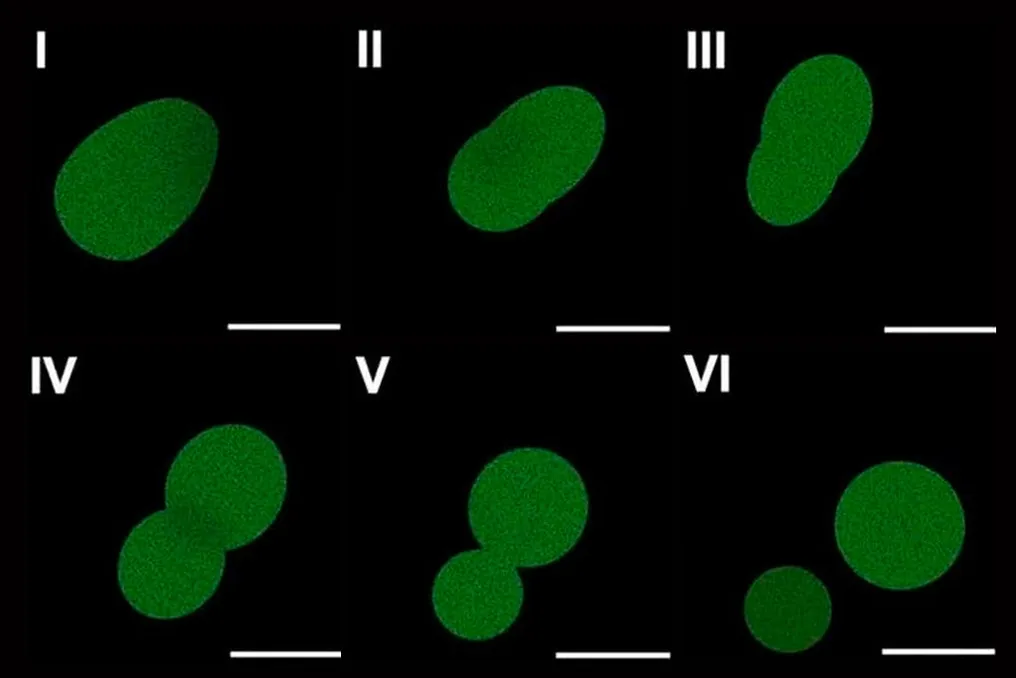
The researchers developed an artificial structure called SpudCell. This cell is capable of performing several functions typical of living organisms: it feeds, grows, copies its DNA, divides into two new cells, and even competes for food with other similar structures.
This study was published on the bioRxiv preprint server, meaning it has not yet undergone peer review, so other scientists have not analyzed this work before its official publication in a scientific journal. If the results are confirmed, this will be a major achievement for synthetic biology.
Difference from Previous Work
It is important to note that this is not the first synthetic cell ever created. In 2010, researchers at the J. Craig Venter Institute were able to produce a bacterium whose DNA was entirely synthesized in the laboratory. However, that experiment was based on a real bacterium. The new research aimed to go the other way—to build almost everything from scratch.
Cell Creation Process
The scientists began the process by manufacturing tiny microscopic fat bubbles called liposomes. These bubbles perform a simplified function of the membrane surrounding all cells. Inside these bubbles, they placed water, necessary molecules, and a small set of DNA containing only 36 genes. For comparison, a normal bacterium has about 4400 genes.
The resulting SpudCell got its name due to its resemblance to a potato (spud) and a reference to Sputnik, the symbol of the start of the space race. The lead researcher, a Pole, joked about the name choice, stating in an interview with The Guardian: 'I am mostly made of potatoes.'
Growth and Division Mechanisms
After creation, the cell was placed in a nutrient-rich solution. It absorbed Adenosine Triphosphate (ATP)—the molecule that provides energy for almost all known life—and also fused with small 'nutritional' bubbles carrying proteins and other necessary components. As this material was supplied, the SpudCell increased in size. When a certain size was reached, the accumulation of proteins in its membrane caused the cell to divide into two parts, with each inheriting a copy of the DNA.
This is the first instance where a cell assembled entirely from non-living components managed to complete the cycle of growth, genetic material replication, and division.
Limitations and Signs of Life
Nevertheless, the cell is not yet considered alive. The main limitation is that SpudCell cannot independently produce ribosomes—structures that act as miniature protein factories inside cells. Instead, it requires pre-made ribosomes, which the researchers deliver via nutritional bubbles. Without this 'support,' the cell stops functioning after only five to ten generations.
Furthermore, its DNA is extremely simple: while the human genome contains about 3 billion base pairs, the SpudCell genome has only 90 thousand. Moreover, its genetic material is divided into seven separate fragments, which are not always distributed correctly between daughter cells, forcing it to be completely dependent on the conditions created in the laboratory.
Demonstration of Evolutionary Behavior
Despite this, SpudCell demonstrated behavior related to evolution. The researchers created a modified version that absorbed food more efficiently. When two variants started growing together, the mutant variant produced more offspring and, after five generations, became dominant, especially under nutrient deficiency. This does not mean the cell evolves like a natural organism, but it shows that even an artificial system can undergo a simple selection process.
Significance of the Research
The goal of this research is not to create artificial life to replace natural organisms. According to the scientists, building a cell piece by piece helps answer the question of the minimal set of components required for something to behave like a living organism. This understanding may also pave the way for practical applications: in the future, synthetic cells could be programmed to produce drugs, new materials, or molecules that natural cells cannot create.
However, it is still far off. Seraphina Wegner, a biochemist from the University of Münster who was not involved in the work, told Science magazine: 'This is a very interesting paper, but I don't think it means we are close to creating a fully synthetic cell.'
The team's next task is to enable future versions of SpudCell to produce their own ribosomes and stop depending on the 'nutrition' provided by the researchers. For now, SpudCell should be viewed as proof that various characteristics of life can arise in a structure built entirely from chemical components. As bioengineer Drew Andy from Stanford University summarized in an interview with the New York Times, this achievement is like the Wright brothers' first flight: 'The flight of the Wright Flyer for 12 seconds doesn't turn you into a Boeing 737. It's just the beginning.'