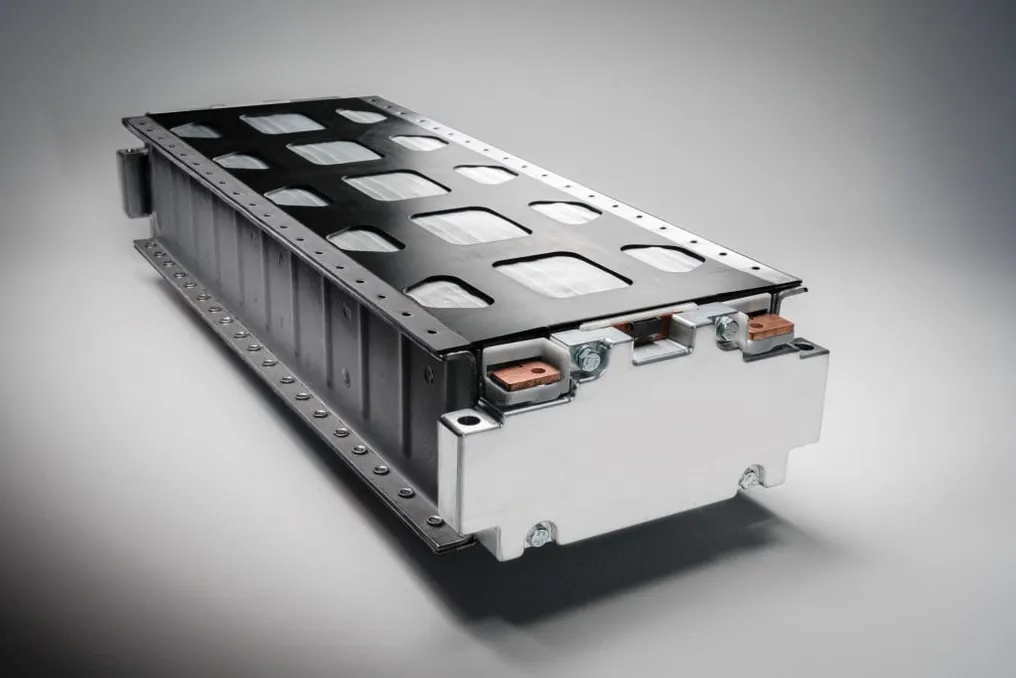
Tesla has implemented a new program called Cell Giga Challenge, focused on accelerating the development of technologies applicable to battery cell manufacturing. This initiative allows partner companies to test their innovations directly on the production line of the Gigafactory Berlin-Brandenburg, located in Germany.
Program Objectives and Partnerships
This program arises at a time when the automaker is expanding the production of its 4680 cells at the Grünheide facility in Germany. The established goal is to achieve an annual capacity of 18 GWh, positioning this plant as one of the largest battery cell producers in Europe.
The Cell Giga Challenge is conducted in collaboration with JUNI, a support platform for startups in the Berlin-Brandenburg region. JUNI is managed by UNITE gGmbH and receives funding from the German Federal Ministry of Economy, as well as the EXIST program. According to JUNI, the focus is to support startups that can make battery cell manufacturing more efficient, faster, better, and scalable.
Technological Focus Areas
Tesla is seeking innovative solutions in five main domains: Materials, Equipment, Operations, Automation, and Artificial Intelligence (AI). Applications to participate in the program are already open through the Submittable platform, with a deadline of July 24, 2026, and the official start scheduled for August 2026.
Selection Stages and Pilot Projects
The selection process will be structured in five distinct phases: online application, technological evaluation based on real manufacturing requirements, first technical interview, presentation (pitch) before Tesla representatives, and finally, discussions about pilot projects. Teams that perform best will have the opportunity to advance to a paid pilot project with the Tesla cell team in Grünheide.
The company requires candidates to demonstrate that their technologies provide measurable improvements in aspects such as quality, speed, cost, safety, or production scalability, while also viewing Tesla as a potential partner and customer.
Gigafactory Expansion and Investments
This initiative is intrinsically linked to the plan to expand battery production at the Berlin Gigafactory. In May, Tesla announced an additional financial injection of US$ 250 million (equivalent to R$ 1.3 billion) to more than double the unit's planned capacity, raising it from 8 GWh to 18 GWh annually. With this reinforcement, the total investment in the factory's cell division should approach 1 billion euros (R$ 5.9 billion).
The company projects the need for over 1,500 employees dedicated exclusively to cell production, with the gradual capacity increase scheduled to occur during the first half of 2027. Upon reaching the 18 GWh annual mark, the Grünheide factory should meet the demand for approximately 250,000 to 350,000 vehicles per year, following Tesla's strategy of integrating cell and complete vehicle manufacturing in the same industrial complex.
Financial Details and Challenges
JUNI mentions that the program is part of an investment package totaling US$ 350 million (R$ 1.8 billion) announced in the last six months. However, this amount is higher than the US$ 250 million confirmed by Tesla itself in May, suggesting that the amount disclosed by the platform may include investments prior to the automaker's confirmation.
The development of 4680 cells has represented a major manufacturing challenge for Tesla. The company has faced continuous obstacles in meeting yield and cost targets in production, remaining dependent on suppliers such as LG Energy Solution and Panasonic, even while developing its own cells internally. Opening the production line to external startups implicitly signals Tesla's recognition of the urgency to find new solutions to solve complex large-scale production problems.