The social network X has introduced a native video editor in the iPhone application, aiming to encourage creators to publish original material directly on the platform, reducing dependence on reposted videos from other sources.
The social network X has introduced a native video editor in the iPhone application, aiming to encourage creators to publish original material directly on the platform, reducing dependence on reposted videos from other sources.
This new tool, released this week for iPhone, allows users to record and edit content within the same environment. The initiative seeks to make the platform more functional for those who produce videos on X, thus competing with video-focused networks like TikTok, Instagram, and YouTube, after already implementing the infinite scroll characteristic of short videos.
Nikita Bier, the network's head of product, stated in a post that future improvements will be added to the editor in the coming weeks. However, the feature is not yet available for Android, as the application for the Google system is undergoing a reconstruction process, according to Bier.
Among the features included in the novelty are overlaid subtitles in various languages, options to customize text appearance, and green screen features. With the green screen, it is possible to use images from the gallery or existing posts on X as a background for the video.
Bier emphasized that one of the priorities is to provide creators with the necessary tools to produce authentic content and, consequently, reward them. He mentioned that video posts already account for almost half of the impressions on the social network.
Additionally, the tool is expected to incorporate features from X's Media Studio in the future, a solution aimed at businesses to manage and organize audiovisual content and static images, such as GIFs. The executive declared the goal of offering complete support without the user having to leave the application.
The arrival of this editor occurs in a context where X is trying to mitigate the dissemination of reused content or content appropriated from other networks. According to Bier, many large accounts continue to use third-party materials, sometimes years after the initial success of the videos.
The executive pointed out that this practice has become even more frequent due to the incentives granted to profile engagement on the microblog, especially with monetization for verified accounts. Despite this, X still lacks tools as advanced as those of its competitors for creators to identify, report, or prevent the unauthorized republication of their original content.
Networks belonging to Mark Zuckerberg, for example, have intensified their fight against copycats since 2024. Currently, Reels creators can restrict the visibility of unauthorized repurposed content or add attribution links. YouTube also has similar mechanisms, as reported by TechCrunch.
An additional challenge lies in the presence of bots, which can artificially increase views, steal videos, and distort engagement metrics, making it difficult to build a reliable monetization ecosystem.
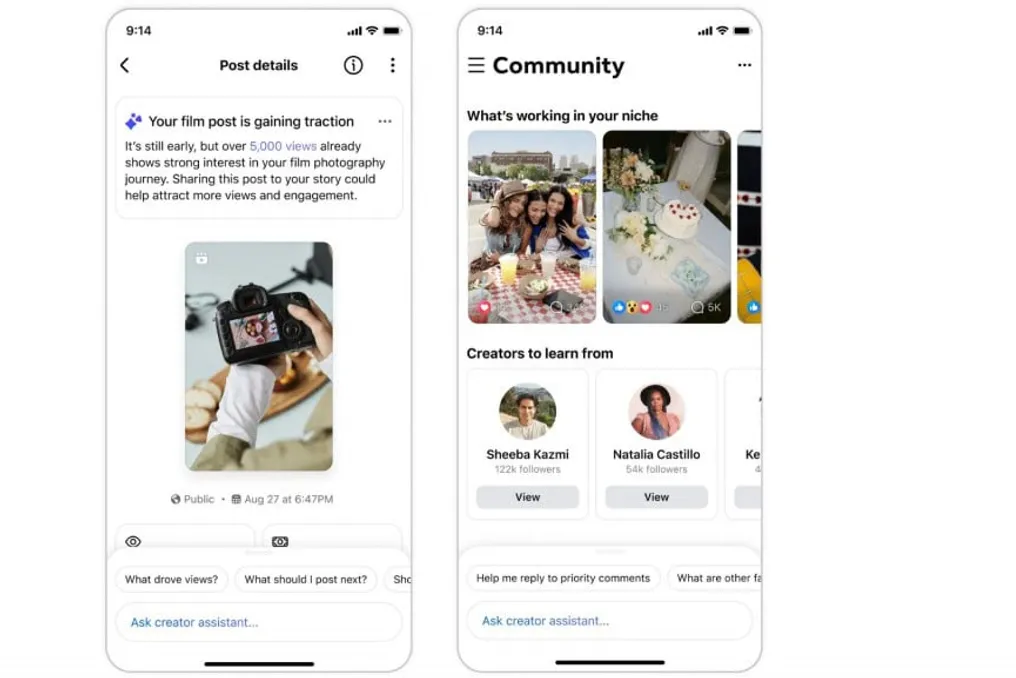
Meta has announced the overhaul of Facebook Creator Studio, transforming it from a management tool into a standalone artificial intelligence application. This initiative aims to support content creators and boost audience growth within the social network.
The application functions as a central hub for authors, offering personalized advice and quick answers about content, including optimal posting times. The system includes a chatbot assistant that analyzes the creator's profile and suggests ways to increase reach, engagement, and monetization. Furthermore, an AI-powered commenting feature has been introduced, which identifies significant interactions and suggests draft replies in the author's style. Concurrently, Meta is splitting the old Professional Dashboard into a Creator Dashboard and a Business Dashboard, while some features of Meta Business Suite are being moved to the web version.