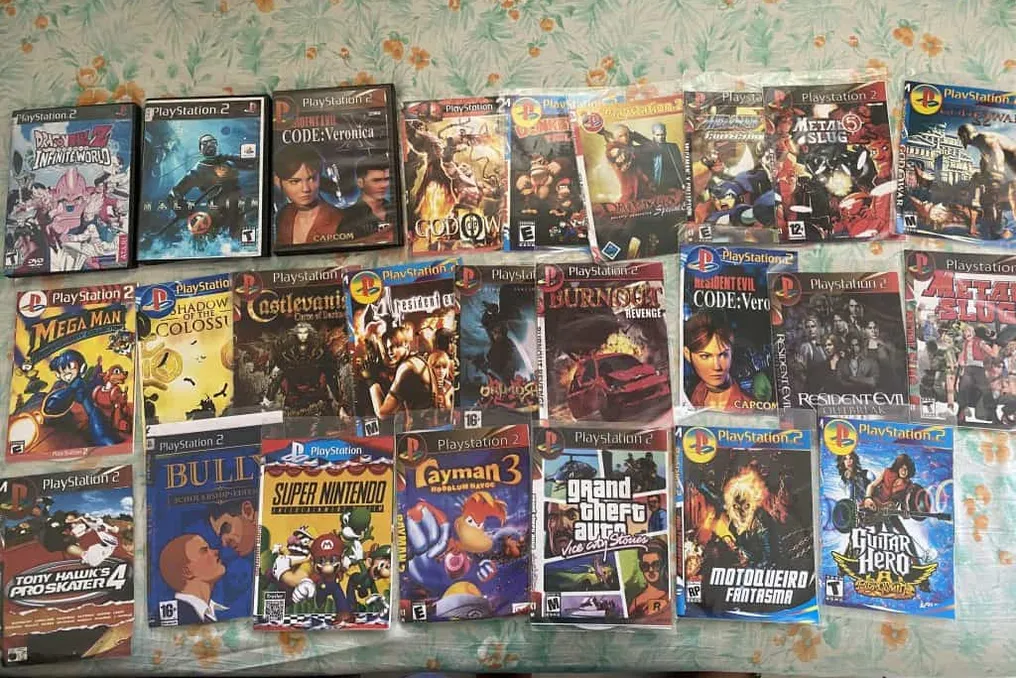
One of the largest global video game producers began its journey by selling pirated copies at street fairs in Warsaw. Marcin Iwiński and Michał Kiciński did not found the company with a focus on profit, but rather with the desire for Polish citizens to have access to the same games as the rest of the world. Thus, CD Projekt was born, driven by two gaming enthusiasts, without initial capital, an office, or alternative plans.
In the 90s in Poland, access to games was restricted to a small portion of the population. Although there was a Western market, it did not reach the country, which Iwiński and Kiciński considered unacceptable. The initial solution found was piracy, with copies sold at street stalls, at a time when the country was still recovering from the fall of communism.
However, selling illegal copies was not the ultimate goal. When the gaming market began to expand in Poland, the two entrepreneurs sought something that no distributor offered: the translation and dubbing of games into the Polish language. It was at this point that the business truly began to prosper.
The first major success came from an unexpected source: the localization of the game Ace Ventura (based on the Jim Carrey film) sold thousands of copies, surpassing the previous level of hundreds. With this confidence, they sought a larger project. They managed to convince BioWare and Interplay to allow them to translate and dub Baldur’s Gate into Polish, even when Interplay itself doubted the financial viability of the localization. CD Projekt assumed the full financial risk, hiring ten translators and over twenty actors, and delivered the title with a hardcover manual, map, and soundtrack included.
The first 3,000 units sold out three months before the release. Subsequently, they licensed up to 18 thousand copies at once, requiring them to rent a warehouse. The total exceeded 100 thousand copies, setting an absolute record in Poland and proving the existence of a market hungry for serious treatment.
Thanks to the success of Baldur’s Gate, CD Projekt became the official distributor for Atari, Konami, Microsoft, Sega, and Ubisoft in Poland. However, Iwiński and Kiciński never wanted to be just a distribution company, and Interplay catalyzed the next step. Taking advantage of Baldur’s Gate's notoriety in Poland, Interplay invited the duo to develop a port of Baldur’s Gate: Dark Alliance for PC. They accepted, assembled the team, and started development. However, Interplay faced a financial crisis and canceled the project, leaving the code in the custody of CD Projekt.
Instead of archiving the material, they decided to use it. In 2002, they formalized CD Projekt RED as a development studio, with the purpose of creating their own games, something they had never done. The process was one of continuous learning during production. The chosen title was The Witcher, based on the works of Andrzej Sapkowski. BioWare provided the Aurora engine in exchange for the work CD Projekt did with Baldur’s Gate in Poland and offered a spot at E3 in 2004 if the demo was well received, which it was.
The development of The Witcher lasted five years, cost 20 million zlotys (approximately US$ 4.7 million), and involved over a hundred collaborators. When released in 2007, The Witcher sold 35 thousand copies in the Polish market alone in the first three days, totaling 2 million units. Despite the obstacles during those five years, the biggest fear was bankruptcy in case of failure, but the project was completed successfully.
CD Projekt recognized that there was still a way to go. In 2011, they launched The Witcher 2: Assassins of Kings, accompanied by a crucial decision: abandoning licensed engines and developing their own, the REDengine. This meant greater creative autonomy, technical ambition, and high risk. The game doubled the sales of the first and received over 50 awards, gaining international prominence. In 2014, during an official visit to Poland, President Barack Obama mentioned The Witcher 2 in a speech in Warsaw, praising it as an example of Poland's role in the new global economy.
The definitive turning point occurred in 2015 with the launch of The Witcher 3: Wild Hunt, a monumental open world. Nowakowski, Co-CEO of CD Projekt, set an extremely bold sales target: 6 million copies over the game's lifetime. This goal was achieved in just three months. Nowakowski feared that Batman: Arkham Knight, released just over a month later, would compete, but Batman sold 5 million in the same period, and The Witcher 3 had already surpassed its own goal. The game accumulated over 250 Game of the Year awards and reached 65 million copies, ranking among the top 20 best-selling titles in history, consolidating a Polish studio as one of the largest RPG producers.
Cyberpunk 2077 was announced in 2012, three years before The Witcher 3 hit the market. CD Projekt generated enormous buzz through trailers and ambitious statements. At E3 in 2019, Keanu Reeves' appearance announcing his role as Johnny Silverhand caused the internet to explode, turning the game into the most anticipated of the generation and a cultural event.
Internally, after the success of The Witcher 3, there was a shift in mentality. Adam Badowski, Co-CEO, observed the transition from being considered disadvantaged to becoming a notorious company in the industry. This visibility generated a self-confidence that became dangerous. Nowakowski admitted there was an internal feeling that, regardless of the outcome, there would be a 'magic fairy' to solve any problem.
This trend had happened before. In February 2015, with The Witcher 3 about to be released in May, the game had numerous issues and seemed unfinished, being released with a last-minute patch. The company emerged unscathed from this experience, drawing an incorrect conclusion. With Cyberpunk, the scale was larger, the team was bigger, and the work was fragmented, with departments developing disconnected systems and side missions unrelated to the main plot.
In the final phase, the team realized the problems, resulting in weeks of intense work and successive delays: April 2020, September, and November. The game was released on December 10, 2020, without the expected miraculous intervention.
Although the game ran on powerful PCs, most players used consoles like PS4 and Xbox One. On these devices, the delivered product featured textures that failed to load, characters clipping through the floor, constant crashes, and frame rates below 20. CD Projekt later admitted that they had intentionally hidden the older console versions of the media before the launch, preventing prior testing on the PS4.
The public reaction was immediate. Shares, which were already declining due to the delays (nearly 29% before the launch), plummeted another 7.3% on the day of the launch. A week later, on December 18, Sony took an unprecedented measure for the platform: it removed Cyberpunk 2077 from the PS Store and initiated a wide refund campaign. On that day, shares fell another 22%, representing a loss of US$ 1.8 billion in a single day, and CD Projekt would lose more than 75% of its market value since its peak, returning to levels unseen since 2017.
In January 2021, Marcin Iwiński recorded a personal apology video, taking responsibility for the company's failure before millions of players.
After the apology video, the removal from the PS Store, and the sharp drop in shares, CD Projekt could have opted to release basic fixes, let the game decline slowly, and quickly announce a sequel to divert attention. However, the company maintained silence for almost two years, focusing only on updates without major marketing campaigns or redemption speeches. The game was gradually fixed, piece by piece, without a guarantee of audience return.
The turnaround occurred in September 2023 with two simultaneous releases. Update 2.0 completely overhauled the skill system, implemented police AI capable of chasing players with vehicles and helicopters, rebuilt combat from scratch, and adjusted driving physics. On the same day, the Phantom Liberty expansion, starring Idris Elba as Solomon Reed, was released, introducing a new region, intense political suspense, and a new ending for V. Critics summarized at the time that 'Phantom Liberty presents Night City better than Cyberpunk 2077 itself.'
In December of the same year, update 2.1 added a functional subway and mech battles. CD Projekt delivered content that the original game had promised but failed to deliver, for free, three years after the initial release. The results were evident: on Steam, the game reached 95% positive reviews, drastically reversing the negative critical landscape. Phantom Liberty sold over 10 million copies. Furthermore, the animated series Cyberpunk: Edgerunners, released by Netflix in 2022, attracted a new player base to Night City.
In July 2026, almost six years after the problematic launch, CD Projekt announced that Cyberpunk 2077 had sold over 40 million copies, with 5 million of those units sold between November 2025 and July 2026. This milestone was reached faster than The Witcher 3, which took seven years to reach the same volume. Nowakowski commented that these 40 million copies demonstrate the 'incredible and lasting strength of Cyberpunk 2077 and are proof of what CD Projekt does best: creating engaging, high-quality stories that keep players coming back for years.'
The success of Cyberpunk does not erase the past, as CD Projekt keeps its history visible. In an interview given to the Knowledge newsletter of EDGE magazine in June 2026, Nowakowski was frank about the studio's current state: 'I am not 100% convinced that we went through the entire arc of redemption. I am convinced that we lost the trust of some people indefinitely, and that is fair.'
Regarding the possibility of regaining this audience, the co-CEO showed caution: 'I hope we can regain them, whether with The Witcher 4 or with whatever comes next.' This stance contrasts with common industry practice, where companies tend to declare victories.