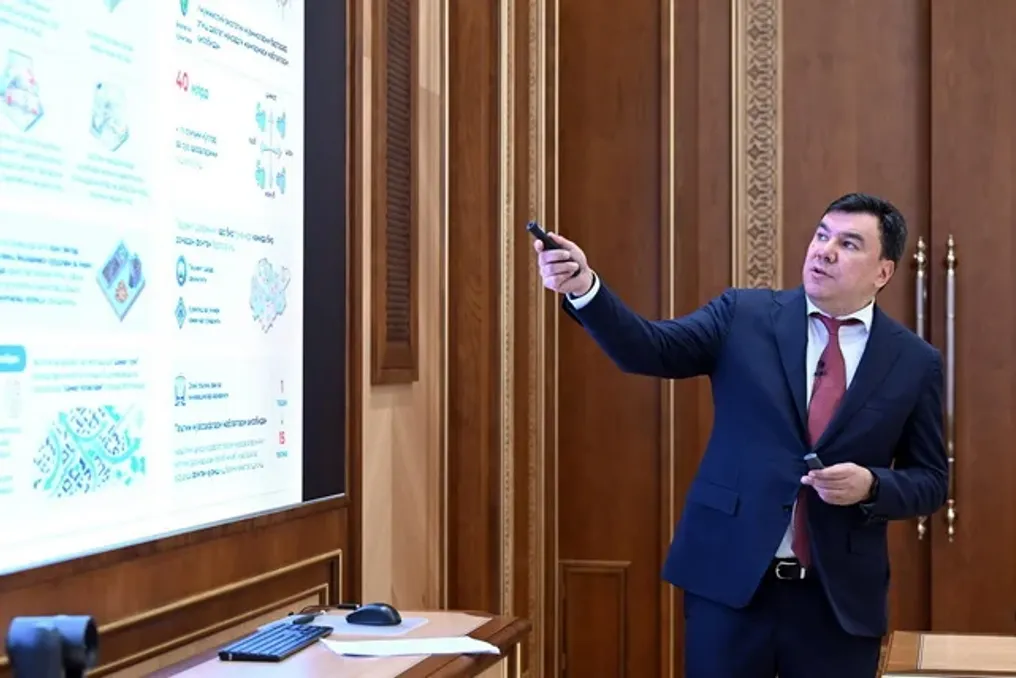
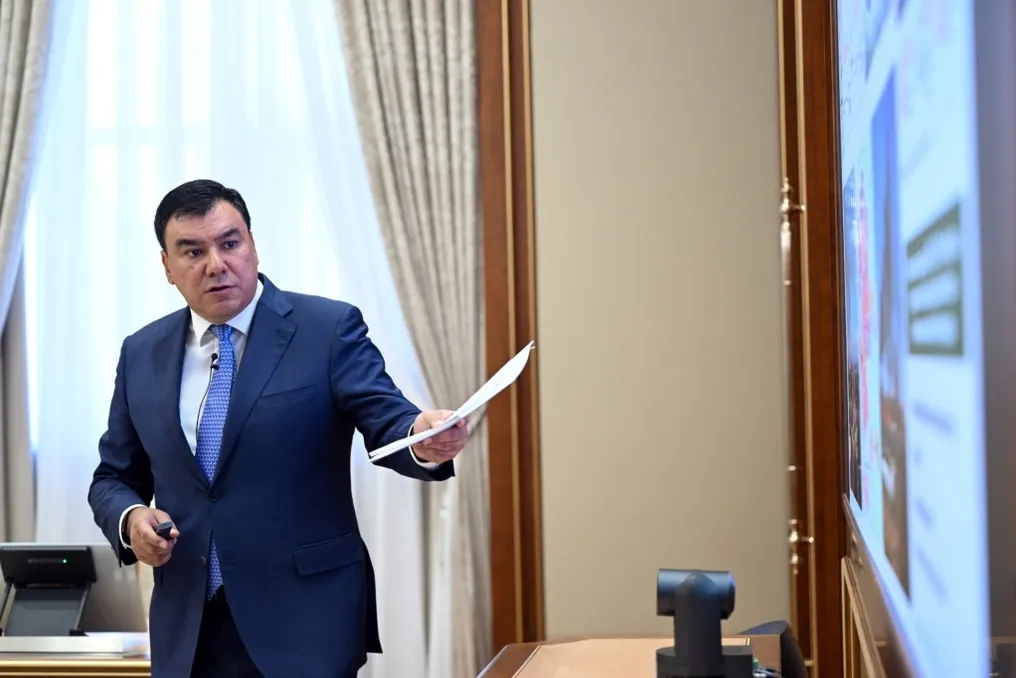
President Shavkat Mirziyoyev reviewed a set of proposals aimed at combating desertification, developing the economy in desert zones, and implementing the principles of creating a 'green city' in Uzbekistan.
Environmental Challenges in Central Asia
Currently, climate change, water resource depletion, and land degradation are critical environmental problems for the entire Central Asian region, directly affecting food security and agriculture. Approximately 80% of Uzbekistan's territory consists of desert or semi-desert areas.
Salinization of soils, sand drifts, and strong dust storms pose a serious threat to the Karakalpakstan, Bukhara, Navoi, Khorezm, as well as parts of Kashkadarya, Surkhandarya, and Jizzakh regions. The situation has been exacerbated by the drying up of the Aral Sea, which has transformed into the Aralkum Desert.
Progress in Greening and New Plans
Systematic planting of saxaul and other resilient species continues in the Aral Sea region. Over the past years, more than 2 million hectares of new forest plantations have been formed on the dried seabed. The 'Yashil Makon' project has demonstrated significant growth in greening across the country: from 8% in 2020 to 14.3% by 2025, thanks to the planting of over one billion seedlings.
The new phase of the strategy for the period 2026–2030 includes the creation and restoration of forests over an area of 1.27 million hectares, as well as the establishment of 16 thousand hectares of protective forest plantations in mountainous, foothill, and desert areas. Specifically, the planting of green cover is planned for 10 thousand hectares in the Surkhandarya region, and a 'green wall' of 84 kilometers will appear in the border areas of the Syrdarya region.
Desert Economy Concept
The head of state emphasized that desert lands should be viewed not only as an environmental problem but also as a potential source of economic growth. The 'desert economy' concept includes developing sustainable income sources on saline lands, cultivating halophytes, expanding livestock farming and ecotourism, and developing seed production of drought-resistant crops.
Specialized nurseries will be opened in Karakalpakstan, and pistachio plantations will be expanded in Babatag. Financing these measures will be provided by the regional seed bank and the attraction of private international investment.
International Cooperation and 'Green Samarkand'
The issue of strengthening environmental interaction in Central Asia was raised. Since land degradation does not recognize national borders, it was proposed to intensify the work of the Regional Scientific Research Center for Combating Desertification, increase the number of practical projects under the 'Green Shield' program, and jointly develop a strategy until 2040.
A key element of the presentation was the 'Green Samarkand' model. This metropolis, possessing historical significance and developed infrastructure, is slated to be transformed into a model of an ecologically sustainable and climate-adapted 'green city' of Central Asia.
Samarkand's Environmental Goals by 2030
By 2030, strict environmental goals are set for Samarkand: preventing the emission of 51.2 thousand tons of pollutants, reducing the concentration of hazardous particles PM2.5 and PM10 by 50% through the installation of filters on production facilities, reducing construction dust by 80%, and reducing harmful transport emissions by 50%. Additionally, the volume of waste in landfills must be halved, and the share of green areas must reach an average of 30%.
Urban Planning and Transport Reform
To monitor these large-scale processes, the 'Yashil Samarkand' project office is being established with the support of the regional hokimiyat and the National Committee on Ecology and Climate Change. A special ecological urban planning regime is being introduced in the city, obligating all new and reconstructed buildings to comply with 'green building' requirements, including the use of energy- and water-saving technologies.
Samarkand's transport policy includes purchasing 50 modern electric buses, installing 150 intelligent traffic lights, and fully transitioning all public transport and taxis to electric traction by 2030. The implementation of a 'Park & Ride' system and the gradual closure of the city center to private vehicles in favor of pedestrians and green spaces are planned.
To improve the microclimate in Samarkand, the creation of at least four artificial lakes, the construction of ten new fountains, and the restoration of 319 kilometers of irrigation networks are planned. Around the city, along the New Outer Ring Road, an extensive 'green belt' spanning 102.7 kilometers and covering 3532 hectares will be formed to provide protection against heat and dust.
Innovations in Urban Planning
In the field of urban planning, the construction of the ultra-modern 'Green City Samarkand' district, covering 300 hectares, is planned, where all infrastructure will meet high international ecological standards. Industrial enterprises will transition to digital monitoring and the 'Zero Visible Emission' concept, and eight largest factories of Hazard Categories I and II will be moved outside the city limits. The waste management system will be restructured according to the 'Zero Waste Samarkand' principle using smart photo- and video surveillance systems.
As part of the climate policy, the city will receive the 'Carbon Neutral Samarkand' roadmap and its own financial platform for climate projects, named the 'Green Samarkand Climate Finance Facility'. Shavkat Mirziyoyev approved all proposed measures, stating that their implementation will form the basis for transforming Samarkand into a leading regional center for green investments and innovation, and instructed responsible persons to begin practical work immediately.