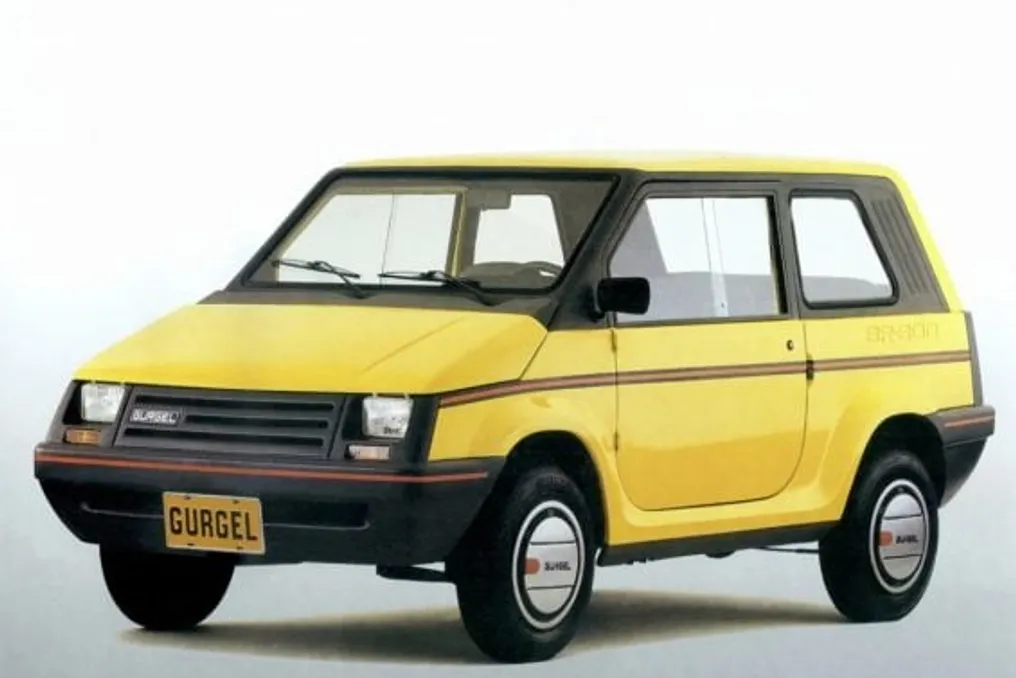
The Gurgel BR-800, a genuinely Brazilian project, was launched in 1988 with the intention of being a popular car option, but it ended up being a major failure, notably for presenting deficient finishing and unsatisfactory performance.
Gurgel's Context in 1987
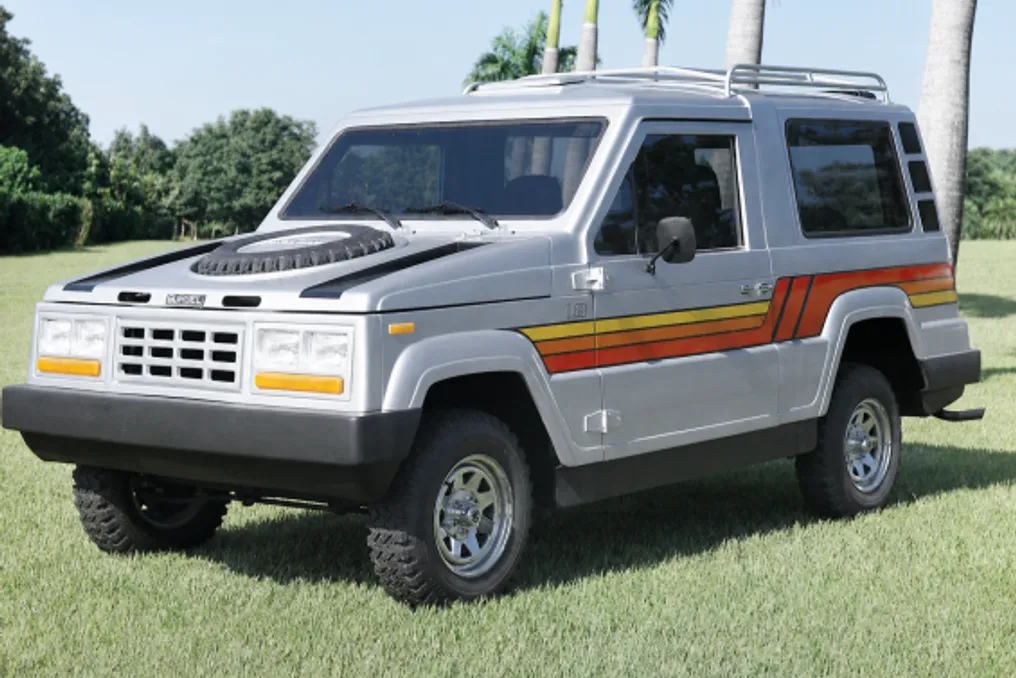
In 1987, Gurgel enjoyed a good period thanks to the success of the X-12, a jeep characterized by having a fiberglass body and using much of the mechanics from air-cooled Volkswagen vehicles. This vehicle was robust, easy to maintain, and capable of traversing difficult terrain because it inherited the front suspension, brakes, steering, platform, engine, and gearbox from German models, with only the rear torsion bars replaced by helical springs.
In this positive scenario, Gurgel decided to undertake a riskier move: creating a compact urban automobile. The goal was to meet the demands of those traveling in large cities, designing an economical, agile, easy-to-park, affordable car suitable for both small families and daily professional use.
Development and Strategy of the BR-800
To speed up the development process, the manufacturer opted to incorporate mechanical components already available on the market, aiming to reduce costs and eliminate long testing and validation cycles. Thus, the BR-800 emerged, which used suspension parts from one manufacturer, steering components from another, in addition to brake assemblies, gearbox, differential, and other parts available in the national industry.
Mechanical Details of the Engine
In the engine area, Gurgel's engineering had to perform more in-depth work. Starting from the air-cooled Volkswagen 1600 engine, engineers developed a new block with only two cylinders. Maintaining the original diameter and stroke dimensions, they created a powertrain with about half the volumetric capacity, transforming the old 1600 into an 800 cm³ engine. The crucial distinction from the Volkswagen assembly lay in the cooling system: while the German engine used air, Gurgel implemented liquid cooling by encasing the cylinders and cylinder heads.
The engine flywheel and clutch were practically identical to those used by Volkswagen. Mounted longitudinally at the front, the engine was connected to a Chevette gearbox and used the driveshaft, universal joints, and part of the Chevrolet model's rear axle, a strategy that simplified the design and reduced development costs.
Commercial Planning and Nomenclature
According to the discourse of the time, all these components had already been validated by other companies, which allowed Gurgel to considerably accelerate the production schedule. In 1987, the company was already working on installing the factory, operational costs, and determining the sales volume necessary to meet the expected demand for an economical popular car. To raise funds, Gurgel began issuing shares in the market, promising shareholders priority in acquiring the first units, whose production was scheduled to begin in 1988, generating great anticipation among consumers.
Name Change and Market Reception
Initially, the model was named CENA, an acronym for Carro Econômico Nacional (National Economic Car). Due to the phonetic similarity with the surname of Ayrton Senna, a prominent figure in Brazil, the driver filed a lawsuit alleging possible image association. The request was granted, forcing Gurgel to change the name to BR-800, a reference to Brazil and the engine's displacement.
Structurally, the BR-800 was built on a steel tubular chassis and covered with a fiberglass body, standing out for its extreme simplicity. Even compared to the popular cars of that period, the finish was extremely basic and fell short of public expectations. Upon arriving at dealerships, various criticisms arose, as the promise of an accessible, practical, comfortable, and economical vehicle did not materialize as expected.
Performance and Final Results
With a price between US$ 5,000 and US$ 7,000 at the time, the BR-800 was 20% to 30% cheaper than competitors like Gol, Uno, and Chevette. However, it offered little interior space and a very simple finish, with fuel consumption only marginally higher than rivals. Performance was also disappointing: the maximum speed reached about 110 km/h, which made highway travel unpleasant, keeping the cruising speed close to 80 km/h, considered low for Brazilian roads.
Acceleration was another critical point, as the BR-800 took between 40 and 45 seconds to reach 100 km/h, a time far from what was expected even for a popular car. Due to these factors—simplified finish, reduced space, fragile construction, and modest performance—the initial appeal of the model quickly disappeared, frustrating many buyers. Produced between 1988 and 1991, the BR-800 manufactured approximately 7,100 units, a number much lower than Gurgel's projections. In 1992, it was succeeded by the Supermini, a direct evolution of the original project, which continued until the manufacturer's bankruptcy in 1995. Despite the limitations and wrong choices that prevented its commercial success, the BR-800 remains a relevant chapter in the Brazilian automotive industry.