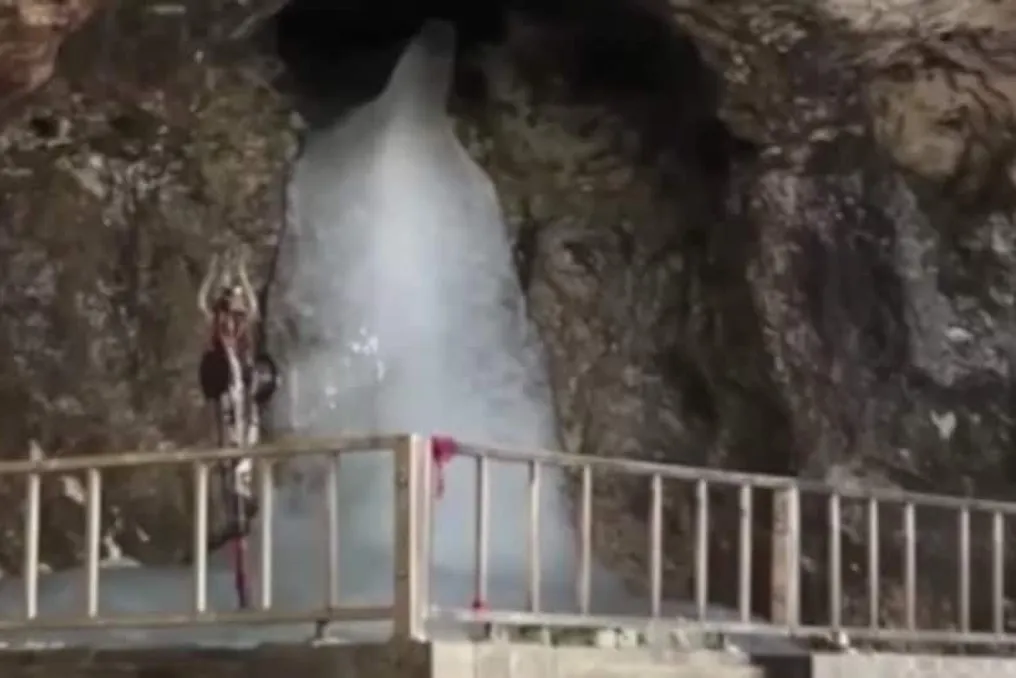
The sacred ice Shivling, which forms naturally in the Amarnath cave, melted in just four days. The pilgrimage was planned to last 57 days, but in the past four days, it has been reported that the size of the sacred Shivling in the Amarnath cave has significantly decreased, losing over 90% of its volume.
Reasons for the Ice Shivling's Melting
Several potential reasons for this phenomenon exist, including rising temperatures, increasing average annual figures in the Himalayan region, changes in weather patterns, and global climate change. Additionally, the expansion of infrastructure and development occurring at the expense of nature have been cited as significant factors.
Infrastructure Development and Crowds
Previously, the route to the Amarnath cave was difficult, but after ten years of development, amenities have appeared. Roads to the cave have been widened, the number of temporary tents and shops has increased, and the langar system has been brought closer to the cave. The recent approval of a cable car project for pilgrims, along with discussions about building a tunnel between Sheshanag and Pandjatarani, may improve conditions for devotees.
Impact of Development on Nature
However, the question arises regarding the benefit of such development if it leads to the degradation of nature around the Amarnath cave and the accelerated melting of the Shivling in just four days. During the first ceremony, held on June 29, the sacred ice Shivling measured 12 feet. Deputy Governor of Jammu and Kashmir, Manoj Sinha, attended this ceremony. The pilgrimage began on July 3, and it was already noticeable then that the Shivling's size had started to decrease. The situation worsened on July 6, when the Shivling lost over 90% of its volume and became less than one foot.
History of the Shivling's Melting
This is not an isolated incident: in 2018, the sacred Shivling melted in only 29 days. In 2020, during the COVID pandemic, it melted in 38 days. In 2022, it happened in 28 days, and in 2024—in just one week. There is a suggestion that this year the Shivling might also completely melt in a week, with the main reason being the increase in the number of pilgrims and the improved conditions for them.
Increase in Pilgrims
If two decades ago no more than 100,000 pilgrims visited the cave annually, the flow of tourists has increased significantly with infrastructure development. In 2003, 170,000 people came for the pilgrimage, and in 2011 and 2012, this figure exceeded 600,000. After the killing of terrorist Burhan Wani in 2016, the number of pilgrims dropped to less than 250,000, but since 2022, there has been a new rise, with 410,000 people visiting last year.
Change in Shivling Size
It is important to note that previously, when there were fewer pilgrims, the Shivling reached a size of 18–22 feet. Currently, the maximum size is 12 feet, and it melts earlier than scheduled. The main reasons for this are the rapid increase in temperature at an altitude of about 18,000 feet where the Amarnath cave is located, as well as climate change, global warming, and the increase in the number of people.
Changes on the Route
Up to twenty years ago, the path to Amarnath was entirely natural, consisting of dirt and rocky trails, and reaching the cave at such an altitude was not easy. However, the situation has gradually changed. For example, the path from Pandjatarani to the cave was a natural trail passing through rocks and melted glacial water. Now, LED lights, rest areas, power lines, JCB-type construction equipment have been installed along this route, and slope expansion work has been carried out, leading to changes in the local nature. These changes have resulted in mountains that were previously covered in snow now appearing dry and covered with earth.
Temperature Rise in the Region
This is happening because the region's nature is rapidly changing, and due to increased human traffic, people can now reach the Amarnath cave even without warm clothing. Even on Mount Mahagunas, where Lord Shiva is said to have left his son Ganesha, the average temperature has risen, although this peak was previously covered in snow. This phenomenon is occurring in the Himalayan region, causing about 10 glaciers around the Amarnath cave to melt. Simply put, just as ice frozen in a freezer melts when taken outside, huge glaciers are melting due to increased temperature and heat, which is currently happening in Amarnath. Changes in the Amarnath ice Shivling make one wonder: if it melts in a week today, it might cease to form at all in the future due to global warming.