Volkswagen is preparing the second generation of the compact crossover Nivus, which is expected to arrive in Brazil next year. Prototypes of the model are already being tested, disguised to hide the adoption of a new platform.
Volkswagen is preparing the second generation of the compact crossover Nivus, which is expected to arrive in Brazil next year. Prototypes of the model are already being tested, disguised to hide the adoption of a new platform.
The new structure will be based on the MQB Hybrid architecture, replacing the MQB A0 due to its support for hybrid systems. This platform change will allow the Nivus to gain in length, wheelbase, and width, slightly distancing it from the traditional compact segment.
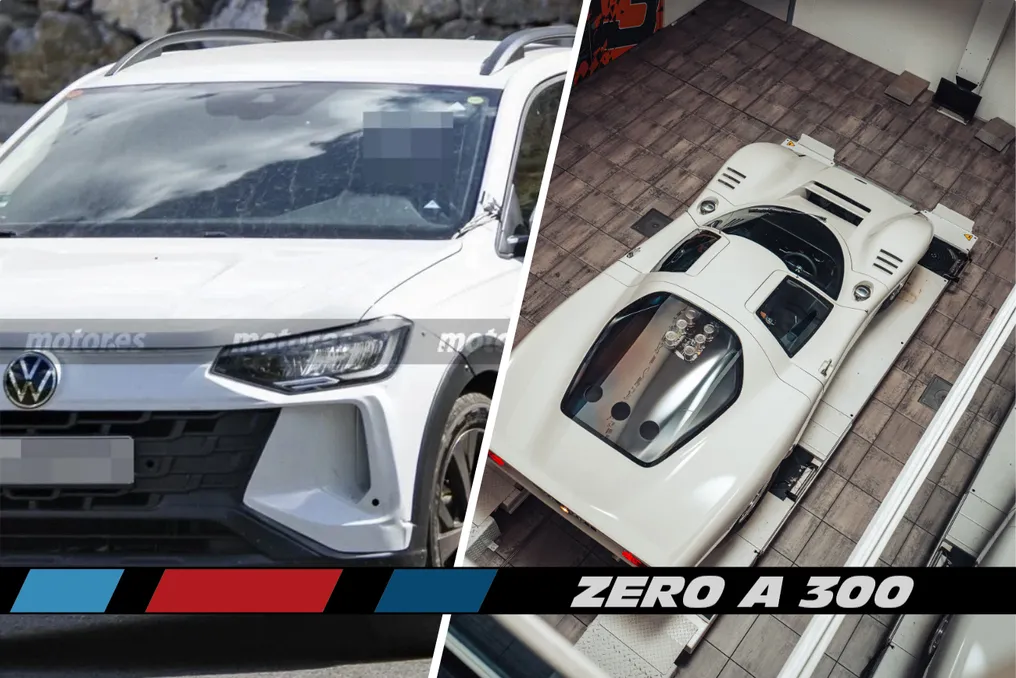
Prototypes were spotted by vehicles from the website Motor.es, appearing similar to the VW Taigo (European version of the Nivus), except for the front end, which uses a VW Tera bumper to accommodate structural changes, mainly in the front width. The wheelbase will increase by 9 cm, reaching 1.65m, which will significantly benefit the legroom for rear passengers, a weak point of the current model.
The suggested powertrain options indicate a change in the strategy for the new Nivus. The 1.0 turbo engine should be replaced by the 1.5 TSI Evo 2, which can run on gasoline or ethanol and will be combined with a 48V mild hybrid system in entry-level versions. This configuration generates 150 hp and 25.5 kgfm of torque, using a six-speed automatic torque converter gearbox.
In higher versions, the MHEV system will be replaced by a full hybrid (HEV) setup, keeping the 1.5 turbo engine but with more power: 170 hp and 31.6 kgfm of torque. In this case, the transmission will be a seven-speed dual-clutch unit.
To celebrate Fiat's 50 years in Brazil, which began with the iconic 147 in 1976, the manufacturer launched a special series for the Toro pickup and the Fastback crossover, both with 550 units available.
The Toro, based on the Volcano version, features exclusive 'Maximum Steel' gray paint, commemorative emblems, and darkened details on the wheels and trim. It has a black roof, and the interior features suede upholstery on the doors and seats, with 'Fiat 50 Years' embroidery and a special message on the dashboard. It is equipped with a 10-inch multimedia center and an ADAS package, including automatic braking, lane departure warning, front parking sensors, blind spot sensor, and rear cross-traffic alert. Its engine is the 1.3 turbo flex with direct injection and a 48V mild hybrid system, delivering 176 hp and 27.5 kgfm of torque, coupled to a six-speed automatic gearbox.
The Fastback Special Edition Fiat 50 Years follows a similar aesthetic but in Amalfi Blue. Based on the Fastback Impetus, it stands out with a panoramic sunroof. It includes a digital dashboard, a 10.1-inch multimedia system with wireless connectivity for Apple CarPlay and Android Auto, and an ADAS package with emergency automatic braking and lane keeping assist. The engine is the 1.0 GSE turbo flex with a mild hybrid system, producing 130 hp and 20.4 kgfm of torque, connected to a simulated seven-speed CVT gearbox. Fiat has not yet disclosed the prices for this special series, which will start selling next Thursday (9).
Previously, it was explained that the growth of Chinese EVs was driven by local incentive policies. However, preliminary data from the China Passenger Car Association (CPCA) shows a 13% contraction in the market compared to the previous year, after hundreds of brands were created and supply exceeded demand.
Several factors contribute to this decline, such as local economic instability, leading Chinese consumers to wait for a possible price war. Additionally, the gradual withdrawal of government subsidies has reduced the appeal of EVs compared to hybrids. The Chinese government has already cut tax exemptions this year and confirmed that it will completely eliminate annual incentives for electric, hybrid, and fuel cell vehicles starting January 1, 2027.
This local slowdown may impact the global market, especially large importers like Brazil. Due to excess stock, reduced margins, and financial risks, Chinese manufacturers need to export this surplus. Brazil has an incentive program for these vehicles coming from China. Analysts predict that China will continue to break export records in 2026, projecting 10 million units, a 41% increase over last year.
Currently, only three manufacturers actually profit in China—BYD, Xiaomi, and Leapmotor—two of which are strong in Brazil. Consulting firms like AlixPartners estimate that at most four more brands will survive this crisis, citing GWM and Geely. The others will face bankruptcy or merger.
Bruce McLaren is a prominent figure in motorsport history, known for victories in Formula 1 and the 24 Hours of Le Mans, and for founding McLaren. His main aspiration, however, was to apply his track experience to creating road cars. Although McLaren became a major supercar manufacturer, the New Zealander died in 1970 during testing of the McLaren M8D.
The M6GT, the car conceived by Bruce McLaren, was a closed, street-homologated version of the CanAm prototypes. More than half a century later, McLaren officially realized this concept through McLaren Special Operations (MSO), creating a unique example based on the final design of the 1960s.
The project focused on historical fidelity, avoiding modernizations. The chassis was taken from a contemporary M6A race car, and the body replicates the original molds, preserving even minor development modifications made during tests of that decade. Mechanically, the vehicle uses a central-rear V8 small-block engine with heads identical to the originals, along with period transmission and suspension. The artisanal work included the manual fabrication of hidden structural elements and the replication of the windshield via digital scanning. The interior features green vinyl seats and a walnut wood gear knob. The exterior paint, Colnbrook White, pays tribute to the region where Bruce began his activities, evoking the look of the 1966 McLaren M2B Formula 1.
The M6GT will be displayed at the Goodwood Festival of Speed, alongside models such as the Can-Am M8A and the McLaren F1 GTR, representing the DNA of all McLaren road supercars.
After ceasing operations in Russia in March 2022 due to economic blockade, the Avtotor factory in Kaliningrad was not dismantled. Instead, it ignored the end of the partnership and resumed production of the X5, X6, and X7 models using spare parts left in the warehouses, without authorization from the German headquarters, which disclaimed any responsibility.
Although sales in authorized dealerships dropped drastically to 505 units in 2023, the brand managed to regain leadership in the Russian premium segment in 2025, thanks to the importation of wheels from China and neutral countries. However, the Kaliningrad scheme is considered marginal. Local media reports that more than 145 of these 'unlicensed' SUVs were sold between 2025 and 2026 to wealthy clients. The price of an X5 produced under this scheme starts at 11.9 million rubles (approximately US$ 155,000), making it more competitive than that practiced by independent importers.
A notable aspect of this survival engineering is the embedded technology. Since Avtotor workers are merely assembling a puzzle with what remained before the embargo, the cars are dated 2025 and 2026, but retain the mechanics and appearance of 2022 models. Later aesthetic or technological facelift updates are absent. Furthermore, since BMW no longer participates, the ECUs do not receive official updates, which has become a selling point: these SUVs cannot be remotely blocked or disabled by BMW programmers in Germany.
To keep production active, the factory had to improvise with components from Russian manufacturers, expanding local production to models like the X6 40d, which was not originally manufactured there. Parallel production will only cease when the core stock runs out, unless they find a local or Chinese supplier to replicate the components.
The first batch of the Ferrari Luce model, intended for the Chinese market, was completely sold in just over 35 days after its presentation. Despite negative expectations about the car, the initial sale of 88 units, announced by Car News China and Beijing Business Today, demonstrates that the model appealed to the Chinese public, who highly value the Ferrari brand, even in simpler electric vehicles.
The initial batch of 88 units was offered locally for 3.98 million yuan, a slightly lower price than practiced in Europe. However, this is only the base price and can increase significantly during the customization process. This success corroborates Ferrari's positioning, indicating that the Luce was designed for an audience that might not be looking for a traditional Ferrari model.
In parallel, Ferrari shares showed positive performance. The day before the announcement, they closed higher at $372 on the New York stock exchange, and opened the following day at $374. Since the launch of the Luce, shares have appreciated by 13.6%, remaining at levels similar to last October, when investment plans for electrification were disclosed.
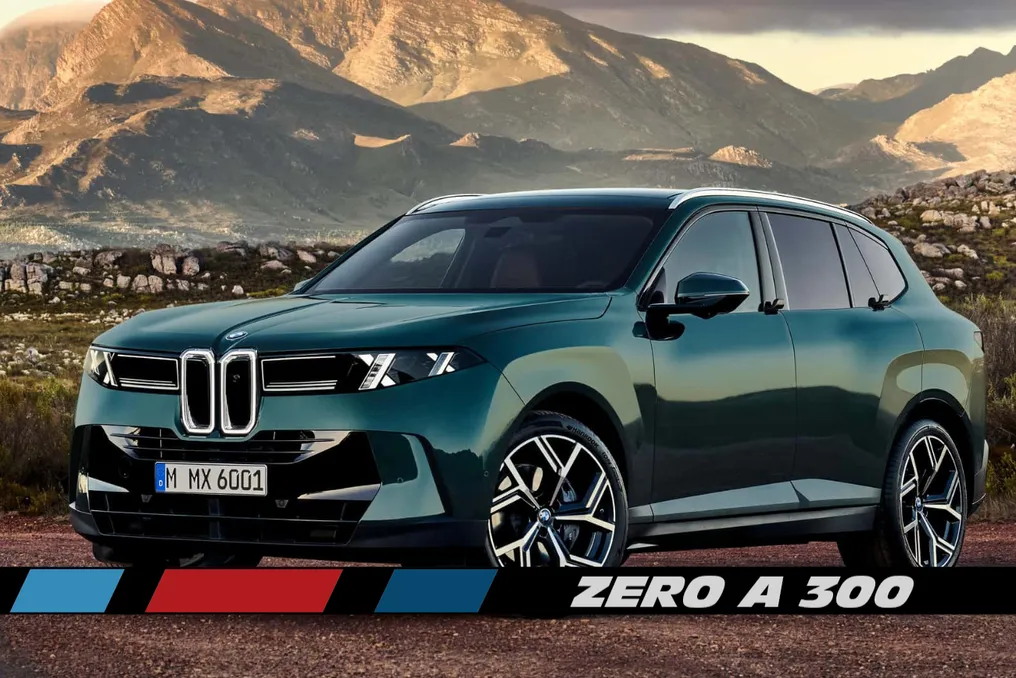
After nearly three decades of influence in the luxury SUV segment, the new BMW X5, in G65 and G78 versions, arrives with a striking aesthetic transformation, following BMW's 'Neue Klasse' philosophy. Unlike previous generations, which maintained an evolutionary design, the new X5 has a distinct appearance, reminiscent of a larger version of the iX3, the electric SUV that introduced this new visual identity.
The X5 incorporates characteristic elements, such as 'X'-shaped headlights that can be activated by a button and turn yellow. The 'double-rim' grille remains, now featuring lighting called 'Iconic Glow'. A notable functional change is the tailgate, which now opens upwards, an awaited improvement justified by BMW for aerodynamic reasons. Internally, the evolution is more subtle, maintaining the cabin architecture but introducing advanced features, such as an additional 14.6-inch Full HD screen for the passenger and optional slate finishes on the center console.
BMW offered five powertrain options. Traditional enthusiasts can opt for the three-liter turbocharged six-cylinder engine in the X5 40 xDrive version, now with 400 hp and 58 kgfm of torque, with future confirmation of an M Performance V8. For long journeys, there is the 40d diesel variant with a mild hybrid system, delivering 313 hp. Plug-in hybrids offer 489 hp in the 50e version, with an all-electric range of 102 km, and an impressive 612 hp in the M60e configuration. The big news is the iX5 60 xDrive, fully electric, which produces 578 hp and 82.1 kgfm of instant torque, accelerating from 0 to 100 km/h in 4.6 seconds. This model weighs 2,900 kg but features a 141 kWh battery integrated into the chassis, providing an 845 km range in the WLTP cycle and support for ultra-fast charging of 460 kW. Finally, a hydrogen-powered version, developed in collaboration with Toyota, is expected to launch by the end of 2027. Production in the US begins in August, and the new X5 is expected to arrive in Brazil in 2027.
The Corvette C8, which revolutionized the market by adopting the mid-rear engine, transforming from an American GT into a supercar, solidifies this proposition with the 2027 lineup. The basic model, Stingray, replaced the 6.2-liter LT2 V8 with the new 6.7-liter LS6 V8. This engine generates 535 hp and 71.9 kgfm of torque, setting a historical record for mass-produced naturally aspirated V8 engines. This update granted the Stingray an increase of 10 km/h in top speed, allowing it to reach 320 km/h.
With a cost of US$ 73,495, the Corvette Stingray allows American drivers to acquire a car capable of reaching 320 km/h, a mark previously reserved for more expensive supercars. This price is comparable to that of the Audi S5 in the United States, placing it at an accessible level for the new car market.
On July 1st, Lamborghini presented the Urus SE Performante, which returns to the name with a powerful 810 hp engine, surpassing the standard Urus SE by 10 hp and 102 kgfm of torque. This performance allows the SUV to reach 100 km/h in 3.3 seconds and a top speed of 312 km/h, classified by the manufacturer as the fastest SUV on the planet.
To achieve these metrics, the four-liter twin-turbo V8 operates alongside a 25.9 kWh electric drive, which offers up to 60 km of range in pure electric mode. The eight-speed automatic transmission and all-wheel drive have been recalibrated for greater agility. Dynamically, the dual-chamber air suspension reduced body roll by 55% and vibrations by 25%, resulting in an SUV that is 12% more agile in maneuvers. Engineering also reduced the total weight by about 49 kg, using carbon fiber on the hood, roof, and side skirts, and incorporating the Akrapovič titanium exhaust, totaling 2,473 kg. Aerodynamic improvements, including new spoilers and rear diffusers, reduced drag by 3% and increased downforce by 23% compared to the SE version.
The collaboration between Toyota and Joby Aviation, which already involved hundreds of millions of dollars in investments since 2020, advanced with the creation of the 'Joby Toyota Aero Manufacturing Preparation Company'. This new joint venture, based in California and majority-owned by the Japanese automaker (51%), aims to combine Joby's experience in electric aircraft development with Toyota's production optimization. The initial focus is not on vehicle design but on creating an assembly line that ensures productivity, quality, and viable costs for commercial urban aviation.
The first product to benefit from this agreement is Joby's eVTOL, designed to operate as an air taxi. This model uses six tilting rotors to allow for vertical takeoff and, at cruising altitude, rotates to operate as a fixed-wing aircraft, reaching speeds of up to 322 km/h. With capacity for four passengers and one pilot, the eVTOL prioritizes safety redundancies and a set of four batteries to ensure autonomy on urban routes, aiming to integrate ground and air transport in partnership with companies like Delta and Uber. Akio Toyoda, Chairman of the Toyota Board, sees this initiative as a continuation of the brand's mission to promote mobility, seeking to transform personal air transport into a consolidated urban alternative.
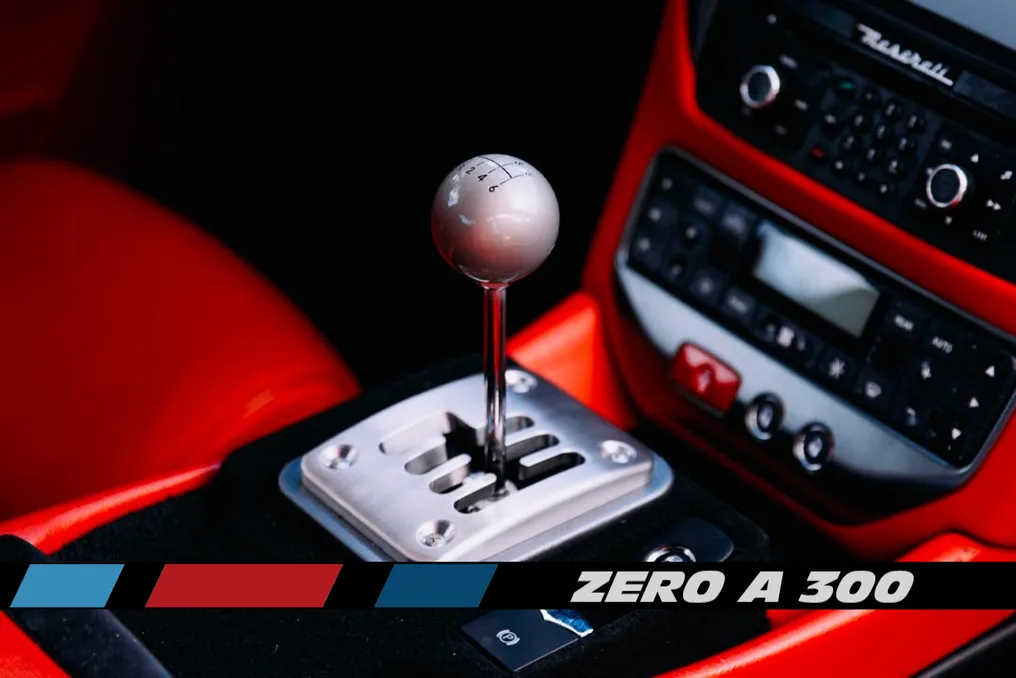
Recent research indicates that practicing driving a vehicle with a manual transmission acts as an exercise for the brain, aiding in maintaining mental health. This finding was revealed by neuroscientists from the Institute of Development at Tohoku University, located in Japan.
The study, led by Professor Ryuta Kawashima, discovered that the physical coordination required to operate a manual gearbox directly stimulates the prefrontal cortex. This brain area is fundamental for essential cognitive functions such as focus, short-term memory, attention, and quick decision-making.
Researchers observed that the need to constantly monitor the tachometer, mentally calculate the appropriate gear for the car's speed, ease off the accelerator, and precisely synchronize the left foot and right hand constitutes low-intensity daily brain training. Thus, the brain of someone who drives a manual car daily is forced to remain active and agile, which helps reduce the natural cognitive decline associated with aging. The study also points out that this benefit does not occur when driving an automatic car, as the driver adopts a more passive cerebral posture.
Interestingly, this scientific basis emerged at a time when manual cars are in great scarcity, being mostly restricted to sports models. In Japan itself, only 1% to 2% of new cars sold leave the factory with a manual transmission. In the United States, the proportion is even smaller, fixed for decades at only 0.7% of the market, with about 24 brand-new models available. Western Europe remains the main global refuge, with countries like Spain and Italy showing adoption rates of 41% and 48%, respectively.
In parallel, the Brazilian automotive sector is receiving announcements of new features. Renault confirmed the official presentation of the Kwid restyling in India for July 3rd, signaling future changes in Brazil. The gasoline Kwid will incorporate visual elements from the E-Tech electric version, such as a split optical unit with Y-shaped LED daytime running lights on the new grille, while the main headlights will remain on the redesigned bumper with halogen lamps to control costs.
Domestically, Renault will renew the Kwid dashboard with a 10-inch multifunctional screen and wireless mirroring, using the Kardian steering wheel. However, in the national model, it is expected that the safety package will remain basic, and advanced electronic features, such as autonomous emergency braking, will likely be omitted, maintaining simplicity in entry-level configurations. The national engine will continue to be the naturally aspirated 1.0L three-cylinder SCe, coupled exclusively with the five-speed manual transmission.
MG announced that in addition to the electric MG4 Urban, it is developing new flex engines for its hybrid models intended for the Brazilian market, and there are strong indications of new SUV launches. The company will invest R$ 400 million, with R$ 60 million allocated to preparing the PACE factory in Ceará, and the remainder for R&D.
In the Japanese scenario, Honda and Nissan resumed talks about a possible collaboration, seeking to mitigate costs after Honda recorded a historic loss of US$ 46 billion last year. Reports indicate that the two companies may jointly develop a crossover and a mid-size SUV, following a resource-sharing strategy. Honda, which canceled the development of a purely electric vehicle line to contain losses, is now focusing on hybrids, such as the new generation Civic, aiming for recovery by 2030.
Finally, Lada presented its new utility vehicle, the Lada Iskra SW, which has a naturally aspirated engine, manual transmission, and stamped steel wheels. Based on the Renault Kardian platform, this updated version replaced the CVT with a six-speed manual gearbox. The entry-level version omits luxuries, offering modest performance, with 0 to 100 km/h acceleration in 12.7 seconds, but includes amenities such as an 8-inch multimedia center and heated front seats.