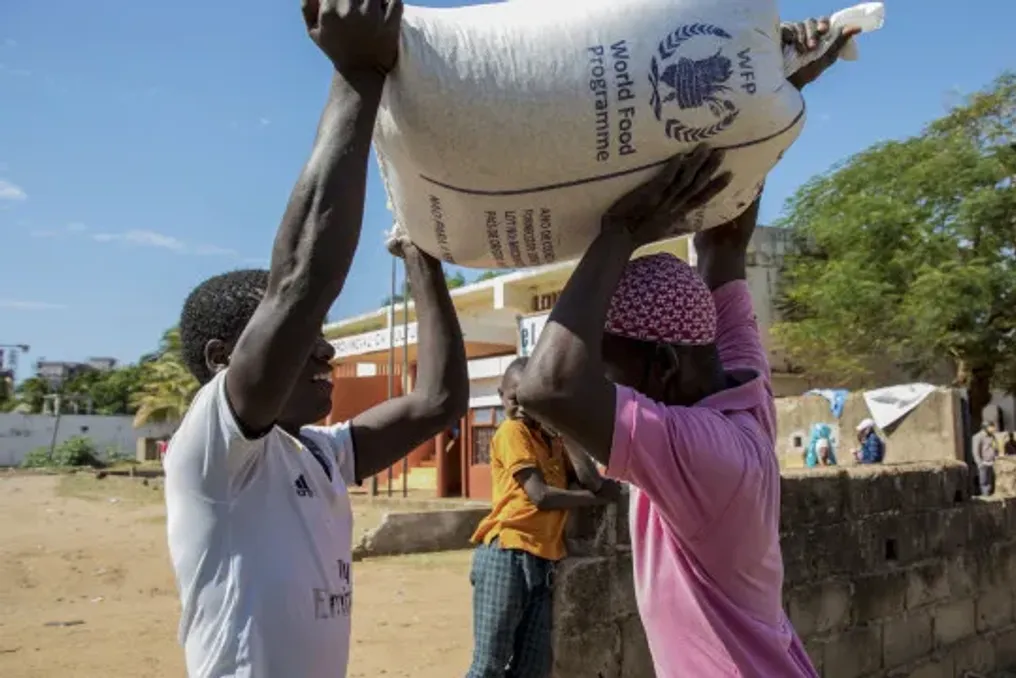
According to the latest report from the United Nations agency, WFP provided support to 427,008 individuals in Mozambique during the month of May. This support was delivered through the distribution of over 2,253 tons of food and the transfer of $2.78 million (equivalent to 2.40 million euros) in financial aid.
Scaling Up Humanitarian Assistance
The document explains that after a forced reduction in the program in March due to funding issues, securing extra resources allowed WFP to increase assistance, targeting 425,000 people between April and May, surpassing the approximately 250,000 served in the previous cycle.
Focus on Cabo Delgado Province
Cabo Delgado province, located in northern Mozambique, which has large natural gas reserves and has been the scene of an armed insurgency since 2017, recorded the highest number of beneficiaries of humanitarian aid. In this April and May distribution cycle, 247,800 people affected by the conflict were supported, representing 58% of the target set for this period.
Additionally, 2,400 people received assistance in Palma through the UN Joint Response Program as a rapid response measure following severe floods.
Security and Recovery Challenges
The report points out that instability persists and continues to hinder recovery efforts in the northern part of the country. More than 506,000 people are internally displaced, while approximately 715,000 have returned to their areas of origin, often facing difficulties accessing essential services, agricultural land, and livelihoods.
Health and Nutrition Support
In parallel, WFP supported national health and nutrition services, delivering 119 tons of specialized nutritious food to 112 health units in Cabo Delgado. This food is intended for the treatment of moderate acute malnutrition in children under five years old, pregnant women, and lactating mothers.
The UN agency warns that Mozambique faces a complex humanitarian crisis, caused by the combination of climate shocks, armed conflict, and enduring socioeconomic vulnerabilities. Floods and long periods of drought during the 2025/26 agricultural campaign impacted over 518,000 hectares of cultivated land, with more than 312,000 hectares destroyed. This situation resulted in decreased agricultural production, reduced family incomes, and depleted food reserves in various regions of the country.
Assistance in Other Regions
The report also mentions that WFP assisted national health systems to cope with floods and droughts in the cities and provinces of Maputo, Gaza, Sofala, and Inhambane. This support included providing nutritional material, screening, and treating malnutrition, in addition to supporting frontline health professionals, ensuring the continuity of vital services for vulnerable groups affected by the shocks.
Economic Concerns and Funding Needs
WFP alerts that the increase in transport costs and food prices is intensifying the vulnerability of the poorest families, especially women, children, and displaced populations, who depend on humanitarian aid to meet their basic needs.
To maintain operations, the organization estimates the need for $129.3 million (113 million euros) between May and October 2026. If additional funding is not secured, WFP predicts that the current level of assistance can only be maintained until December, with new cuts expected starting in January 2027.
Violence and Conflict Monitoring
The Armed Conflict Location & Event Data Project (ACLED) recorded 11 violent incidents in the first two weeks of June in Cabo Delgado. All these events involved Islamic State extremists and caused eight deaths, raising the total number of fatalities since 2017 to 6,632.