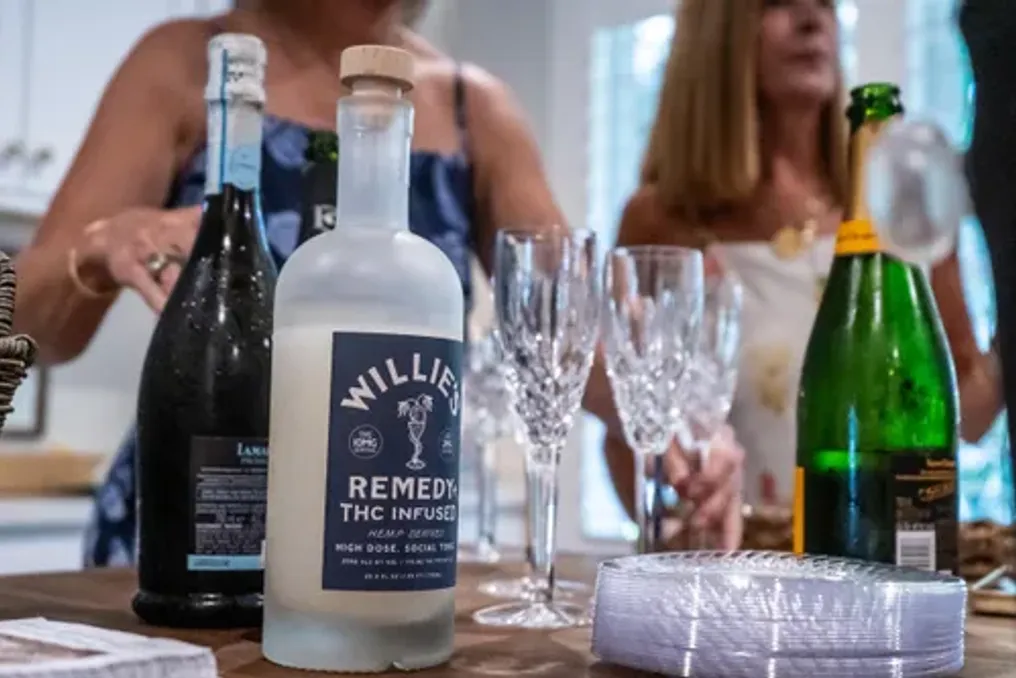
A growing trend is observed in the US to replace traditional alcoholic beverages with non-alcoholic drinks containing tetrahydrocannabinol (THC). During Independence Day barbecues, Americans more often chose cans of cannabis instead of beer.
>A growing trend is observed in the US to replace traditional alcoholic beverages with non-alcoholic drinks containing tetrahydrocannabinol (THC). During Independence Day barbecues, Americans more often chose cans of cannabis instead of beer.
>Previously, cannabis was associated in the United States with hippies and smokers. However, before federal legislation restricts this trend later this year, many Americans are experiencing a more socially acceptable effect during dinner or on the patio by consuming THC-infused drinks sold in regular supermarkets.
For instance, small business owner Cecilia Pfaff, who hosted friends at her coastal home in North Carolina, displayed various drinks on the kitchen counter: beer, wine, mimosa, as well as a large glass bottle of Willie's Remedy+, labeled 'Derived from Hemp... High Dose. Social Tonic.' This bottle contained no alcohol but had 170 mg of THC, which is 10 mg per serving, being the chemical component responsible for the intoxicating effect of marijuana.
Pfaff noted that 'almost everyone I know—all professionals—consumes a THC-based product in some form.' Another professional, pharmaceutical salesman Pat Clawerty, poured himself some of this cloudy drink bought at a local supermarket. He reported that this drink replaced a significant part of what they used to drink in the evening, previously red wine or beer, but now they just pour a couple of these drinks. Clawerty also added that he feels less hangover.
According to a 2025 Gallup poll, only 54 percent of Americans consume alcohol, which is the lowest figure since the polls began in 1939. In contrast, the research firm Euromonitor reports explosive growth in sales of cannabis drinks as products move from niche stores to mainstream retail outlets.
Trent Murring founded the Kaya THC drink brand in the nearby town of Kingston in 2024, developing his successful business in craft beer and alcoholic seltzer production. Murring told AFP that sales have tripled over the last year, aided by the agreement of a major supermarket chain to stock the product.
Peter Hamilton from Euromonitor told AFP that the firm's assessment shows the industry volume will grow from $238 million in 2023 to approximately $720 million in 2025, and by 2026 it is projected to exceed $1 billion in retail sales, provided Congress does not repeal legalization.
Recreational marijuana remains an illegal drug under federal law, even if it is legalized in several individual states. Nevertheless, products derived from hemp—the cannabis plant, but with lower THC content—were mostly legal federally after the law changed in 2018. Critics argue that this Congressional change was aimed at stimulating the market for non-intoxicating textile and hemp products. Instead, it opened the door for innovative products designed to achieve euphoria through the concentration or extraction of THC from hemp into strong drinks, candies, vapes, and other forms.
At the end of 2025, the Republican-controlled Congress amended the law again, stipulating that starting November 12, 2026, containers must not contain more than 0.4 mg of THC, which is significantly lower than the 5 mg and 10 mg present in many popular products. Murring warned that this would 'kill the THC drink industry.' Industry groups, including the National Restaurant Association and Wine & Spirits Wholesalers of America, are pressuring Congress to change the law. Murring advocated for keeping THC products legal but incorporating them into regulations similar to those for alcohol, arguing that 'they need to come up with something.'