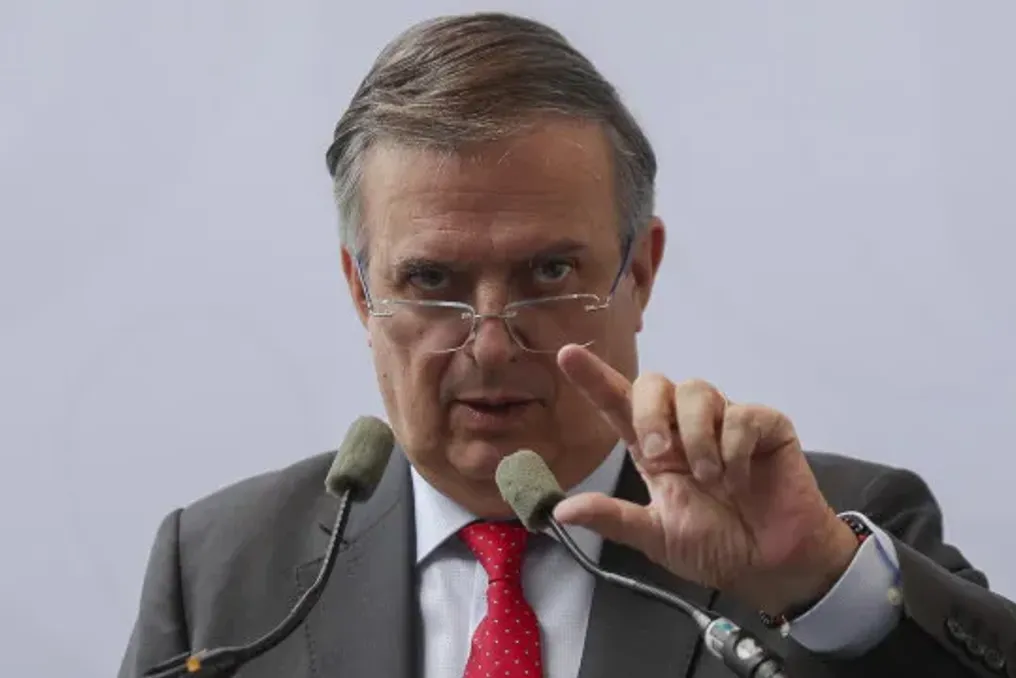
Marcelo Ebrard, Mexico's Economy Minister, announced that he will travel to the United States capital to represent Mexico's commercial interests in response to Washington's refusal to renew the trade agreement.
Details of the Trip and Negotiations
Ebrard informed through a social media post that he would board a flight to Washington on the following day, July 8th, with the goal of preparing the next round of discussions regarding the review of the T-MEC. He confirmed that he would be present on Wednesday to defend Mexican interests.
Context of the Agreement Review
This trip comes after the United States communicated on July 1st that it would not proceed with the extension of the agreement in its current configuration, opting instead for an annual review process.
Despite the American rejection of extending the pact for another 16 years, Mexican President Claudia Sheinbaum expressed optimism on Friday about the possibility of reaching a consensus. She considered that the conversations between the three North American countries, in the context of the first annual review of the trade treaty, are 'very advanced.'
Mexican Stance and Perspectives
Given the uncertainty generated by Washington's decision not to extend the T-MEC, President Sheinbaum emphasized that there is security for investments in Mexico, since the treaty remains valid until at least 2036. Regarding Mexico's trade posture, she classified it as 'absolutely false' that the country negotiated poorly with Washington, adding that Canada is in circumstances 'even more unfavorable' than those faced by Mexico at this time.
The T-MEC was implemented on July 1, 2020, replacing the old NAFTA. Although the US has currently dismissed the extension of the treaty beyond 2036, the agreement itself provides that the three partners can agree to a 16-year extension at any time, provided they can resolve the divergences driving the annual reviews.
Additionally, US President Donald Trump had previously expressed skepticism about the renewal of the agreement, stating that the country 'needs nothing' from its North American partners.