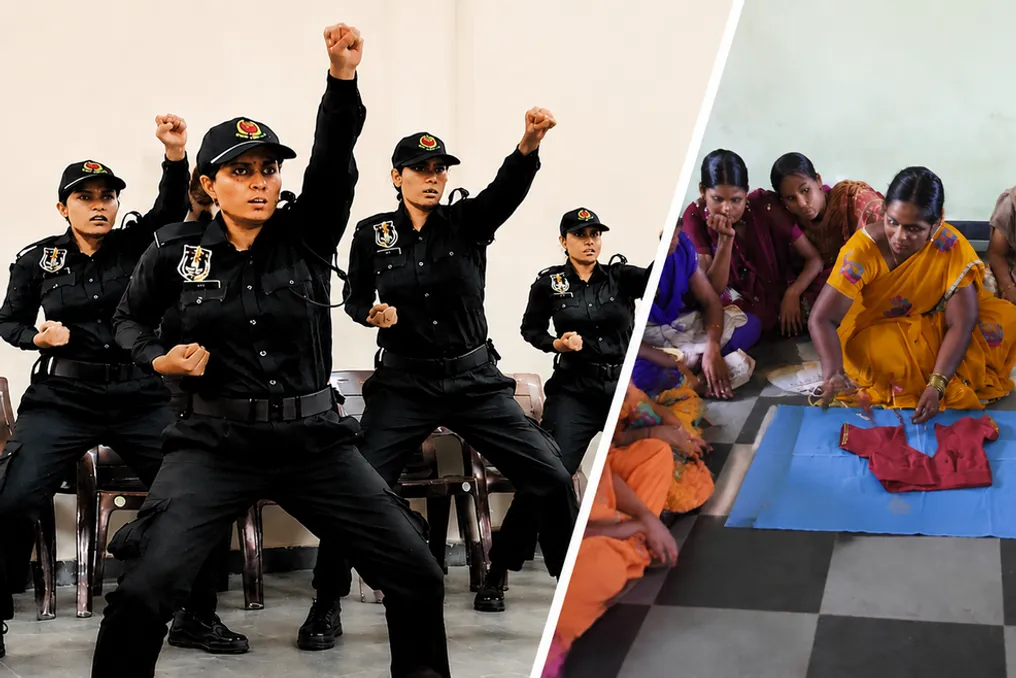

Girls from the state of Rajasthan are undergoing training under the Rani Laxmi Bai Kendra program, which combines self-confidence development, legal literacy, and financial skills for young women across the state.
Program and its Goal
The program, named after a warrior from Jhansi, is aimed not so much at martial arts as at enhancing the capabilities of young women. The goal is to provide them with knowledge, awareness, and self-confidence to make their own life decisions.
Chetna Jogi, an undergraduate student, noted that the training gave her strength for independent action. She attended class at the Veerbala Kalibai Government Girls College, where the Rani Laxmi Bai Kendra program is held.
Curriculum Structure
Each center conducts a four-week course for groups of 40–45 students. In addition to personal safety and body awareness classes, students attend seminars on women's rights, emergency response, health, and safe internet behavior.
A key feature is the partnership with the state police, making law enforcement involvement a routine part of student life rather than just a reaction to emergencies.
Knowledge of Laws and Careers
Sessions dedicated to legal rights and cybersecurity deeply impress many students. The girls learn how to recognize harassment, how to preserve evidence of online abuse, and which authorities or helplines to contact if necessary. Information that previously seemed complex becomes a practical tool.
The centers also focus on life outside the college walls. Personality development, career planning, and professional counseling sessions are conducted, helping young women build financially independent futures, including basics of banking, budgeting, and scholarships.
Scaling the Initiative
The program, which began as a pilot project in several colleges, has significantly expanded. The first phase covered 34 government girls' colleges in district centers, training about 3,500 students. The second phase increased coverage to 314 block-level colleges, reaching approximately 15,000 young women.
The third phase is currently rolling out in another 150 colleges, which is expected to push the total number of trained students beyond 25,000. If the state reaches this figure, it will become one of the largest college-based youth empowerment programs in the country.
Impact on Life
For students like Chetna and Ridhika Kanwar Bhati, the true significance lies not in statistics but in daily moments. It is gaining confidence when entering a classroom, bank, or government office, knowing where to go, what to ask, and how to assert their interests.