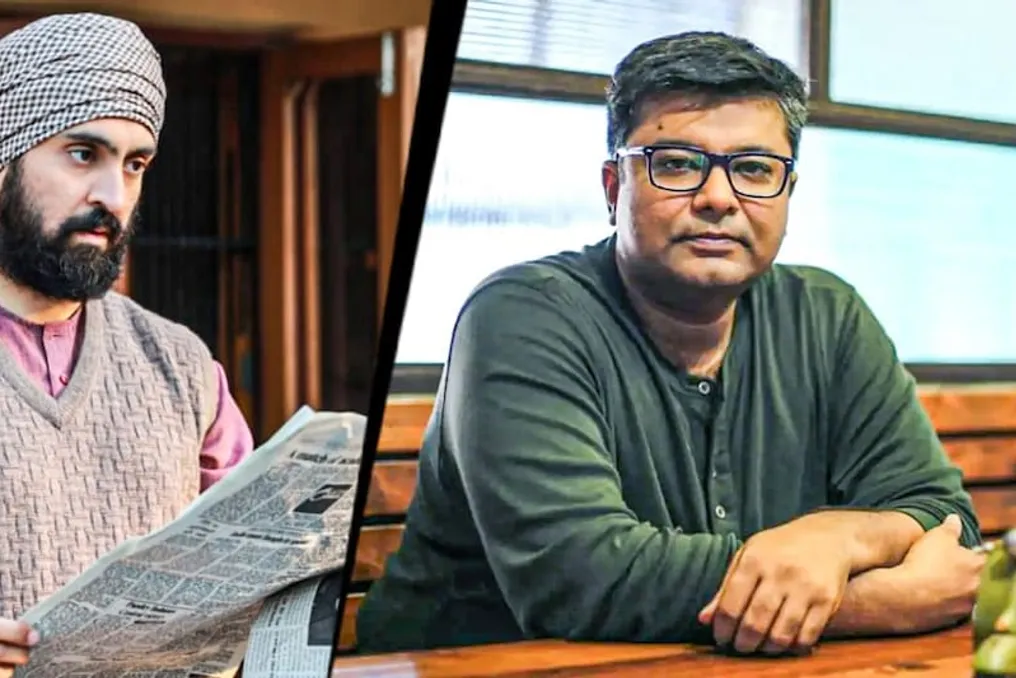
The film 'Satluj' by Diljit Dosanjh, which had been in development for a long time, suddenly appeared on the streaming platform G5 on Friday. However, as soon as interest in the film began to build, it was removed from G5 on Sunday evening, just 48 hours later.
Reason for the film's removal
Platform G5 issued a statement announcing that the streaming of 'Satluj' in India was suspended due to 'current events.' This sudden release and subsequent disappearance of the film became the subject of widespread debate. According to reports, the decision to remove it was made by the Ministry of Information and Broadcasting (MIB) of the Government of India.
Certification process
The MIB also established a special committee to review the content of 'Satluj.' Director Hani Trehan spoke about the long and difficult battle the film, originally known as 'Punjab 95,' had to go through. He started working on the film with Diljit in January 2022. By December, he completed filming and submitted the film to the CBFC for certification.
During the first assessment, after watching half an hour, the council decided to halt the screening, calling it a 'Punjabi film' and questioning why a Hindi certificate was required. A week later, after a full viewing, the council noted issues and referred the film to a 13-member review committee. The committee watched the film at the end of January 2023 and proposed 21 changes, including changing the name of Jaswant Singh Halda, on whom the story is based, and banning the phrase 'film based on real events.'
Legal battle and intervention
The creators sent a response to the council in February, stating their disagreement with the proposed changes as they saw no logic in them. Since the council did not respond in March, April, or May, the creators approached the Bombay High Court in June. By July 30, the CBFC replaced four lawyers. Hani noted that one of the lawyers did not appear at the hearing because he was retiring that day, to which the judge objected, asking, 'Did they call him last night? He should have known about this date a month ago!'
Hani emphasized that legally, they could not argue their position because everything was based on testimonies and actions in court (in the case of Jaswant). During the next hearing, after questions from the fourth lawyer, the judge asked him to watch the film and personally requested that he review it. Hani provided them with copies of the film. The lawyer stated in court that he watched the film the previous night, and it was so disturbing that it kept him awake all night. The judge also noted that watching the film disrupted his sleep. The lawyer expressed concerns that the film might contribute to the spread of separatist sentiments or incite youth anger.
Court's stance and pressure
The judge objected that both of them watched the same film, and their opinions could not differ so much, hinting at the absence of such content in the film. However, the lawyer insisted on the strength of his assumptions. The judge asked when courts started considering assumptions. The lawyer cited the risk of law and order violations in Punjab. Hani replied that the judge calmly accepted this assertion but clarified, 'When did CBFC become concerned? That is the responsibility of the state government, and the task of CBFC is to issue certificates.'
After this, the lawyer did not present new arguments but voiced a critically important observation: 'The problem with the film is not only with the CBFC, but also with the Ministry of Information and Broadcasting.' To this, the judge asked who showed the film to the ministry if it hadn't yet received certification in India, and reminded them what the CBFC was created for. The judge further stated that the CBFC was established as an independent body to protect creative rights, freedom of speech, and artists' interests, and its opinion should not depend on political power.
Deal and further developments
That same evening around 4:30 PM, the judge opined that the film should be released without any changes, although the case still had hearings pending. Around 6:30 PM the same day, producer Ronnie Screwvala called Rani in Delhi. He traveled there and informed Hani by phone that they could no longer continue the legal process in the High Court and had to withdraw the lawsuit. They agreed to an out-of-court settlement with a version featuring 21 cut scenes to avoid canceling the Toronto premiere.
Hani reported that the new DCP version with these 21 cuts was prepared and sent back to the CBFC. New objections were filed, demanding 35 cuts. Following the council's instructions, the new DCP was sent with 35 cuts, but the demands increased: first 45, then 65, and then 85 cuts. Hani agreed to 85 cuts because he was promised that this would ensure certification. He was constantly told that the CBFC chairman would watch the film and issue the certificate, but this never happened. After the chairman viewed the film, Hani stood outside the theater while he walked past and headed to the review committee.
During the process, Hani also provided the CBFC with an 1800-page document detailing how each scene in the film was based on testimony in court proceedings. Upon reviewing this document and the film, the chairman realized that it was based on real events. When Hani asked him about it, the response was: 'Trehan, who speaks the truth so loudly in our time?' Nothing happened for a month after the chairman watched the film. Then he required 16 more changes, adding 37 new cuts, bringing the total number of cuts to 127. Hani decided to cancel all cuts, stating that the film would be released completely or not at all. According to Hani, the last conversation with the CBFC took place in December 2024.
International release and final debut
Hani told The Hollywood Reporter that at the time, the creators were planning an international release. He was informed, 'There are elections in Delhi now, don't do it. We will let you know when you can release it.' No response followed, and Ronnie Screwvala decided that a direct digital premiere would be the best solution. Hani clarified that for 'Punjab 95,' he had never received official permission, so he considered the title 'Satluj,' but another party had already registered a similar name, '1995.' To avoid another fight, the production house pre-registered the name 'Satluj,' which perfectly matched the spirit of the film.
The partnership between Ronnie's RSVP company and G5 proved strong; they worked together on films like 'Sonchiriya' and 'Kedarnath.' Hani mentioned that G5 liked the film very much and decided to release it. Both companies developed a solid plan for a closed-door release. Hani was also involved in discussions before the final release of 'Satluj.' Only Diljit knew about everything from the beginning. On Friday at 6:00 PM, Hani messaged the team asking, 'Is this really happening tonight?', and received a direct reply from Diljit: 'Paji, the film is really coming out tonight.'
On Friday, 'Satluj' did indeed appear on OTT, but it was removed within 48 hours. Diljit had previously warned about this possibility on social media and asked fans to watch and download the film. Instead of being sad about its removal from G5, Diljit is glad that the film is now available to the public. Hani Trehan, the creators, and G5 await a re-release of the film, but it remains unknown whether the public will be able to see the original 'Satluj' without any changes, which some viewers have already seen.