Work is underway in the city of Nukus to improve the modern appearance of the city. The Regional Council of the Republic of Karakalpakstan and the Branch of the Executive Committee of the International Fund for the Salvation of the Aral Sea finance and credit planned programs and projects aimed at ecological stabilization of the Aral Sea region and its basin.
State Initiatives and Objectives
The decree of the head of state from November 23, 2023, on measures to ensure ecological sustainability by increasing the level of greening in the Republic and the subsequent implementation of the national project 'Green Space' is of significant importance. One of the key tasks today is the creation of protective forest belts to improve the ecological situation in the Aral Sea region, mitigate the negative impact of global climate change, and accelerate the work of forming 'green covers' from desert plants.
Implementation of the 'Green Space' Project
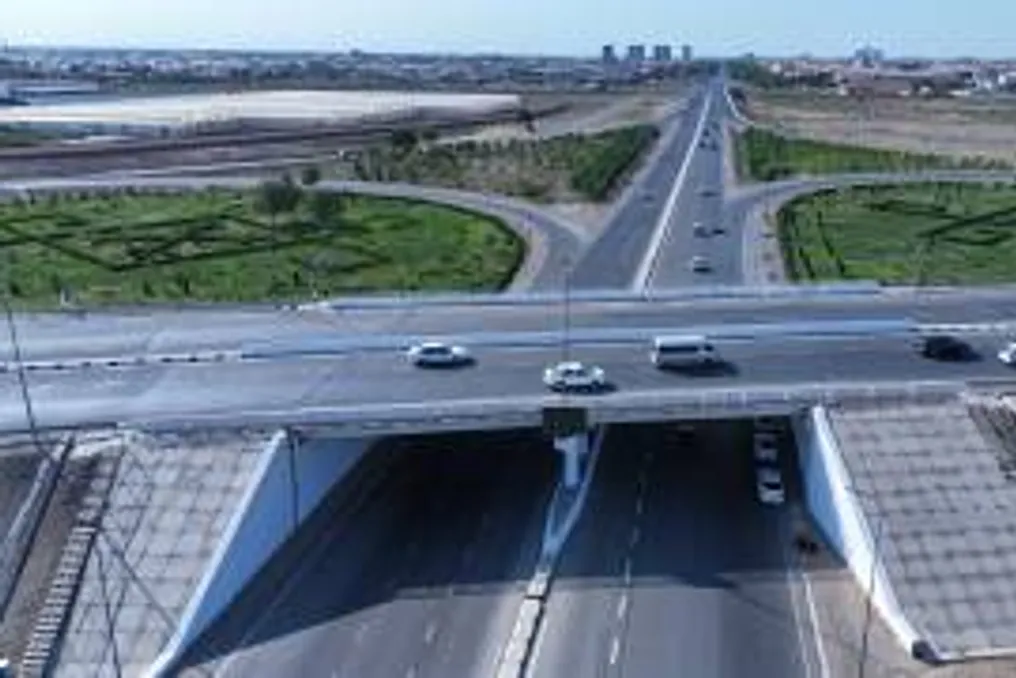
In 2023, within the framework of the 'Green Space' project, a joint project was implemented between the Branch of the Executive Committee of the International Fund for the Salvation of the Aral Sea in Nukus and the unitary enterprise 'Karakalpak yo'l kookalam'. As part of this project, landscaping work was carried out and a planting system was developed in the 'Clover' area, which is considered the 'Southern Gate' of Nukus city, near the 'Kapalak Bridge' (as the city residents say).
The enterprise planted amorphous, ash, catalpa, and spruce seedlings on a section of the A-380 highway, at a distance of 763 to 765 kilometers, which passes through Guzor, Bukhara, Nukus, and Beyneu. These coniferous trees, which are among the most beautiful world landscapes, adapt well to the soil and climatic conditions of the Aral Sea region due to their resistance to heat and cold. Since there were sandy areas near the bridge, the planted seedlings showed very low susceptibility to drying out.
Solving Water Supply Problems
Until now, a serious problem was ensuring irrigation for the planted seedlings due to the inability to divert water from the canal. Thanks to the support of the Regional Council of the Republic of Karakalpakstan and the Branch of the Executive Committee of the International Fund for the Salvation of the Aral Sea in Nukus, work has begun on installing water pipes of various diameters, totaling 2500 meters, using groundwater and water-saving technologies.
As a result of these measures, the possibility of irrigation has improved over an area of 5 hectares near the bridge, where 1660 seedlings were planted. This project contributes to the emergence of green zones along highways and prevents dust raising.