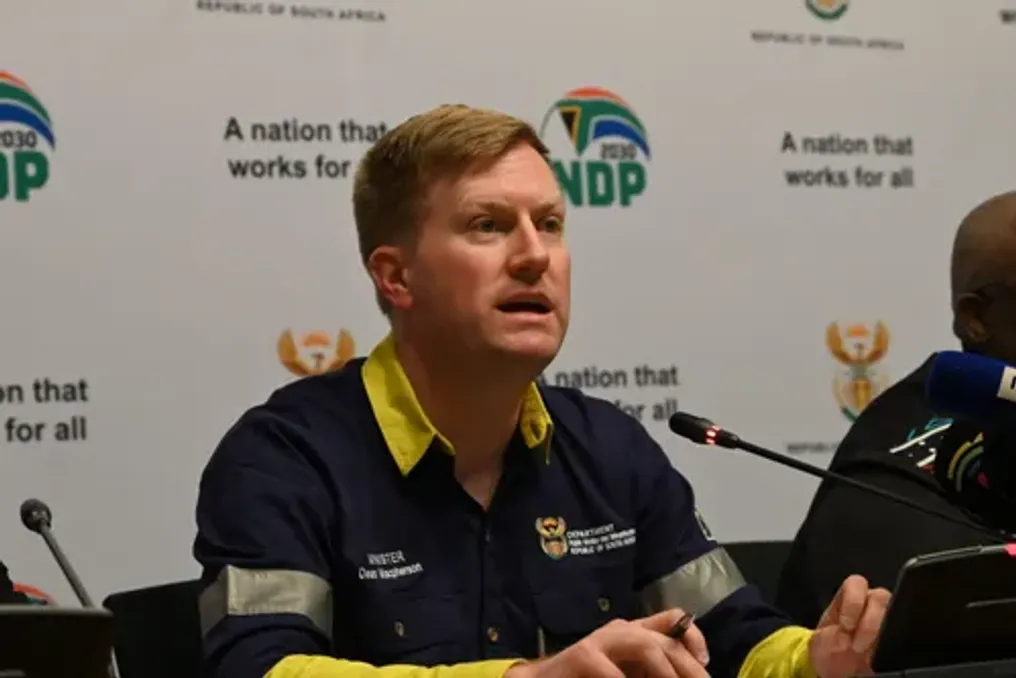
The Minister of Public Works and Infrastructure, Dean McPherson, addressed the press in Cape Town on Tuesday, warning of a serious threat posed by the so-called construction mafia. He reported that this organized crime has led to the collapse of over 180 infrastructure projects across South Africa, with a total value exceeding 63 billion rand.
Construction Mafia Tactics
McPherson noted that the groups have become extremely sophisticated: they create their own companies, posing as legitimate contractors to gain access to construction sites. The Minister emphasized that these groups often have political connections and know how to infiltrate processes not only through open violence but also through subcontracting agreements, local participation structures, security contracts, the use of shell companies, and self-proclaimed community representatives.
New National Policy
These statements came after the Cabinet approved the Integrated Social Facilitation Framework Programme (ISFF). This program is a mandatory national policy that requires government departments, municipalities, and state-owned enterprises to engage with local communities before construction begins. The construction mafia is defined as organized groups that invade construction sites, demanding money, jobs, or subcontracts under the guise of local participation, often using intimidation and violence.
McPherson explained that the ISFF, which was developed for almost two years, aims to prevent these groups from exploiting public frustration to sabotage projects. He called this program an important tool in the fight against extortionists and those who impede infrastructure development across the country. The Minister thanked the Cabinet for adopting ISFF as a mandatory instrument of state policy, marking the transition from policy development to its official state implementation.
Scale of the Problem and Past Successes
McPherson stated that when he took office in July 2024, the construction mafia was one of the most evident threats to the implementation of infrastructure projects. What started in KwaZulu-Natal spread to most provinces. He said that South Africa cannot become a construction site if it is run by criminals. Projects were halted, workers were intimidated, sometimes subjected to brutal attacks, equipment was damaged or stolen, and companies were forced to pay money or hand over work to individuals who had no legal right to it.
Syndicates increased state expenditure, deterred investment, and endangered the lives of workers, project managers, and company owners. The Minister recalled a horrific incident where a senior manager in Durban was shot six times on a site but miraculously survived. He specifically highlighted that the most alarming aspect is the theft of infrastructure from the communities themselves.
Turning Point and Reaction
A turning point for him was the incident at the Umkhomazi water project in KwaZulu-Natal. This multi-billion rand project, one of the country's largest water infrastructure schemes, involves building a dam on the Umkhomazi River to supply water to Durban and its surroundings, where demand had long exceeded supply. The incident involving the construction mafia there resulted in three deaths and an attack on a fourth. McPherson called this a defining moment and a 'wake-up call' that confirmed this was not just about procurement issues, community protest, or labor disputes, but about organized crime requiring a coordinated national response.
He noted that the previous approach had failed because disruptions were treated as isolated incidents: a contractor would report a problem, the municipality would try to negotiate, the police would file a case, but nothing would happen, and the networks behind the disruptions would continue to operate. This prompted him and the KwaZulu-Natal Minister of Public Works, Martin Meyer, to hold a national summit on the activities of the construction mafia in Durban in November 2024. The summit led to the adoption of the Durban Declaration, which obliged the government, law enforcement agencies, the National Treasury, regulators, state-owned enterprises, and the construction industry to adopt a coordinated national response.
Results of Joint Efforts
Since the signing of the declaration, according to McPherson, measurable progress has been made. Over 770 cases of extortion and intimidation related to construction have been registered nationwide, resulting in 241 arrests, and importantly, 176 people have been convicted. In KwaZulu-Natal, the historical center of construction mafia activity, the monthly number of site disruptions has decreased from over 60 incidents per month to less than 10. McPherson called this a significant improvement, demonstrating the effectiveness of joint work between the government, law enforcement, state structures, and the private sector.
Enforcement management has also been strengthened: since September 2025, 52 contractors have been blacklisted, and another batch is under review. He compared this to only two such cases in the previous 22 years.
Warning About New Threats
Nevertheless, McPherson warned that the government has not declared victory, citing recent incidents in Gauteng, including Randfontein in the West Rand and the Vaal region south of Johannesburg. However, these cases were escalated through the provincial priority crime committee, and the sites stabilized without prolonged stoppages. He warned that syndicates are finding new ways to penetrate projects. 'We now have criminals who have their own shell companies posing as contractors, and they manipulate community structures and influence subcontracting opportunities,' he stated. 'They are still trying to make public infrastructure serve criminal interests, not public ones.'
Standardization of Community Engagement
ISFF standardizes community engagement at the national, provincial, and local levels, as well as within state-owned enterprises. Communities will be informed about what is being built, why it is being built, what opportunities exist for them, and how concerns can be legally expressed. This framework program will apply throughout the entire project lifecycle—from planning to completion. It will also establish project liaison committees as formal platforms for communication and conflict resolution, requiring continuous monitoring and reporting for early risk detection.
McPherson emphasized that this means communities should no longer be involved only after a conflict begins; they must be engaged before the project starts. He noted that community engagement had been too inconsistent and fragmented for too long, sometimes amounting to mere formality or being left to unprotected intermediaries. 'In many cases, self-proclaimed community liaisons fill the vacuum and claim to speak on behalf of communities without bearing any responsibility, standards, or ethical obligations,' he said. 'This vacuum was exploited by extortionists, and this framework programme closes that vacuum.'
A central element of the reform is the professionalization of social facilitation, led by the South African Council for Project Management and Construction in conjunction with the Department and the Environmental Council. In the future, social facilitators must be qualified, registered, and bound by a code of ethics. McPherson noted that they should act as a bridge between the community, not gatekeepers. He added that implementation will prioritize high-risk projects where conflicts, extortion, and vandalism are highest. He clarified that the framework program does not replace law enforcement but strengthens it: 'If there are legitimate community concerns, we will engage. If local businesses seek legitimate participation, we will create those opportunities. But if criminals invade sites, threaten our workers, demand money, or try to manipulate outcomes or vandalize infrastructure, we will ensure they are arrested.'
He concluded with a warning to the syndicates: 'You cannot negotiate with extortionists or criminals. There will be no compromises with them. And there will be no future for the construction industry where implementation depends on paying bribes for protection.'