South Africa's passenger rail network shows signs of recovery after many years of decline, while the government pushes reforms aimed at revitalizing freight transport and modernizing the country's transport system.
Warnings about logistical risks
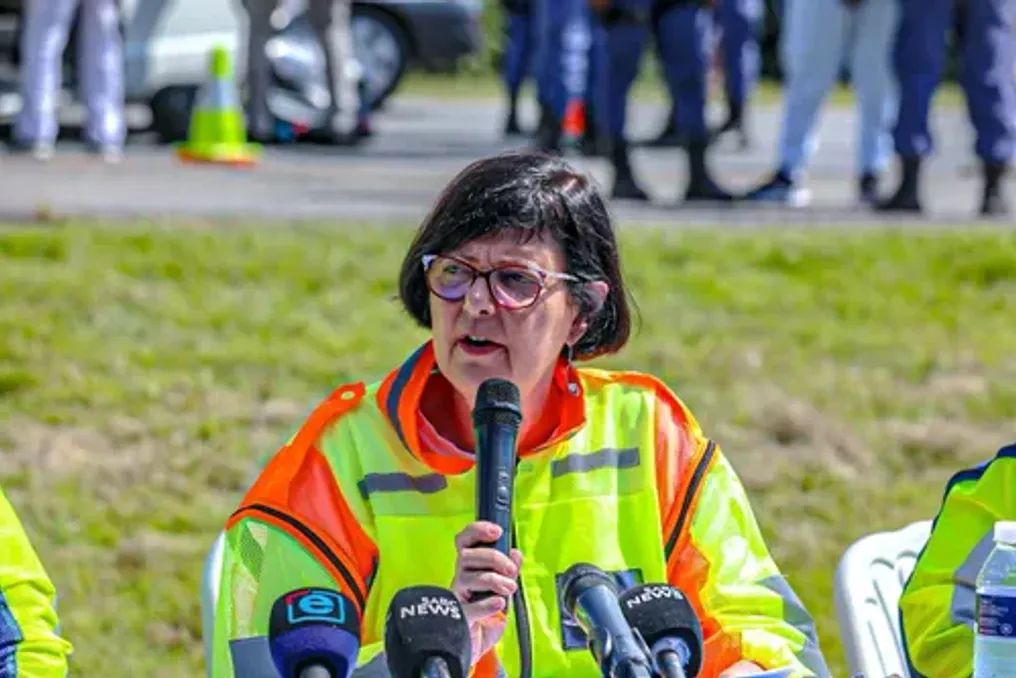
However, Transport Minister Barbara Crisi warned that years of underfunding in logistics infrastructure continues to pose a threat to the country's economy. Furthermore, neighboring countries are increasingly able to exploit South Africa's weaknesses.
Speaking at the South African Transport Conference in 2026 on Monday, Crisi reported that the government's transport reform program focuses on restoring rail services, improving freight transport, implementing digital transformation, and supporting the country's energy transition.
Consequences of transport inefficiency
She emphasized that transport inefficiency has far-reaching consequences beyond the sector itself. Crisi noted that such disruptions affect passenger travel, freight movement, and the efficiency of supply chains supporting the economy. When transport faces interruptions, market efficiency is undermined, and the sector's ability to benefit goods, jobs, and public welfare weakens.
According to the minister, South Africa's logistical difficulties have become more pronounced following prolonged declines in port and rail performance. In the South African context, years of insufficient investment in logistics infrastructure and the downturn in rail and port activities post-pandemic have led to increased competition from neighbors who can capitalize on logistical vulnerabilities.
Restoration of the rail network
The restoration of rail services remains a central element of the government's transport agenda, which considers it critical for reviving the country's freight logistics system. Ambitious reforms in the rail sector aim to restore the railway's status as the backbone of the freight transport system.
The minister specified that increasing the use of rail transport will not only improve freight efficiency but also reduce the burden on the road network. More active use of rail transport contributes to improved road safety, reduces congestion, decreases road surface wear, and, crucially, leads to reduced CO2 emissions.
Reforms and development of passenger transport
As part of the reforms, Crisi confirmed the approval in March of 11 private Train Operating Companies (TOCs) to access the South African rail network, with their operations expected to begin in April 2027. These operators will bring capital and expertise to rail operations, while the infrastructure itself will remain state-owned. The government expects this initiative to help achieve the target of 250 million tons of freight transport on the Transnet network by 2030.
Additionally, the minister mentioned progress in restoring passenger rail services after widespread vandalism and service disruptions during and after the Covid-19 pandemic. Over the last two years, 35 out of 40 priority South African rail corridors have been restored, and passenger numbers have significantly increased. In the 2020/21 financial year, immediately after the pandemic and mass destruction of rail infrastructure, the Passenger Rail Agency of South Africa (PRASA) recorded 10 million passenger journeys. By the end of the 2025/26 financial year, 101 million passenger journeys were recorded.
The government aims to increase the annual number of passenger journeys to 600 million by the 2030/31 financial year, returning usage to pre-pandemic levels. Crisi also stated that the launch of the locally manufactured train Isitimela Sabantu, or 'People's Train', on restored corridors is part of the government's efforts to improve affordable public transport, as providing passenger transport for the South African working class is a socio-economic imperative.
Energy and digital transition
Beyond rail transport, Crisi stressed that transport reforms must facilitate South Africa's transition to a greener and more digitized economy. Examples cited include the Ngqura liquefied gas terminal, the development of the proposed Boegoebaai port, green hydrogen initiatives, and sustainable aviation fuel, demonstrating the growing role of transport in the country's energy transition.
Plans were also announced to create a unified digital platform that will consolidate online permit services across the entire transport sector. Crisi added that the foundation of the current reform agenda is the understanding that one cannot continue operating using old methods in the face of current geopolitical realities. She concluded that implementing significant transport reforms will require continuous collaboration between the government, industry, and investors to ensure a future for transport that is resilient to uncertainty and beneficial to every citizen.