Increased demand for fruit and vegetable products grown in the country on global markets, along with the development of agricultural technologies and increased attention to product quality, contributes to growing interest in Uzbek goods.
Increased demand for fruit and vegetable products grown in the country on global markets, along with the development of agricultural technologies and increased attention to product quality, contributes to growing interest in Uzbek goods.
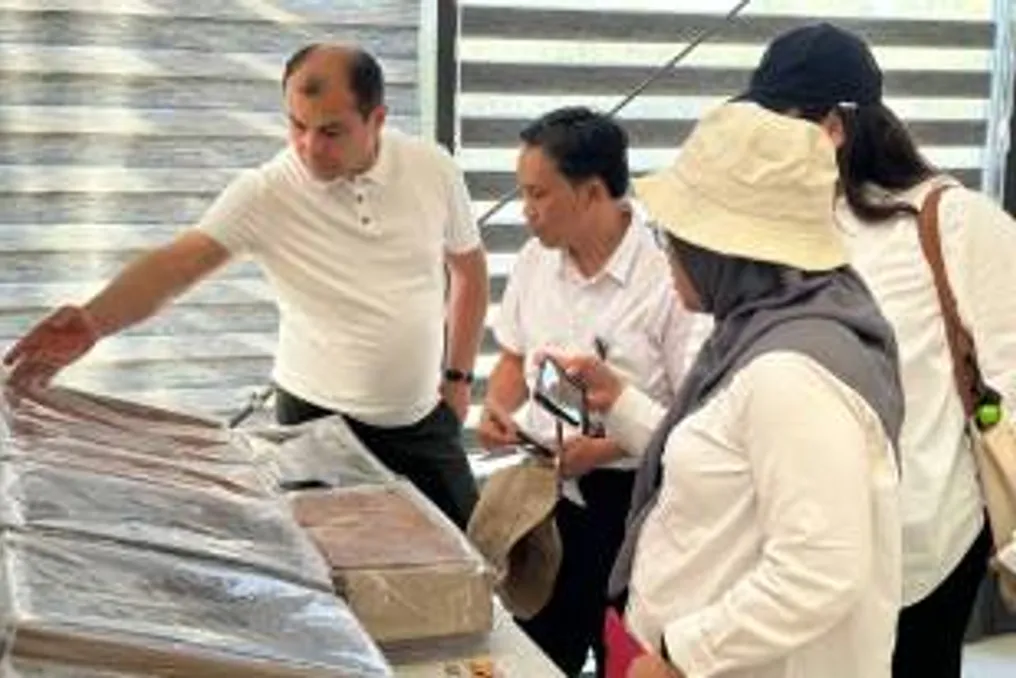
Representatives of the Indonesian Quarantine Agency (IQA) conducted a visit to districts in Tashkent region. The delegation familiarized itself with the activities of farms growing lemons, as well as a dried fruit packaging enterprise.
Specifically, at the 'FOOD AGRO' enterprise in the city of Nurafshon, products such as maize, orix, and olkhuri are packaged using modern methods and exported to countries such as Russia, Lithuania, Latvia, Iran, and Dubai.
During the visit, the parties exchanged views regarding the needs of the world market and the phytosanitary requirements imposed on imported goods. The Indonesians assessed the compliance of fruit cultivation and processing processes with international standards.
IQA Inspector Captain Ratih Rahayu stated that the purpose of the visit was to study the compliance of Uzbek products—gilos, lemons, and dried fruits and vegetables—with Indonesian requirements, especially concerning food safety and phytosanitary standards. He added that the exporters' capabilities to meet Indonesian norms in food safety and phytosanitary matters are being checked, noting the high interest in Uzbek goods in the Indonesian market due to their high quality and ability to meet food safety requirements, as the state of Uzbekistan strictly controls these aspects.
According to preliminary findings, opening new export markets for Uzbek and dried fruits will allow for an increase in the export potential of the regions, expand the geography of external markets, and make a significant contribution to increasing foreign currency revenues to the country.
In recent years, the decentralization of state governance in Uzbekistan and the direct delivery of services to mahallas, as well as decision-making at the lowest level of society based on the principle of 'human dignity,' have become the main directions of systemic reforms.
The mahalla is no longer just a self-governing body; it has become a unique institution of civil society responsible for solving social problems of the population, supporting entrepreneurship, and defining the moral and legal environment of the region.
It is necessary to recognize the decree of the President of the Republic of Uzbekistan adopted in December 2023, titled 'On measures to fundamentally enhance the role of the Mahalla institution in society and ensure its functioning as the first link in solving people's problems,' and the resolution 'On launching the activities of the Association of Uzbek Mahallas and taking additional measures to improve the governance system in mahallas' as an important step in perfecting the mahalla system.
Based on these documents, the previous 'mahalla council' composition was expanded, leading to the emergence of the 'mahalla seven-member' institution with the inclusion of a tax inspector and a social worker. This change is a profound renewal not only in number but also in substance.
Currently, the deputy mayor under the head of the mahalla, youth leaders, women activists, prevention and tax inspectors, and social workers work as a single team. This system allows for the coordination of areas such as social protection, poverty reduction, employment provision, and encouragement of economic activity based on the 'one-window' principle. At the same time, a legal and organizational basis has been created for state services to be provided to the population in an even easier, faster, and more convenient form.
As part of the ongoing reforms, 2026 has been declared the 'Year of Developing the Mahalla and Advancing Society.' Within this year's State Program, the practice of appointing 'seven-member' members from the local population or nearby areas in 500 mahallas is increasing the popular nature of the system. Furthermore, strict rules regarding the exemption of employees from unnecessary meetings and assignments are serving to increase the efficiency of their activities.
Today, the mahalla is a technologically equipped area. The 'Digital Mahalla' electronic platform integrates all links, from the mahalla head to the deputy mayor, into a single system. Through this platform, the population can submit their appeals online and monitor their execution in real-time. This system reduces bureaucracy while creating the possibility of objectively evaluating employee performance based on key performance indicators (KPIs), which increases the responsibility of each employee.
According to data from the Association of Uzbek Mahallas, many activities were carried out in 2025 in 8,992 mahallas with over 55 thousand 'seven-member' employees and nearly 1 million participants. In the scope of these activities, 2,090 (23%) mahallas were turned into unemployment-free areas. Additionally, poverty decreased sharply in 1,435 (16%) mahallas, and the crime rate was lowered and a safe environment was created in 4,388 (49%) mahallas.
It should be specifically emphasized that the work carried out to ensure the employment and social rehabilitation of 428 thousand migrants returning from abroad demonstrates what an important social force the mahalla is.
Another strategic direction of the reforms is the financial independence of the mahallas. Based on the presidential decree, 15% of the funds collected from property and land taxes will be directed to funds for solving the socio-economic problems of the mahalla directly. Increasing transparency in the use of mahalla funds and fully delegating decision-making authority to mahalla councils is set as a priority task in the 2026 Reforms Program.