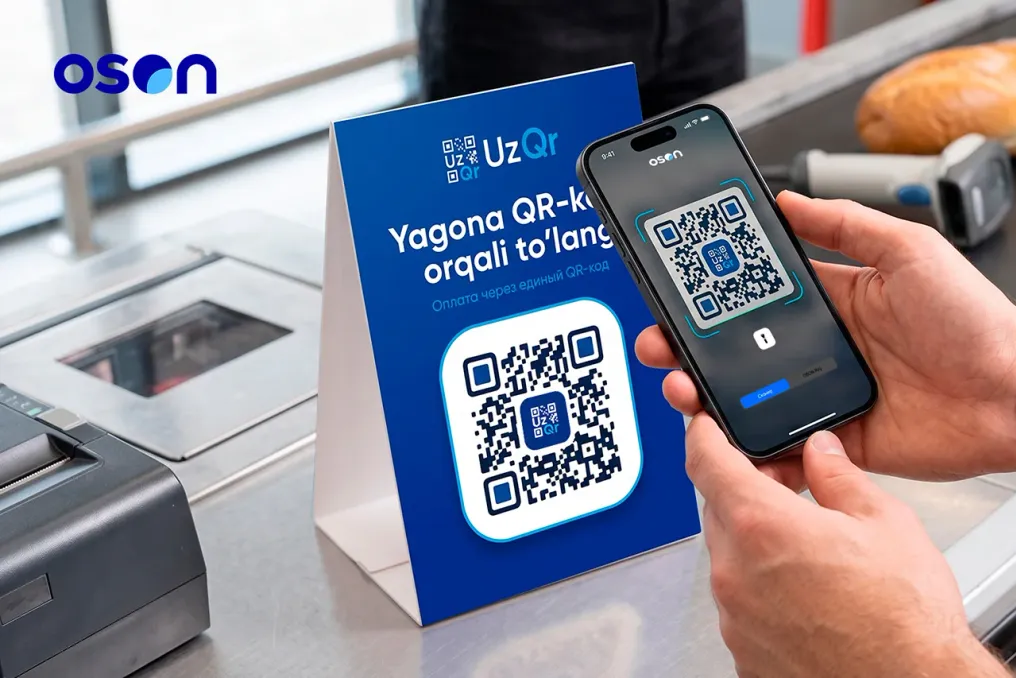
Uzbekistan's financial sector is undergoing rapid digital transformation. According to Presidential Decree No. UP-246, the country aims to reduce the share of the shadow economy relative to GDP by 1.3 times by 2030, while simultaneously increasing the share of non-cash payments in trade and services to 75%.
Fintech Development Goals
A separate resolution sets a goal to increase the number of local fintech market participants to 200 companies by 2030 and attract up to $1 billion in foreign investment into this sector within five years.
Activity of International Players
Against the backdrop of these changes, the international fintech holding company OSON is actively developing its division in Uzbekistan, continuing to expand the functionality of its OSON Wallet product. Founded in 2016, the holding structure operates in five countries: Uzbekistan, Kazakhstan, Kyrgyzstan, Tajikistan, and the UAE, serving over three million users.
Market Trends and Integration
A shift in competition is observed in the market: instead of launching individual services, the focus is on integration, combining various payment tools into a single user experience. Recently, OSON released a universal scanner that recognizes all major QR standards used in the market (Tez QR, UzQR, Xolis) within one application. Furthermore, the scanner supports Uzcard and HUMO cards, as well as its own e-wallet.
Company Vision and Sector Future
Farhod Makhmudov, the founder and CEO of the company, noted that the product is being created so that the level of convenience for users in Uzbekistan matches the best global practices. He emphasized that the unified QR scanner is a step in this direction, as the market should provide people with the same seamless payment experience they are accustomed to seeing in countries with more mature fintech ecosystems.
These changes reflect a broader trend: fintech in Uzbekistan is moving from simply replacing cash to a phase of consolidation and enhanced convenience. Now, what matters to users is not only the ability to make non-cash payments but also the absence of needing to understand which standard a specific checkout uses.
Given the current momentum and strict regulatory deadlines (2026–2030), Uzbekistan has a good chance of becoming one of the key fintech hubs in Central Asia. Companies that invest in infrastructure and user convenience today will determine the speed at which this goal is achieved by the market.