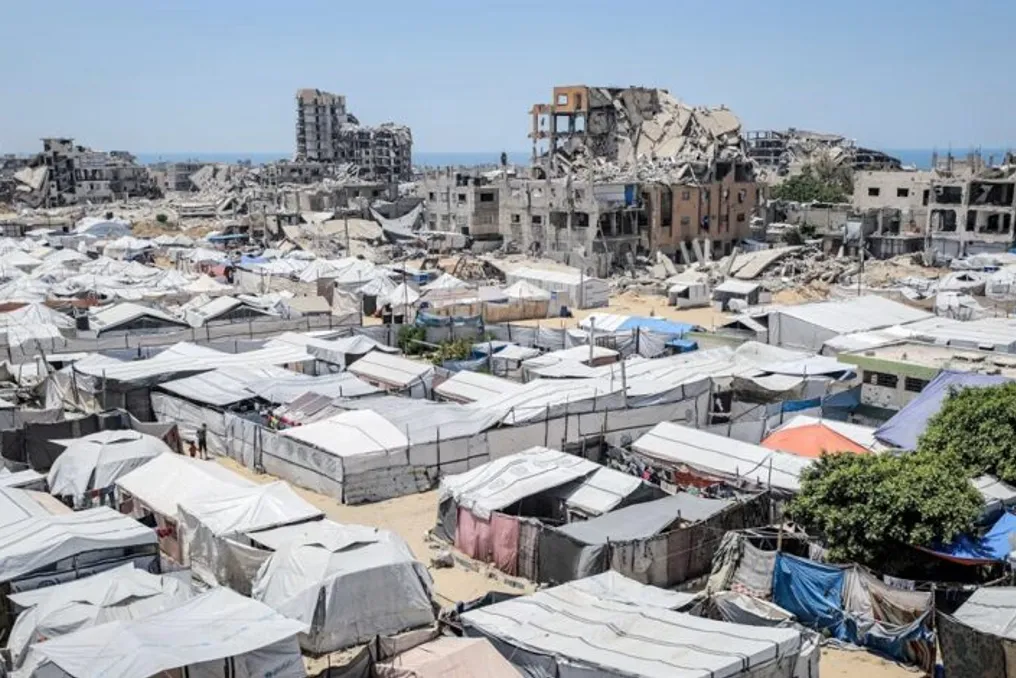
The Minister of Foreign Affairs, International Cooperation and Egyptian Expatriates, Badr Abdel Atti, stated that Egypt will maintain intensive contact with Qatar, Turkey, and Palestinian factions, including Hamas. He emphasized that efforts are not ceasing, and the withdrawal of Israeli troops from Gaza is necessary in accordance with the plan of US President Donald Trump.
Negotiations and Key Objectives
These statements were made by Abdel Atti in response to journalists' questions during a joint press conference on Saturday, July 4, 2026, with the EU Commissioner for the Mediterranean, Dubravka Šuica. Abdel Atti stressed that contacts 'have not stopped and will not stop.' Egypt is working to reach an agreement on two key issues: arms control and collection, as well as the complete withdrawal of Israeli forces from the Gaza Strip, which is preparation for the second phase of the Trump plan.
He also noted that Egypt will continue to make efforts and exercise maximum patience to stimulate positive interaction with arms control proposals based on the document presented to Palestinian factions, including Hamas.
International Efforts and Cooperation
Separately, the minister announced that work continues within the quadripartite structure, as well as through constant contacts with the United States, Iran, and other key states, to maintain progress in negotiations at the technical level. A recent quadripartite meeting held in Cairo was mentioned.
Regarding the main areas of cooperation between Egypt and the European Union in the coming period, the EU Commissioner for the Mediterranean, Dubravka Šuica, stated that resilience, readiness, and migration are interconnected pillars within the Mediterranean Pact. She emphasized that the EU seeks to support talent and partnerships, and that Egypt is an indispensable partner for the European Union.
During the press conference, Šuica added that readiness and migration 'will lead us to prosperity,' and also noted the EU's involvement in this process and the importance of human development.
Economic and Energy Partnership
For his part, Abdel Atti mentioned an important project with Greece in the field of legal migration that will allow both sides to 'benefit and gain.' On matters of key initiatives with the European Commission and areas of progress, Abdel Atti stated mutual commitment to the full implementation of the comprehensive strategic partnership agreement.
He pointed out that the European Union has allocated 1.8 billion euros to support the private sector and investments, emphasizing the need to ensure benefits for Egyptian companies from this support. Egypt also aims to become a hub for new and renewable energy, noting interest from European companies as well as non-EU countries such as Norway.
Furthermore, he mentioned some regulatory obstacles affecting Egypt's exports to European markets and called for technical support for renewable energy projects and capacity building.
Stability and Financial Support
Šuica emphasized the importance of regional stability, noting that grants already exist, but stability is necessary to attract European investors to the region. She also reported on the consideration of a financing platform worth 10.8 billion euros, adding that the green transition is extremely important and must be carried out in stages.
Abdel Atti responded that Egypt has adopted laws and regulations to facilitate and encourage investment, stressing its commitment to further strengthening the private sector. Assessing Egypt's efforts to combat irregular migration, Šuica called Egypt an indispensable partner in the region, especially regarding irregular migration, and stated the EU's commitment to supporting this partnership and assisting authorities in these efforts. She highly praised Egypt's strong efforts, calling migration a serious and sensitive global issue.