Diljit Dosanjh's film 'Satluj' was removed from the Zee5 platform in India less than 48 hours after its premiere, causing significant social media buzz.
Diljit Dosanjh's film 'Satluj' was removed from the Zee5 platform in India less than 48 hours after its premiere, causing significant social media buzz.
The film was originally titled 'Punjab '95', and its release was postponed for three years because the Central Board of Film Certification requested over 120 edits, which were ultimately not made for its screening on the OTT platform.
Currently, the film is unavailable in India, but it remains accessible to an international audience on the streaming platform Z5. Viewers in the UAE can subscribe to this platform for 22.99 dirhams per month, which grants access to all content on two devices.
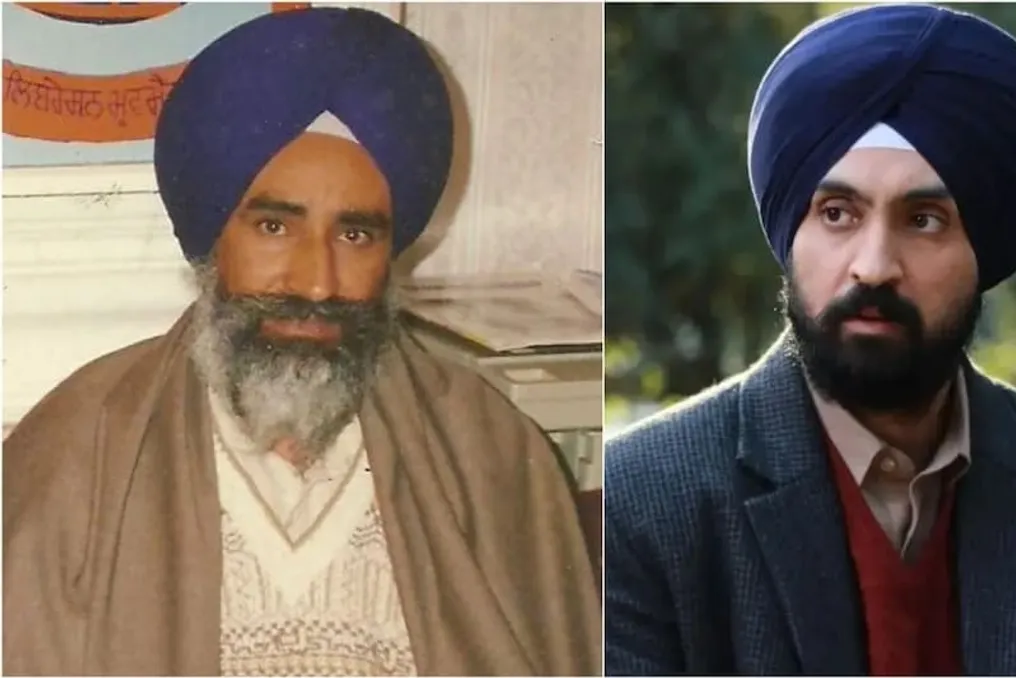
The plot of the movie is based on the life of human rights activist Jaswant Singh Khalra from Punjab. He exposed alleged illegal killings and secret cremations in the late 1980s and early 1990s during the uprising in Punjab. Khalra himself disappeared in 1995, and his body was found near the Harike bridge on the Sutlej River.
After the film was removed from Zee5 in India, it began circulating as pirated copies online. In response, the streaming platform expressed concern and urged viewers not to support piracy. Zee5 posted a message on social media stating: 'We are doing everything possible to bring back Satluj. Please do the same—do not support piracy. We are hopeful and doing everything we can. Please do not support piracy. We remain committed to exploring all possible ways to bring Satluj back to you.'
In an official statement made after the removal on Sunday, ZEE5 acknowledged the audience response and confirmed the temporary unavailability of the film in India. The platform noted: 'The response to Satluj since its release has been truly overwhelming. We are deeply grateful to every viewer who decided to subscribe, watch, and support the film. Your love and support have meant a great deal to us and to everyone who brought this story to life.'
Announcing the removal on Sunday, the platform stated: 'In light of current events, Satluj will be unavailable in India until further notice. We continue to make efforts through proper procedure to bring the film back to our audience as soon as possible.'
Lead actor Diljit Dosanjh commented on the situation live on Instagram on Monday. The actor shared his thoughts on the sudden restriction of access to the film and the long journey that preceded its release, expressing both disappointment and acceptance of the situation. In his live session, Diljit Dosanjh openly discussed the sequence of events that led to the ban. He said: 'My love and respect to all of you. What I expected has happened exactly like this. I thought the film might be banned when the offices opened on Monday, but I didn't know it would happen so early, on Sunday evening.'
In Punjab's politics, the connection with cinema goes beyond mere entertainment, as many stories shown on the big screen reach political platforms. Sometimes films dedicated to terrorism or police actions contribute to the formation of an anti-government atmosphere, while others concerning the drug problem put the government in an awkward position.
Currently, Diljit Dosanjh's film 'Satluj' (formerly known as Punjab-95) is being actively discussed again. After a limited screening on ZEE5, the telecast of the film was suspended. In this regard, Akali Dal, SGPC, and several Sikh organizations have called it an act of censorship and an issue related to Sikh history. The question also arises whether another film is preparing a political narrative ahead of the elections in Punjab.
An analysis of the history of electoral politics in Punjab reveals a similarity between the films 'Matis', 'Udta Punjab', and now 'Satluj'. All three films addressed the most sensitive issues of Punjab and were released just before the state legislative assembly elections, which led to an escalation of political struggle around them.
The film 'Matis', released in 1996 with actors such as Chandrachud Singh and Tabu, became famous for the song 'Chappa Chappa Charka Chale'. The plot covered the period of terrorism and alleged police abuses in Punjab during the 1980s and 90s. The film showed how young people were forced to take up arms due to circumstances and police arbitrariness.
Despite high critical acclaim, the film's influence was not limited to cinemas. The following year, in 1997, the elections for the Punjab Legislative Assembly took place. The opposition constantly questioned the ruling Congress regarding police actions in the fight against terrorism. Akali Dal used this theme as a significant part of its election campaign. 'Matis' emotionally presented the suffering of that time to the general public, which intensified the discussion about police actions and human rights violations, bringing political benefit to the Akali Dal-BJP coalition, which won the elections. The Congress, which came to power after the assassination of Prime Minister Indira Gandhi, shrank from 117 to only 14 seats in the legislative assembly.
About two decades later, a new shift occurred in Punjab's politics thanks to the film 'Udta Punjab', released in 2016. The central theme of the film was the rapidly spreading drug addiction in Punjab, showing how the drug trafficking network had infiltrated politics.
The film sparked controversy even before its release. The stance of the then Chairman of the Central Board of Film Certification (CBFC), Pahilja Nihalani, was extremely strict. The board demanded 94 out of 89 amendments: removing mentions of Punjab, elections, parties, members of the legislative assembly and MPs, muting profanities, removing close-ups of drug injections, and removing the word 'Punjab' from the title. The revision committee also requested at least 13 amendments. However, the filmmakers appealed to the court. The Bombay High Court allowed the film's release with only one change, sharply criticizing the CBFC.
The question arises: what is more surprising—the story of fake detentions involving Jaswant Singh Halda and the Punjab police, or the fact that the film based on these events finally appeared on a streaming service under a new title after years of fighting for distribution? Both situations evoke a mix of disappointment and hope.
Hani Trehan's film 'Satluj' is simultaneously worrying, shocking, and carries a degree of hope. It narrates one of the greatest tragedies of Punjab, showing the story of people turning into monsters. The film convinces the audience that monsters are not mythological figures but people who kill their humanity to achieve their own goals.
The plot shows a family that takes out a large bank loan in search of their missing son. Bank employee Jaswant Singh (Diljit Dosanjh) approves this loan, seeing the family's difficult situation, but does not yet fully understand what is happening. Jaswant's friend was killed by the police as a militant, and his mother, having lost her mind, also disappeared. The search leads Jaswant to realize the true state of affairs.
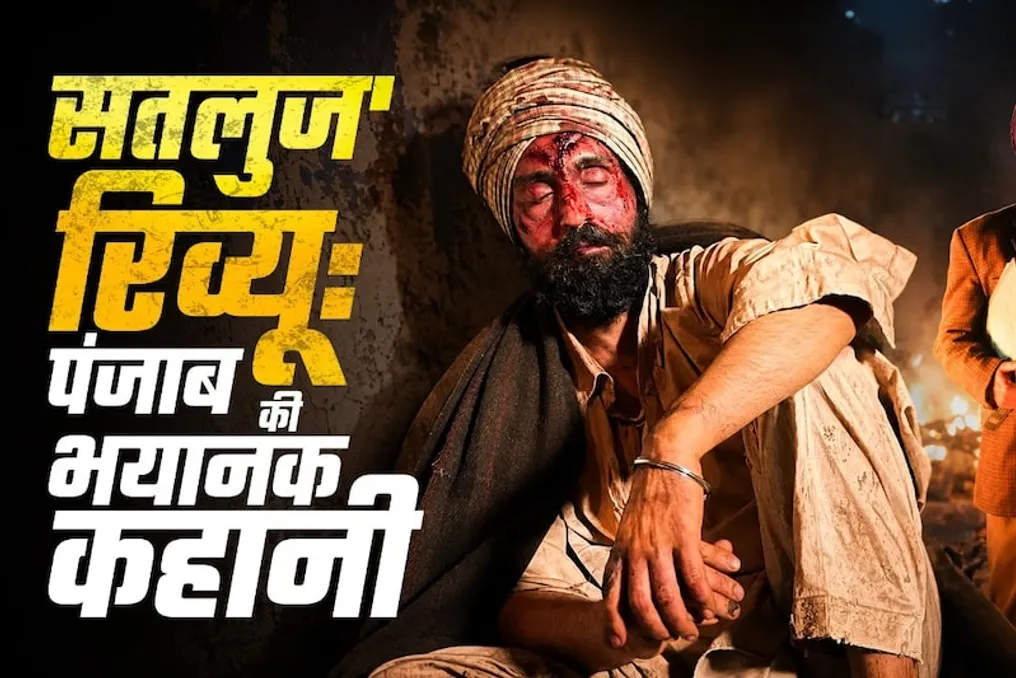
News about the missing people no longer comes from police stations or hospitals; they are found in cemeteries where the bodies were burned by the police as 'homeless'. Shamshans have their difficulties because they need to know the names of the deceased for firewood accounting. Jaswant is shocked by the number of such 'homeless' bodies in the cemetery. His goal becomes exposing the game in the Punjab Police, where promotions are given for killing 'terrorists'.
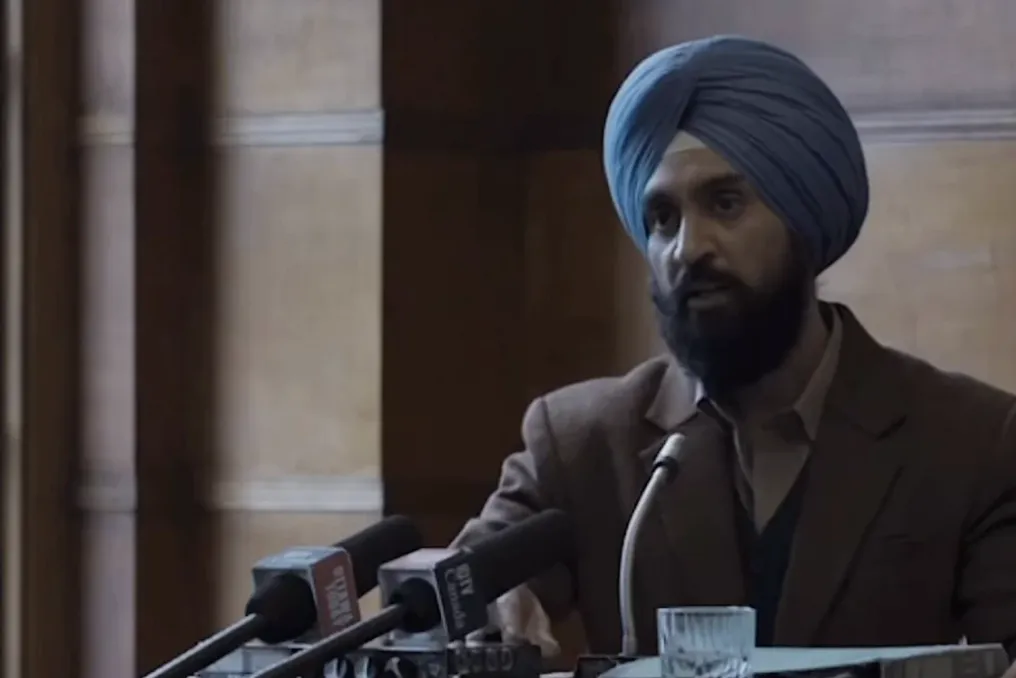
When Jaswant begins to uncover this scheme, he launches a long fight for human rights, but then disappears himself. His wife Parmjit (Gita Vidya Ohlyan) takes over the protection of his mission. The Punjab Police sends its most ruthless officer SP Suggu (Suvinder Vicky) to prevent Jaswant's actions. A CBI team from Delhi, led by officer Samudra Singh (Arjun Rampal), is assigned to find Jaswant and uncover the whole truth.
Director Hani Trehan puts the viewer in a situation where dark secrets are hidden under the light. The story shows how police officers, trying to stop extremism, turn into executioners. They lack any sense of compassion or guilt for what they do. They do not realize that their activity, which should be a mission of 'defenders of democracy', has become a passion for them. 'Satluj' demonstrates this in the most horrifying way.
A feature of the film is that it is not just based on real events but is also a gripping thriller. The first half is dedicated to Jaswant's search for the truth about the missing people, and the second is about Samudra Singh's search for Jaswant. These storylines present a tense thriller. How truthfully 'Satluj' depicts the real events related to the murder of Chief Minister Beant Singh and Punjab explains why the censorship board refused to issue him a certificate for four years.
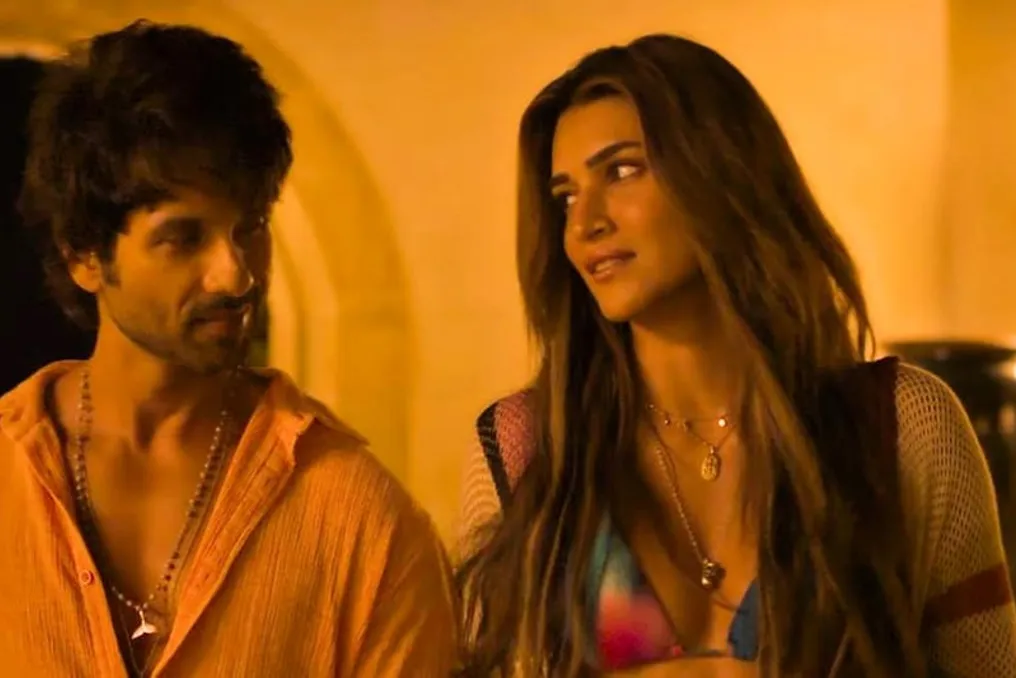
The film 'Cocktail 2', starring Shahid Kapoor, Kriti Sanon, and Rashmika Mandanna, was released to theaters amid significant interest, despite an active promotional campaign. After a strong first weekend, the film began to gradually decrease its box office earnings. A further slowdown in collections was observed during the second weekend, which is particularly critical for a film with a budget of 150 crore rupees. The release of Akshay Kumar's comedy film 'Welcome to the Jungle' with paid advance screenings contributed to this decline. While 'Cocktail 2' continued to fall, 'Welcome to the Jungle' showed significant success. In ten days, the film collected a net income of only 83 crore rupees, raising concerns about its overall success.
At the time, the government in Punjab was formed by the Akali Dal-BJP coalition. Opposition parties, such as the Congress and Aam Aadmi Party, criticized the government over the drug problem. After the film's release, this topic received even more coverage. The filmmakers and opposition parties claimed that the Punjab government was trying to hide the drug problem before the elections. As a result, drugs became the most important electoral issue in the 2017 elections. The Congress promised a 'Drug-Free Punjab', and the Aam Aadmi Party made it its main election campaign. Allegations were leveled against many Akali Dal leaders regarding involvement in drug smuggling, which ultimately led to the loss of power by Akali Dal and the success of the Congress in forming the government.
Currently, attention is focused on the film 'Satluj', originally titled 'Punjab-95'. The film is based on the life of human rights activist Jaswant Singh Haldar, who exposed cases of alleged false detentions and missing persons burials in Punjab during the fight against terrorism in the 90s. He was later kidnapped and killed, and many police officers were convicted in this case.
The film was long in dispute with the censorship board. Reports emerged that the CBFC demanded 120-127 amendments, changed the title from Gallughara to Punjab-95, and discussed transitioning to 'Satluj'. The demands included removing the tag 'Based on real events', deleting Haldar's wife's name, and softening torture scenes. Ultimately, the film was released unedited on ZEE5 but was immediately removed from India.
This move exacerbated the debate surrounding 'Satluj'. Akali Dal, SGPC, and other Sikh organizations stated that the film is being suppressed and prevented from revealing the story of Punjab. On the other hand, some political parties view this as a matter of freedom of expression. Thus, the film has once again turned into not just a movie, but a center of political debate.
It cannot be said that any single film can win or lose elections. Elections are always determined by multiple factors: social dynamics, leadership, and organizational strength. However, it is true that films can play a huge role in creating the electoral atmosphere.
A film dedicated to a specific issue brings this discussion to the wider public. A topic that previously remained within newspapers and political speeches suddenly becomes a subject of discussion in every home. This is why political parties immediately take their stance on controversial films: some support, some oppose, some raise the issue of censorship, and some speak of damaging the state's image. Thus, the film itself becomes a political symbol.
Preparations for the upcoming elections in Punjab have begun, and the controversy surrounding 'Satluj' cannot be viewed merely as a cinematic dispute. This conflict is linked to issues such as human rights, police actions, Sikh identity, censorship, and freedom of expression. Shiromant Akali Dal is trying to create a strong momentum in support of 'Satluj'. However, it is difficult to say whether it will gain advantage from this.
'Satluj' is an emotional film, but its roots go back more than 30 years. It is impossible to judge the extent of indignation among the new generation of Punjab regarding this from an electoral perspective. Nevertheless, the problems of drug addiction and unemployment are more pressing. Farmers have their own problems. The real game lies in the political equations of leaders and their parties in Punjab. Although 'Satluj' may not become a major electoral issue, it will undoubtedly provide ammunition to strategic thinkers shaping the political narrative. Punjab's experience shows that the influence of cinema extends far beyond box office receipts.
Attempts to label Jaswant an 'anti-national' for revealing facts about the brutality of the Punjab Police in Canada and abroad, and presenting his mission, stemming from a sense of humanity, as a 'conspiracy to defame Punjab', demonstrate the audacity of the Punjab Police, which exacerbates the difficulties of the external CBI. These moments make this 30-year-old story relevant today.
It must be noted the brilliant talent of Diljit Dosanjh, whose performance in 'Satluj' will have a strong emotional impact. As Jaswant, he demonstrates the courage to fight despite the lack of support, which is the best work of his career. His seriousness, restraint, and naturalness in expressing emotions give the film power. The scene with the character Kuljith is particularly memorable.
Suvinder Vicky and Arjun Rampal, who played the roles of father and son in 'Dhurandhar', also performed excellently in their scenes. If this film had been released about five years ago, their contribution would have been even more significant. Their conflict scenes make the film very tense. Gita, as Jaswant's wife, proves again why she deserves more roles. Her conversation with Suvinder gives chills.
'Satluj' is also technically flawless. The cinematography portrays Punjab in a way that is rarely seen. Light, sound, background music, and makeup create an experience that constantly presses on the consciousness in accordance with the narrative, tone, and mood. When I first read the story of Jaswant's fight against this crime by the Punjab Police, it kept me awake for weeks: how can a person become so cruel as not to feel the slightest sympathy for another person? And how can such passion and courage arise in a person to raise their head for the truth amidst such cruelty?
It is interesting that Diljit's recent work 'Main Vaapas Aunga' touched upon the pain of Punjab, which many residents of other parts of India do not understand. This time, Diljit became the face of the pain of Punjab that few people know about. Director Hani Trehan deserves great recognition and love for this film. G5 Service is a platform whose subscription is available less than others, but if you take the monthly plan for 'Satluj', you will surely feel that your money was well spent.