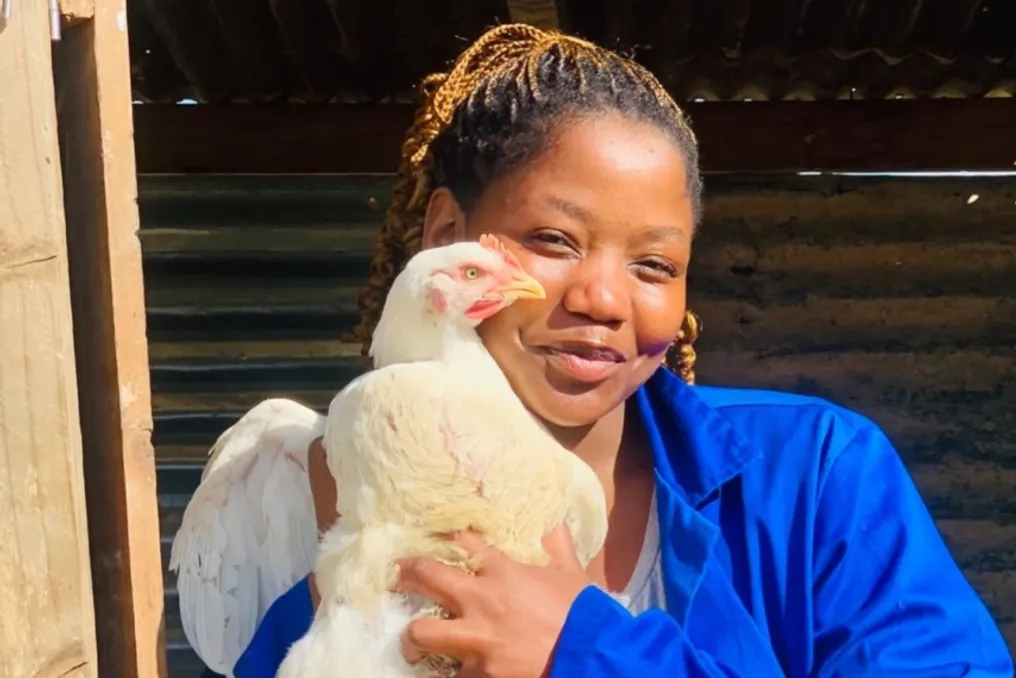
Xolelwa Mthetho, who initially dreamed of a career in the film industry, changed her life path after witnessing food security issues in her community, directing her efforts towards agriculture.
Starting Entrepreneurial Activities
Even before her graduation ceremony at Nelson Mandela University, she was already involved in building her business. Today, the graduate with a degree in 'Agricultural Management' manages Kwande Poultry Farm. This company produces quality broilers directly in her home village of KwaNdungvana, located in Cofimvaba, Eastern Cape.
While looking for a job, Mthetho noticed a significant gap in the local market: villagers were entirely dependent on trips to the city to purchase basic goods. Realizing this opportunity, she decided to engage in farming while preparing for graduation.
Project Development
In February 2026, Mthetho shared her ambitions, which had been growing since 2024 when she registered Kwande Poultry Farm, with her mother. With zero budget, her mother, Bongive Fungile, helped by providing essential support.
Her interest in agriculture was not accidental. Mthetho explains that the attraction began in Grade 11 when she became highly interested in genetics. She recalls: 'I was fascinated by how genes influence the characteristics and productivity of plants and animals.'
By the time she finished school, her career path was clear. She applied for agricultural programs and enrolled at Nelson Mandela University. In her first year of university, she realized her love for agriculture but did not yet know which specific area she wanted to specialize in.
To test her commitment, she bought five sheep. This practical step, as she tells Food For Mzansi, ultimately defined her lifelong career in farming.
Expanding Sales Markets
Initially, Mthetho started with 50 chicks per cycle, but now she raises 200 birds per batch. This scale suits her because it allows for careful control and simplifies management. Mthetho notes that she usually waits at least two weeks between batches before introducing new birds. This time is used for proper cleaning, reducing disease risk, and preparing the area for the next cycle.
Although biosecurity is more manageable at this scale, it remains critically important, especially when batches are of different ages. She points out that the main risk is related to movement between young and old stock, rather than direct contact. She prevents cross-contamination and strictly controls feeding and movement procedures.
At this stage, she emphasizes that consistency and discipline matter more than flock size. Since launch, the community has provided enormous support, and the business is growing through 'word of mouth' and social media. Although her target market is her village and surrounding areas, she currently cannot meet local demand.
Nevertheless, this does not stop her from setting big goals. In the coming years, Mthetho plans for Kwande Poultry Farm to become a regular supplier for both local communities and retail stores. She shares the desire to 'expand production, improve biosecurity systems, and stabilize batches to meet larger and more consistent demand.'
To achieve this goal, she is focusing on increasing production, modernizing housing systems, securing reliable market agreements, and seeking funding to improve infrastructure.
Building a Meaningful Agribusiness
Mthetho's passion for agriculture gradually strengthened during her studies. She notes that a major turning point came when Dr. Ernest Dubbe, a lecturer at Nelson Mandela University, offered her the opportunity to gain practical experience through an internship on his farm.
Although her initial interest lay in agricultural genetics, this practical experience in farming and agricultural management opened her eyes to broader opportunities in the industry. Looking back on her university education, Mthetho believes that agriculture is a practical, business-oriented field that requires a balance between theory and real-world experience.
She concludes: 'One of my biggest lessons is that agriculture is unpredictable and requires resilience. Issues like diseases, costs, and market changes are part of the industry, so patience and adaptability are necessary.'
Her main takeaway is that the sector is full of opportunities even for those without traditional farming experience. With dedication, practical experience, and consistency, she believes it is entirely possible to build a meaningful career in this field.