Amid growing trade tensions with the United States and new concerns over energy security, Canada is changing its strategy. The country, which has been heavily reliant on the American market for decades, is now taking significant steps to strengthen its domestic oil supply network.
Pipeline Project
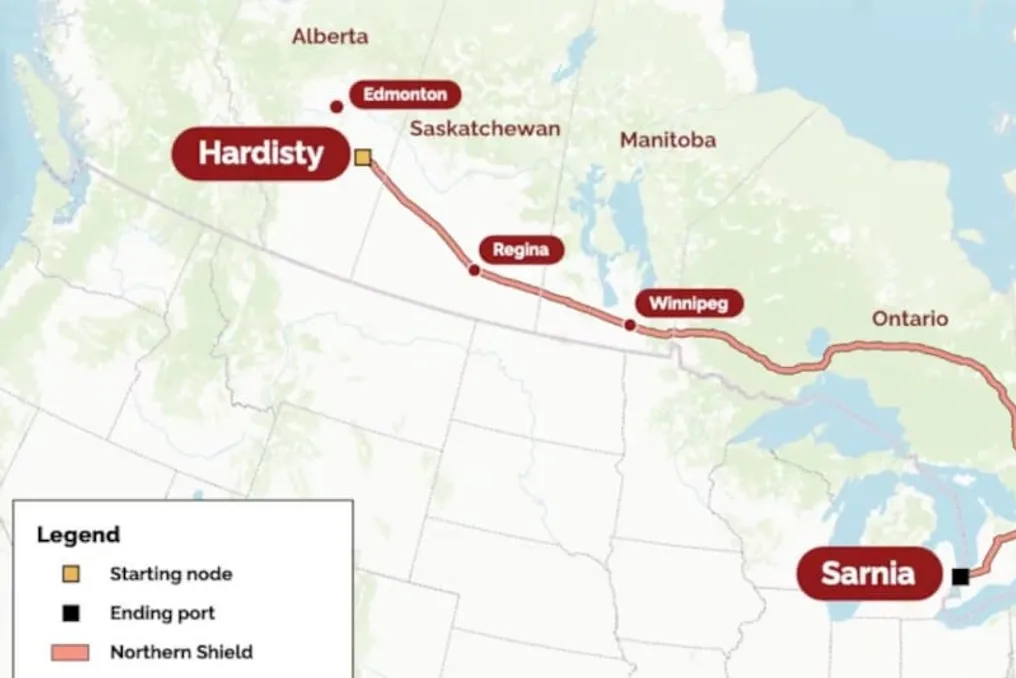
As part of this initiative, the governments of Alberta and Ontario have proposed building a new crude oil pipeline approximately 3,300 kilometers long. This project is viewed not merely as an infrastructure improvement but also as a reflection of Canada's evolving economic and political mindset.
Although Canada is one of the world's largest oil producers, much of the crude oil extracted in the western province of Alberta has historically been directed to the US. Meanwhile, many regions in eastern Canada relied on imports or foreign oil to meet their needs. Now, the government aims to change this established system.
Northern Shield Energy Corridor Project Details
To achieve this goal, Alberta and Ontario have put forward a project called the Northern Shield Energy Corridor. According to the plan, the pipeline, approximately 3,300 km long, will run from Hardisty in Alberta to Sarnia in Ontario. Initially, it is planned to transport about five hundred thousand barrels of crude oil daily, with the possibility of later increasing this volume to eight hundred thousand barrels per day.
Reasons for Canada's Strategy Change
The primary reason cited for Canada's shift in course is the increased trade tension with the US in recent months. Specifically, President Donald Trump's decisions to impose new tariffs on Canadian steel, aluminum, and other goods during his second term created friction between the two countries. In response, Canada introduced countermeasures by imposing duties on American products and has repeatedly signaled the need to shift focus from solely the American market to developing domestic production and seeking new trading partners.
Alberta's Importance to the Industry
Alberta serves as the hub of the Canadian oil industry, as the province holds the largest reserves of crude oil and oil sands. However, residents and representatives of Alberta have long expressed dissatisfaction with the fact that the provincial economy suffers due to the federal government's environmental policies and delays in pipeline project implementation.
This dissatisfaction has periodically fueled movements such as 'Alberta Separation' or 'Wexit'. Proponents of these movements argue that if Alberta does not gain more control over its natural resources and adequate economic benefit, it should consider the option of separating from Canada. Nevertheless, this claim is not currently a main government policy, and most Albertans do not support the idea of creating a separate state. However, this issue has significantly intensified political debates in recent years. Premier Daniel Smith has repeatedly raised the topic of granting the province greater autonomy and reviewing relations with the federal government, but he has not advocated for separation from Canada. His government has, however, supported legislation that could simplify holding a referendum under certain circumstances.
Potential Benefits of the Project
If the project is completed, oil from Western Canada will flow directly into Ontario's refineries. This will reduce imports from abroad and decrease excessive reliance on the American market. The government asserts that the project's realization will create thousands of jobs, strengthen energy security, and in the future, the pipeline can be expanded to Quebec and the Atlantic provinces.
Obstacles and Challenges
Currently, the project is in its initial stages, and a feasibility study is underway. Following this, approval from the federal government, an environmental assessment, consultations with Indigenous communities, and attracting billions in private investment will be required. Environmental organizations have already protested this project, stating that the new pipeline route contradicts Canada's climate goals. Furthermore, many experts question whether private companies are willing to invest in such a costly undertaking.