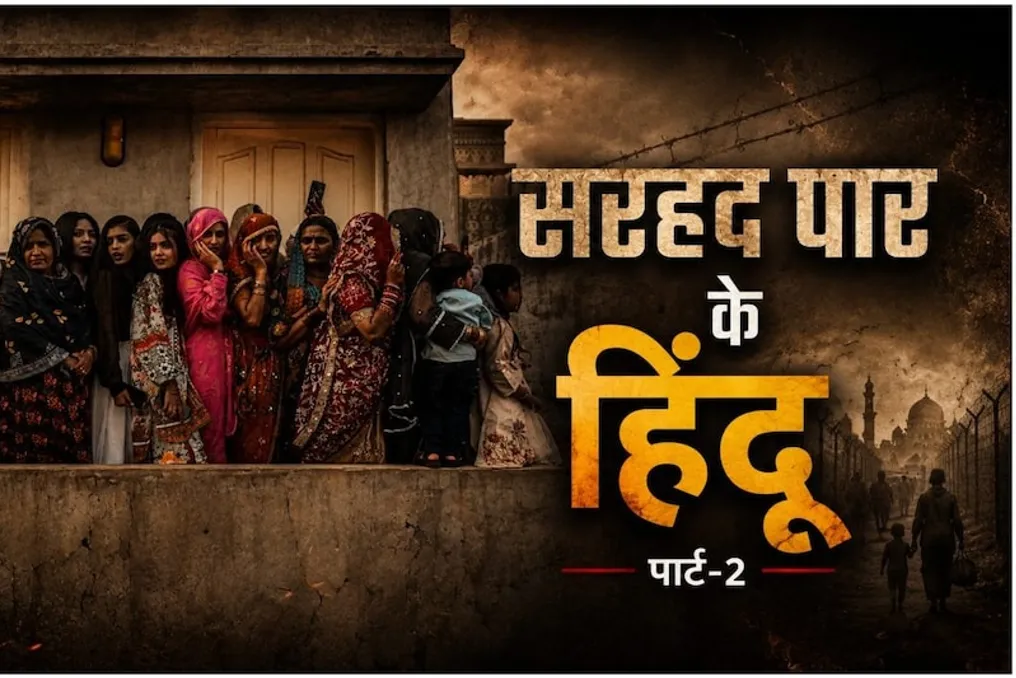
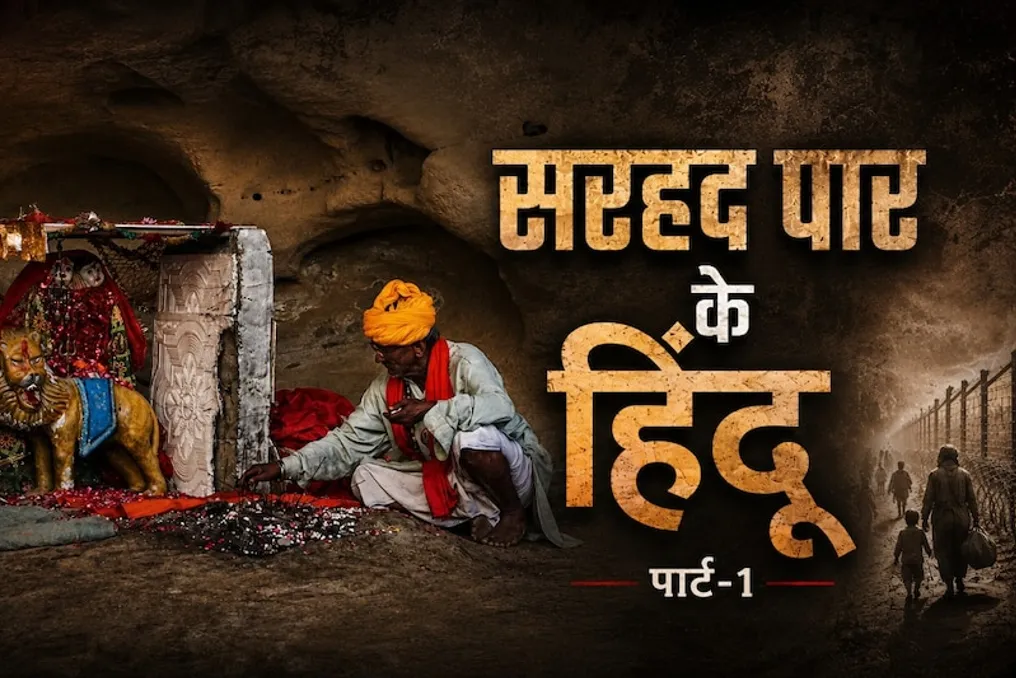
Some residents of Pakistan are forced to adopt Muslim names while keeping their identity secret. While preserving their roots, people who grew up in Pakistan face difficulties in openly expressing their religious identity.
Advice and Residents' Experiences
Sabraj Bill, who lived in Pakistan for about 40 years before returning to India in 2014, recounted that he was advised from childhood not to state his name when visiting Karachi or Lahore, but to conceal his Hindu affiliation if necessary. He noted that the situation is slightly better in the Sindh province, where more Hindus reside, but in other cities, there is a need to hide one's Hindu identity.
Hindu Demographics in Pakistan
According to the 2023 Pakistani census, there are approximately 3.8 million Hindus living in the country, which accounts for about 1.61% of the total population. Most of this population is concentrated in Sindh. In Pakistan, Hindus are counted in two categories: Caste Hindus and Scheduled Castes. There are various estimates of the Hindu population: the Hindu Panjabet asserts that their number exceeds 5 million, while many reports indicate a range between 3.8 and 5 million.
According to government data, the number of Hindus has been increasing: it was about 1.28 million in 1981, 2.4 million in 1998, 3.5 million in 2017, and 3.8 million in 2023. The percentage of Hindus in the total population has always remained within the range of 1–2%. It is often claimed that Hindus once constituted 23%, but this refers to the period before Bangladesh separated from Pakistan. At the time of independence, Hindus made up 12.9% of the population in Pakistan, of which 22.0% were in East Pakistan (present-day Bangladesh) and 1.6% in West Pakistan (present-day Pakistan).
Social Life and Religion
According to NADRA data published in 2022, there were 2,201,566 Hindus, 188,340 Ahmadi Muslims, and 1,873,348 Christians residing in Pakistan. Additionally, there were 7,413 Sikhs and 14,537 Baha'i followers.
Sabraj notes that religious events proceed relatively easily in Sindh due to the higher percentage of Hindus. However, the situation changes when traveling to cities like Karachi, Multan, or Lahore. As Sabraj Bill said: 'There are many Hindus in Sindh, so there are not many problems. But if you have to go to Karachi, Multan, or Lahore, you have to hide. Even speaking your name is scary. The police are ready to rob.'
Jaan Bahadur Singh, who arrived from Pakistan to India in 2014, agrees with this, pointing out that Hindus in villages are often forced to live with their heads bowed. He emphasized that they merely exist, rather than living with their heads held high. Although racial discrimination has decreased, the gap between Hindus and Muslims remains very large.
Hindu Singh Sodha, who has worked with Pakistani Hindus who have come to India for 35 years, believes that the life of Hindus in Pakistan is in a state of adaptation. He stated: 'The biggest problem for Hindus in Pakistan is religious persecution. Religious persecution has reached its peak. It is difficult to survive even one day.'
Festivals and Public Life
Hindus from Pakistan celebrate festivals, but not as grandly as in India. They reported that during Diwali, they performed worship and lit candles, gathering in circles with their people, but the atmosphere present in India was absent. Dilip Singh Sodha, who arrived in 2011, added that festivals are celebrated in an atmosphere of fear. He noted: 'Festivals are celebrated only out of necessity. There is no joy in people; they do it in an atmosphere of fear.'
Jaan Bahadur Singh explained that religious events are conducted in a very limited format. 'We celebrate Holi and Diwali, but only among ten houses. If color gets on someone, a dispute arises, and you cannot play with colors near Muslim mosques. And if you sing hymns, you must be quiet.'
Regarding weddings, there is no complete ban; processions take place and musical instruments are played, but many avoid loud events to avoid attracting attention.
Places of Worship and Education
Historical temples such as Hinglaj Mata, Sharda Dham, Katasraj, and Ramdevji Dham still exist in Pakistan, but Hindus report that there are fewer of them than before. Sabraj noted: 'I saw with my own eyes that there used to be many temples. Gradually, their number decreased. Now only a few temples are visible.'
According to Sabraj Bill, there have been changes in school curricula over the last ten years. Previously, topics such as Holi, Diwali, and Ramayana were covered in books, but these chapters are now absent. Instead, more religious books are studied, which Hindus have to read.
Name Change and Employment
Jaan Bahadur Singh mentioned that many Hindu families have started giving their children names that do not immediately reveal their religious affiliation. 'If the name contains 'Ram', the affiliation becomes obvious in some places. Therefore, many choose names similar to Muslim names so that the religion is not recognizable at first glance.'
According to those who arrived from Pakistan, Hindus are engaged in agriculture, hired labor, small businesses, shops, factories, and other traditional professions. In rural areas of Sindh, a significant portion of the population depends on agriculture and temporary work. Some families are also involved in trade and private business. Another Hindu, Dhalaram, shared that his main goal is simply to reach his homeland: 'What can I say about that place? We just came here. We reached our country.'
Conclusion on the Situation
Almost all interviewed Hindus agreed that Pakistan cannot be viewed as a single entity. In some areas of Sindh, Hindus lead a relatively normal life, whereas conditions in other regions are vastly different. Their daily lives take place amidst minor precautions, attempts to maintain social balance, and protecting their religious identity. Perhaps this is why many Hindus who have come to India primarily speak not of any conveniences, but of no longer needing to hide their name and religion.