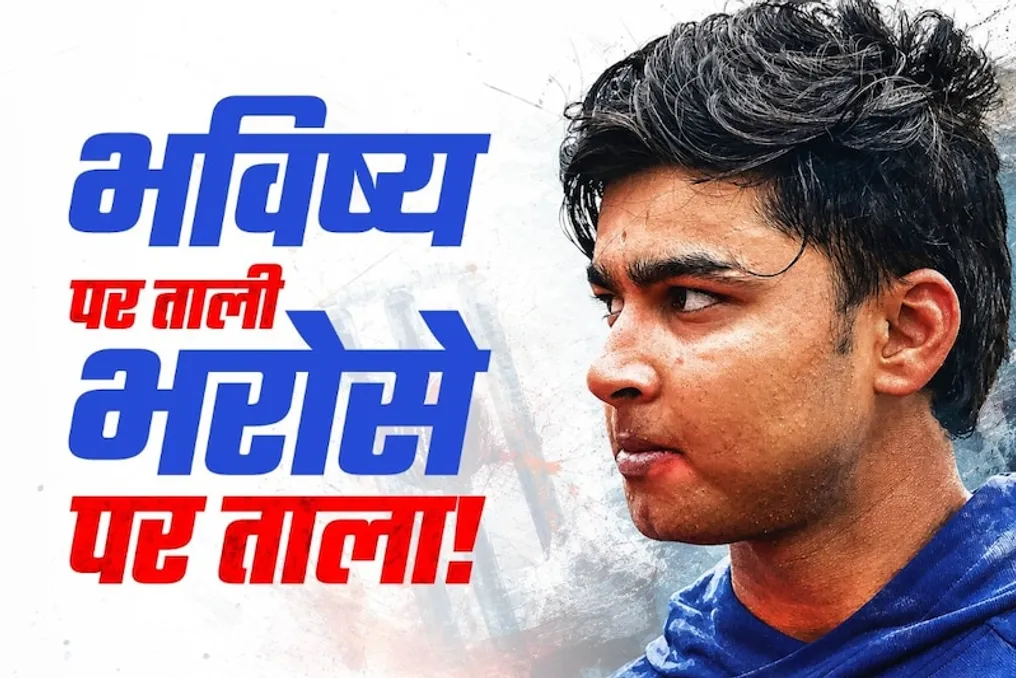
Young player Vaibha Suryavanshi, aged 15, was selected for the Indian national team, which many viewed as the beginning of India's future in cricket. Discussions across the country centered on India acquiring a new major talent. However, a question arose: does the Indian team trust its own future, or is it only capable of promoting it?
Promotional Campaign Versus Actual Game Time
It is noteworthy that the official broadcaster of this tournament made Vaibha a central figure in promotional materials, creating the impression that he was the main story of the tour in England. Nevertheless, when the matches began, Vaibha could not leave the dressing room. After two games against Ireland and the first T20 against England, spanning three matches, the most discussed young Indian player remained on the bench.
The Team Management Dilemma
Team management might argue that a 15-year-old player should not be introduced to international cricket too early. This argument is not incorrect. But then arises the same direct question: why select him into the team so early if there wasn't a suitable moment now?
It is also true that India is not a laboratory where new players are constantly tested. India is the reigning T20 World Champion, and squad decisions must be based on strategy and performance, not emotion.
The Need for Uniform Evaluation Standards
However, evaluation criteria must be consistent for everyone. In the first T20 against England, Indian batsmen again looked uncertain against balls that gripped and bounced. Sanju Samson's poor spell also continued. This does not mean he should be dropped in the next match. Senior players should be given a chance to return. But will this chance go to the young player sitting on the bench?
This is where the biggest dilemma of Indian cricket lies. When an experienced player fails, they say, 'Class remains unchanged.' When a young player is ready, they say, 'Not yet time.' If different standards are applied to them, how will the next superstar emerge?
Rotation as an Investment in the Future
Former BCCI selector Sarnadip Singh raised the issue of rotation precisely for this reason. He believes that building a future team sometimes requires making difficult decisions. Giving a young player a chance at the expense of resting a senior athlete is not an insult but an investment in the future of Indian cricket.
Indian cricket has faced this path before. During the Commonwealth Bank series in Australia in 2012, Mahendra Singh Dhoni and the team management included titans like Sachin Tendulkar, Virender Sehwag, and Gautam Gambhir in the rotation policy to give more opportunities to young players like Rohit Sharma. At the time, this decision sparked much debate, but today, due to the packed international calendar, workload management, and building squad depth, rotation has become an important part of the strategy for almost every major team.
The Choice Between Victory and Long-Term Strategy
One cannot claim that if Vaibha Suryavanshi starts playing, India will win every match. But it is also wrong to assume that keeping him on the bench constantly will secure the future of Indian cricket. Talent is easy to recognize, but belief in it is hard. If selection is done merely to create headlines, and indecision sets in when it comes time to give a chance, the issue will not just concern Vaibha. It will affect the entire selection policy.
Every great player once played for India for the first time. Sachin Tendulkar, Virat Kohli, Rohit Sharma, and Shubman Gill also stepped onto the field without international experience. If someone had insisted solely on 'experience' that day, many great stories of Indian cricket might never have been written.
Now the decision rests with Gautam Gambhir and the team management. Do they need to simply win the next match, or prepare the team for the next ten years? Because the future is not shaped by press conferences, promotions, and social media. The future is created when a young player is trusted at the right moment.
}
}
]