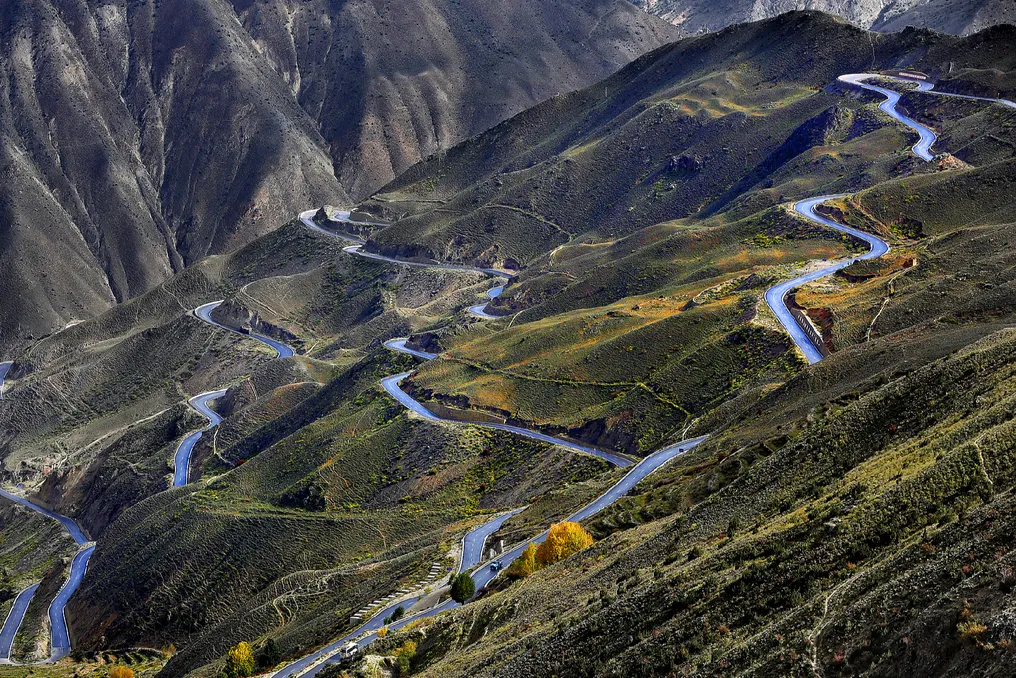
The Yunnan-Sichuan highway, which was fully opened to traffic 50 years ago, demonstrates significant changes in the transport infrastructure of China's southwestern highlands. This road connects Dali in Yunnan Province with Markam in the Autonomous Region of Sichuan in southwestern China, where it joins the Sichuan-Sichuan road.
Historical Significance and Development
The road, spanning over 700 kilometers, is one of the four main arteries leading into Sichuan and has long served as a key corridor for trade, exchange, and movement through the Hengduan Mountains. Over the past five decades, it has developed alongside the regions it unites, connecting not only settlements but also people, goods, and opportunities.
Before the advent of modern roads, travel and trade in southwestern China relied on the ancient Tea Horse Road network. For centuries, camel caravans transported tea, salt, and other goods along routes connecting Yunnan, Sichuan, and Sichuan. Furthermore, branches of this route extended to modern Nepal and India, forming part of a broader Asian network of cultural and commercial exchange.