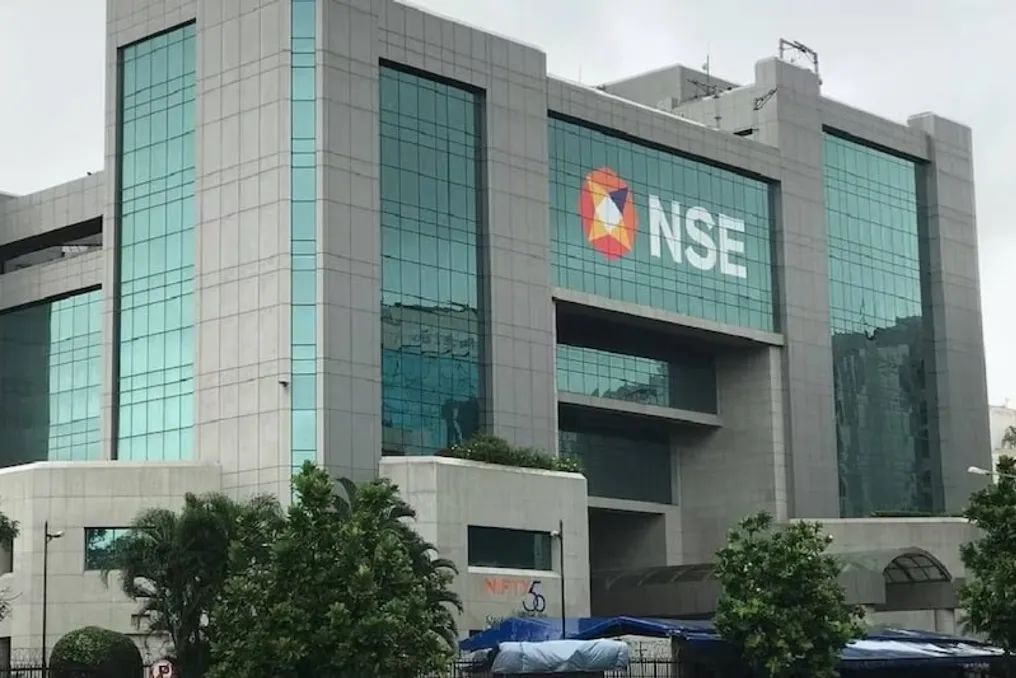
Global broker Jefferies predicts that the upcoming Initial Public Offering (IPO) of the National Stock Exchange of India (NSE) will be the final piece in India's exchange triad, as the country's largest exchange prepares for its long-awaited market debut.
Formation of the Exchange Triad
Following the NSE listing, it will join the Bombay Stock Exchange (BSE) and the Multi Commodity Exchange of India (MCX), which are already publicly traded. Thus, all three major exchange operators will be on Dalal Street. NSE plans to conduct an IPO valued at approximately 30,000 crore rupees in September. If successful, this offering will value the country's largest stock exchange at over 5 trillion rupees, allowing it to surpass the Hyundai Motor India IPO launched in October 2024, becoming the largest public offering in the country's history.
Growth of the Options Market in India
According to Jefferies, the Indian equity options market shows impressive growth with a Compound Annual Growth Rate (CAGR) of 56 percent for the financial years 20-26, significantly higher than the 19 percent rate for the money market turnover. In FY26, the average daily premium turnover for options accounted for about 70 percent of the daily money market turnover. Consequently, derivatives instruments provided around 70 percent of the operating income for Indian exchanges.
In the opinion of Supratim Datta, Prahar Sharma, and Satvik Kanabar from Jefferies, this has led to a decoupling between exchange revenues and market activity cycles, as options trading is closely linked to volatility rather than price movement. Jefferies also noted that although India trades more options contracts compared to the US market, premium rates for options in India are only one-fifth of those in America.
NSE's Dominance in the Market
NSE, established in 1993, generates about 70 percent of the revenue for Indian exchanges, according to Jefferies. Furthermore, the exchange appears to be the most diversified among its competitors, offering services in cash equities, index options, individual stock options, stock futures, commodity futures and options, bonds, and currency derivatives. In most categories, except for index options and Futures & Options (F&O), NSE holds over a 90 percent market share.
The NSE clearing corporation, NSE Clearing Ltd (NCL), controls an 88 percent market share in the cash segment and 91 percent in the F&O segment. The exchange also provides a range of technology and information services that brought in 13 percent of revenue in FY26, and it is expanding its presence in commodity F&O.
Impact of Regulatory Expenses on Profitability
Jefferies asserts that NSE remains more profitable than BSE due to its stronger equity options business. Excluding one-time settlement costs from the Securities and Exchange Board of India (Sebi), NSE's normalized EBITDA margin remained stable at 76-77 percent during the FY24-26 period. The Jefferies report stated: 'NSE's higher clearing market share and the premium to nominal turnover in equity options have led to higher profitability compared to BSE. However, provisions related to the colocation and dark fiber case (INR 1390 crore in FY26) and the payment of INR 670 crore regarding the TAP issue in FY25 affected NSE's operating EBITDA in FY25 and FY26. Considering the one-time nature of Sebi charges, if excluded, NSE's normalized operating EBITDA margin (76-77 percent) was largely stable from FY24 to FY26.'
Strong Balance Sheet and High Dividends
According to the broker, in FY26, NSE's assets amounted to 28,800 crore rupees, including government securities and mutual funds. NSE set aside funds for potential Sebi actions, while contingent liabilities (INR 1,050 crore in FY26) are mainly related to income and service tax disputes. Jefferies added: 'The combination of strong operating cash flows with limited capital expenditure (3-3.5 percent of revenue) allowed NSE to distribute 74 percent and 85 percent of profits as dividends in FY25 and FY26, respectively.'
Risks and Litigation
Jefferies warned investors about the regulatory issues and legal battles facing the country's largest exchange. The broker reported that NSE has faced regulatory measures concerning access to its colocation facilities and servers, and the company is in the process of resolving these matters with Sebi. Additionally, 20 civil and nine criminal cases have been filed against NSE. Jefferies also noted that restrictions on weekly index options and the increase in minimum contributions to the Securities Portfolio Guarantee Fund (SGF) negatively impacted NSE during FY25-FY26.
Potential Improvement in Insurers' Solvency
The NSE Offer for Sale (OFS) document indicated that state general insurers intend to sell 1.1 percent of their stake. The broker expects this OFS to improve the solvency of state general insurers. Jefferies commented: 'We note that three out of four multi-line general insurers (Oriental, National, and United) have solvency below the regulatory threshold by 1.5 times. The OFS may increase the available solvency capital for these insurers.'