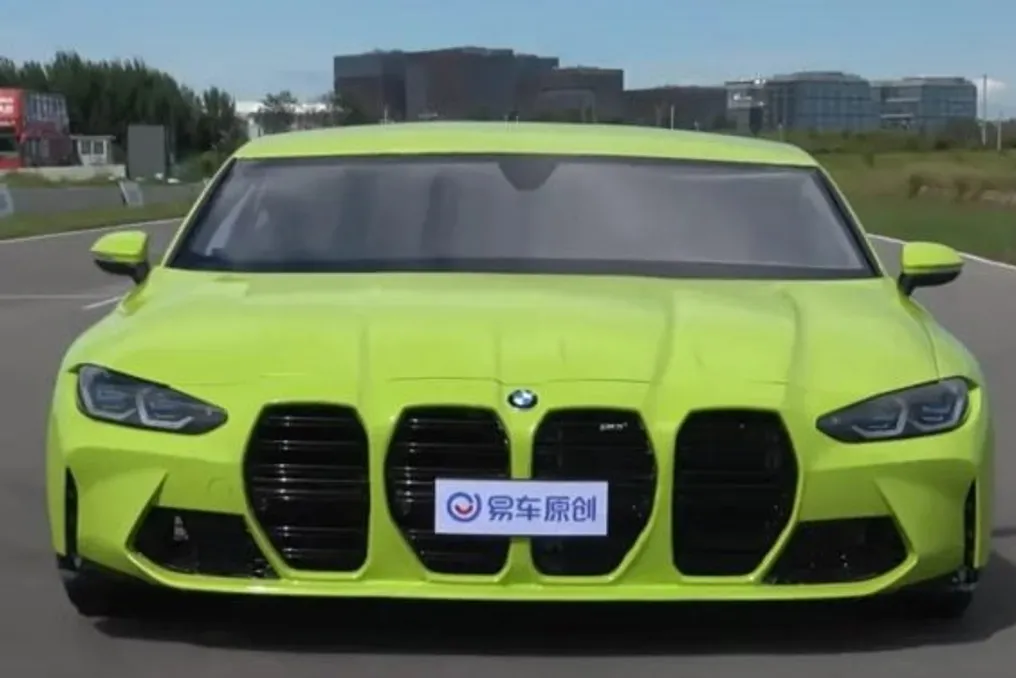
The giant BMW M3, which is not a fake, has a hidden truth under the body that is even worse.
The Concept of the 'M3²' Project
An interesting Volkswagen Lamando L, whose width almost reaches three meters and appeared in China in 2022, underwent a very controversial transformation. This project, named 'M3²' (which can be translated as 'M3 squared'), decided to adopt the controversial appearance of the modern BMW M3 while adding an element of excess that challenges common sense. Images of the car, published by the creator under the nickname Blackma on Chinese social networks such as Bilibili, attracted worldwide attention after being published in Carscoops.
Exterior Modifications and Similarities
The sedan retained the structural basis of the Volkswagen model, abandoning any design subtlety. On the front end, the designers installed not one, but two sets of the famous BMW M3 G80 generation grilles. As a result, the front section occupies almost the entire front part of the vehicle—a visual effect that will surely not go unnoticed at any car meet.
The choice of these elements is not random. The double 'chest' shaped grilles from the modern M3 are among the most criticized design decisions in recent BMW history and constantly become the subject of internet jokes. The Chinese project pushed this provocation to the extreme: if one large grille causes concern, imagine four—even more complicated.
Hidden Features and Interior
Despite the BMW-style 'fantasy,' the project does not hide its origins. The headlights look identical to those of the German sports car—according to Carscoops, they may even be original parts, and the taillights follow a similar concept. However, the roofline silhouette and the rear end reveal that it is still a Lamando. The disappointment for performance enthusiasts inside the cabin is even greater: it lacks the 3.0 bi-turbo six-cylinder inline engine capable of developing up to 510 hp in the Competition version, as well as a sporty chassis tuning. The car is equipped with a modest 1.4 four-cylinder engine, which was original to Volkswagen. Even the VW logo on the steering wheel was covered with tape in a not very convincing attempt at disguise.
To complete the eccentricity, the interior was 'cleaned up,' and instead of sports seats or expensive materials, it was filled with beanbag-type cushions, known as poufs in Brazil. A large panel was also added to the cabin facing the front passenger, which was the only technological addition to this set. It should be noted that in its original configuration, the elongated Lamando could carry about ten people, according to reports at the time.