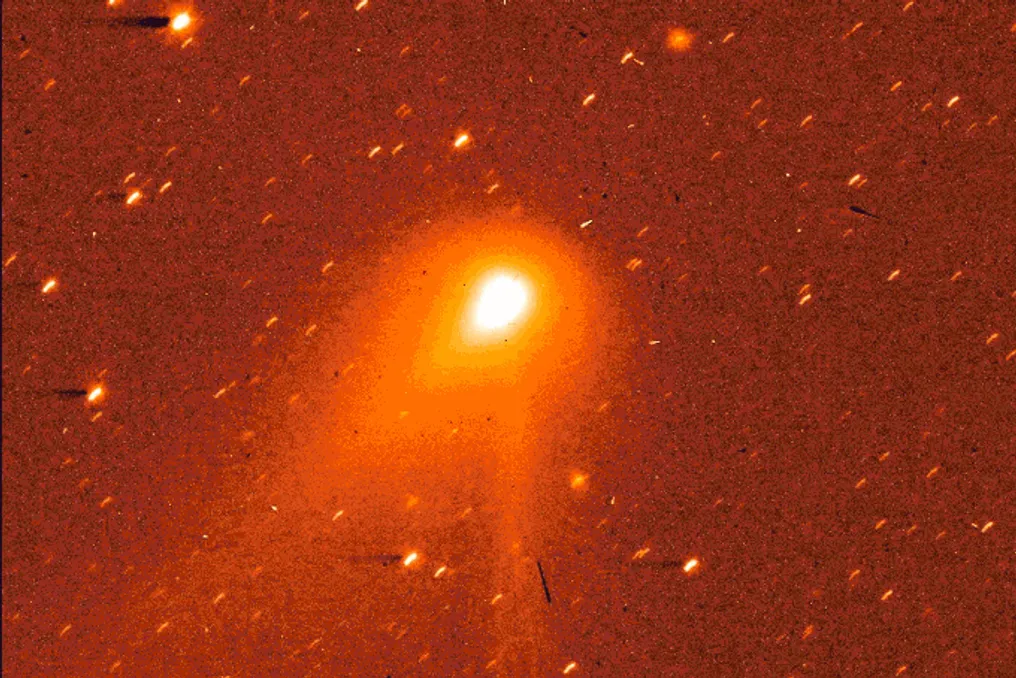
Astronomers from the European Southern Observatory (ESO) were able to detect new signs regarding the origin of the interstellar comet 3I/ATLAS after analyzing its chemical composition using the Very Large Telescope (VLT) in Chile. The study showed evidence suggesting that the comet's age exceeds that of our Sun.
Chemical Composition Analysis and Age
The study, published in the journal Nature Astronomy, examined the isotope ratios in the gas around the object and suggested that the comet likely formed in the outer regions of an old stellar system with a low abundance of heavy elements. The results obtained suggest that this cosmic visitor, which is the third identified interstellar object, may be twice as old as the Sun. This discovery expands the understanding of bodies formed outside the Solar System, as well as very ancient planetary environments.
Details of the 3I/ATLAS Study
Comet 3I/ATLAS attracted the attention of scientists because it is the brightest interstellar object ever observed, allowing for a detailed study of its composition. Unlike the first two such objects, 1I/ʻOumuamua and 2I/Borisov, this comet provided favorable conditions for more precise measurements. The team led by Cyrielle Opitom, a researcher from the University of Edinburgh in the UK, used the UVES instrument installed on the ESO VLT to measure the ratio of various forms of carbon and nitrogen in cyanide molecules released by the comet.