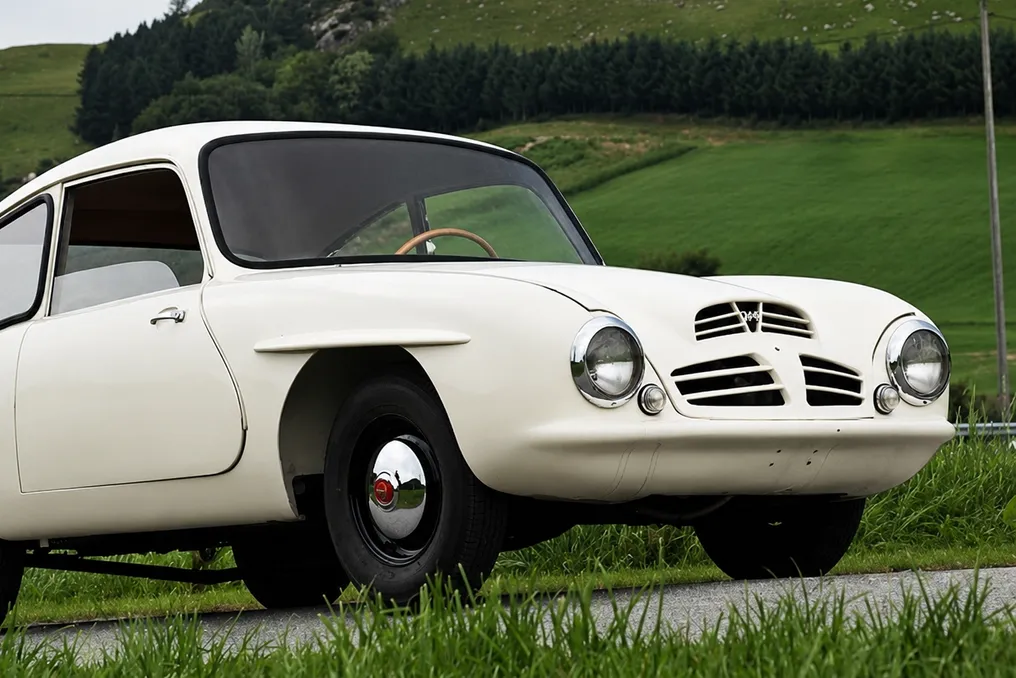
The word troll has multiple meanings. Originally, it refers to beings from Norse mythology, described as ugly and isolated creatures inhabiting caves, forests, or under bridges, demanding tolls, either in money or by solving riddles, to allow human passage. Although the exact origin of the myth is unknown, some specialists suggest that prehistoric interactions between anatomically modern humans and Neanderthals could be a partial explanation for its existence.
Modern meaning of the term
In contemporary internet jargon, trolls are defined as users whose purpose is to incite chaos and discord. They post and comment intentionally provocative, false, or meaningless content, aiming to irritate and provoke negative reactions, all while maintaining digital anonymity. Currently, the term is often replaced by 'ragebait,' which essentially describes this behavior.
Sports context and shift in focus
The automotive website FlatOut mentions an event that occurred on July 5, 2026, when the Brazilian public felt 'trolled' by Norway. Brazil's elimination in the World Cup quarterfinals was considered a hard setback, aggravated by the performance of Norwegian striker Erling Haaland. However, the article uses this context to introduce a different topic: fiberglass sports cars, an area where Brazil, according to the author, demonstrates superiority compared to Norway.
Popular
The case of the Brazilian Puma
In Brazil, the legendary Puma stands out, which evolved from the DKW and incorporated Volkswagen mechanics, combined with an elegant fiberglass body and the reliable air-cooled engine of the German manufacturer. Although not an extremely powerful vehicle, the Puma was appreciated for its charm, finish, and ease of use. The author recounts meeting a couple who used a Puma convertible for daily transport.
The early model Puma VW coupe is considered the most sophisticated, especially when equipped with transparent headlight lenses. However, all Pumas with Volkswagen mechanics, including those with Brasília taillights and integrated late 70s bumpers, are considered good. The GTB, which used the front engine of the Opala, also deserves mention, as it gained its own fan base.
The Norwegian automotive industry
In terms of the automotive industry, Norway has little production. This is due to being a small, highly developed country whose economy does not rely on the automotive sector for revenue generation. Despite this, in the 1950s, there was an attempt at industrialization, resulting in the birth of the Troll, the first and only sports car produced in the country.
The Troll was compared to the Puma because it was also an 'out-of-series' fiberglass car that used an engine from another company. Unlike the Puma, the Troll was a failure, with only five units produced and remaining forgotten in automotive history, while the Puma gained international cult collectible status.
Origins and motivations of the Troll
The Troll project was initiated by businessman Per Kohl-Larsen, an individual with a pragmatic and overly optimistic vision for the future of Norwegian mobility. In the mid-50s, reinforced fiberglass plastic, popularized by the launch of the Chevrolet Corvette in the US in 1953, sparked global interest. For a small nation with rugged terrain like Norway, fiberglass offered solutions to two main problems.
Firstly, the cost of molds: a conventional assembly line would require enormous hydraulic presses and expensive steel molds, unfeasible for small-scale production. Fiberglass allowed for an almost artisanal molding process. Secondly, the climatic factor: Norwegians saw fiberglass as an effective shield against the harsh Scandinavian climate, where salt and snow rapidly corrode steel, making a rust-proof car a strong selling point.
Mechanical partnership and design challenges
Just as the Puma required the German engineering of Volkswagen, Kohl-Larsen sought an external mechanical supplier. He contacted Gutbrod, a struggling small German manufacturer, which possessed the Gutbrod Superior design. This urban microcar, although modest, had a charming design. Between 1950 and 1954, 7,726 units were manufactured, consisting of 6,860 two-door sedans with canvas tops and 860 station wagons.
The idea for the Troll was to use the structure of this German microcar and apply a fiberglass body designed by Hans Trippel. A design unforeseen issue arose: the Gutbrod chassis was 15 centimeters longer than the original Troll body design. The solution found was to slightly lengthen the fiberglass shell, which prevented the creation of a pure coupe and resulted in a tiny rear seat, transforming it into an improvised 2+2 coupe.
A crucial point of divergence was the mechanics: while the Brazilian Puma benefited from the robustness of the VW air-cooled boxer engine, the Troll inherited a more complex and unstable mechanical setup. Under the hood was a two-cylinder, two-stroke, 700cc engine. Notably, the original Gutbrod was one of the first mass-produced cars worldwide to use direct fuel injection, technology developed with Bosch, similar to that used by Mercedes-Benz in the 300SL Gullwing at the same time. Furthermore, Hans Trippel, responsible for the Troll's design, is also credited with the 'gull-wing' doors of the 300SL.
Despite the technical sophistication, the Norwegians opted to keep this system from the bankrupt German manufacturer. The result was a modest power output of 26 hp. However, theory contrasted with practice: the pioneering Bosch direct injection system presented chronic operational and maintenance problems. The team even considered replacing it with the three-cylinder, two-stroke engine from SAAB, produced in Sweden, but the reverse engineering for this swap was never realized.
Design and bureaucratic obstacles
Visually, the Troll was not commendable. Its lines were bulky, the front lacked a traditional grille, presenting only vents on the hood and headlights resembling wide-open eyes. Its proportions were difficult to accept, giving it a visually heavy appearance, similar to an inverted bathtub with thin tires.
The first production Troll was delivered on May 1, 1957. The team was ready, with molds prepared and the production line started, but the official permission from the Norwegian government was missing. Kohl-Larsen hoped for support by creating a national product that would foster employment and technical development. However, despite appeals, the homologation document was never granted to the small company, officially named only 'Plastik & Bilindustri.'
Geopolitics and the end of the project
The biggest obstacle to the project was not the faulty mechanics, but rather the internal geopolitics of the country. In the 1950s, the Norwegian economy heavily depended on bilateral foreign trade agreements, whose main export product was fish (herring and cod), and whose main buyer was the Soviet Union and the Eastern Bloc countries.
Trade functioned through macroeconomic barter: Norway sent fish to the Soviets and, in return, was forced to acquire industrial products from them, such as Moskvitch, Volga, Pobeda, and Tatra. The Norwegian government rigidly controlled the automotive market through quotas and purchase licenses. The authorities in Oslo perceived 'Plastik & Bilindustri' as a potential threat: if Norwegians began buying a local fiberglass sports car, demand for Soviet cars would fall, barter agreements would be broken, and the country would be left with a surplus of spoiled fish.
The final blow was regulatory suffocation: the government blocked large-scale production licenses and domestic sales quotas. The company received authorization to sell a negligible amount of vehicles domestically. Without scale, without financial support, and prohibited from selling to its own citizens, the project became economically unviable overnight. Plastik & Bilindustri ceased operations in 1958, leaving debts and only five complete units. The irony lies in the fact that, despite the bureaucratic failure, the quality of Scandinavian fiberglass proved perfect, and all five surviving cars are today rare museum pieces.