The association's president, Lídia Gulele, announced that Mozambican jurists wish to collaborate with the Assembly of the Republic in the area of human rights. She mentioned that the association has been disseminating laws approved by parliament to Mozambican communities and aims for Mozambique to be aware of these laws to foster a legal culture, allowing citizens to defend themselves in case of rights violations.
Objectives of Legal Cooperation
According to Lídia Gulele, the organization plans to create partnership mechanisms with parliament. The goal is to strengthen legal education in communities and support issues related to human rights, involving judges, prosecutors, lawyers, notaries, and law students.
Combating Gender-Based Violence
The responsible party emphasized that a high rate of domestic violence persists in Mozambique, characterized as gender-based violence. She argued that both institutions—the association and parliament—can work together to reduce this form of violence.
Furthermore, the association expressed interest in collaborating with parliamentary committees focused on constitutional issues, human rights, and gender. The possibility of formalizing this collaboration through a memorandum of understanding was mentioned to guide future joint actions. Lídia Gulele expressed satisfaction with the reception of the request by the president of the Assembly of the Republic, declaring the association's readiness to cooperate in these areas.
Activity of the Legal Association
The Mozambican Association of Women in Legal Careers brings together professionals from various areas of the justice system, including magistrates, prosecutors, lawyers, notaries, and law students. The entity promotes initiatives aimed at legal education, the defense of human rights, and the promotion of gender equality in Mozambique.
Context of Social Issues
In a parallel context, Mozambican social activist Graça Machel criticized in Maputo on April 17th the acceptance of sexual harassment in the country and the fragility of criminal accountability, calling for stricter penalties. On April 2nd, the president of the Mozambican Association of Judges advocated in Maputo for greater dissemination of legislation against sexual harassment, warning that lack of knowledge prevents reports and hinders the fight against practices such as public harassment.
On the same day, Quitéria Guirengane, executive secretary of the NGO Observatory of Women, classified sexual harassment as a 'silent crime,' which is often difficult to prove and occurs in various social environments, such as streets, schools, and workplaces. Citing the Women's Status Barometer 2024, she reported that 89.2% of women felt safe moving around their neighborhoods during the day, but only about 20% felt safe at night, indicating a correlation between harassment and the risk of sexual violence.
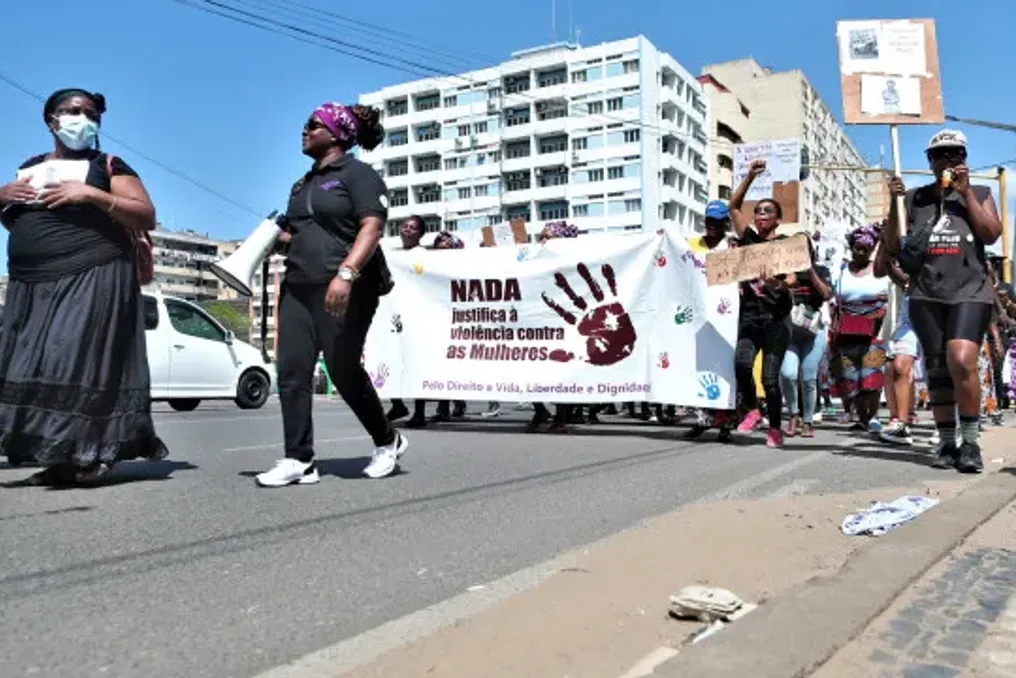
Additionally, the President of Mozambique, Daniel Chapo, expressed concern on March 8th about the increase in cases of gender-based violence, considering it an obstacle to national development efforts. Finally, on March 5th, a group of one thousand Mozambican women requested the classification of femicide, the criminalization of obstetric and digital violence, the creation of specialized judicial sectors for domestic violence, rape, and harassment, as well as the guarantee of economic autonomy for courts.