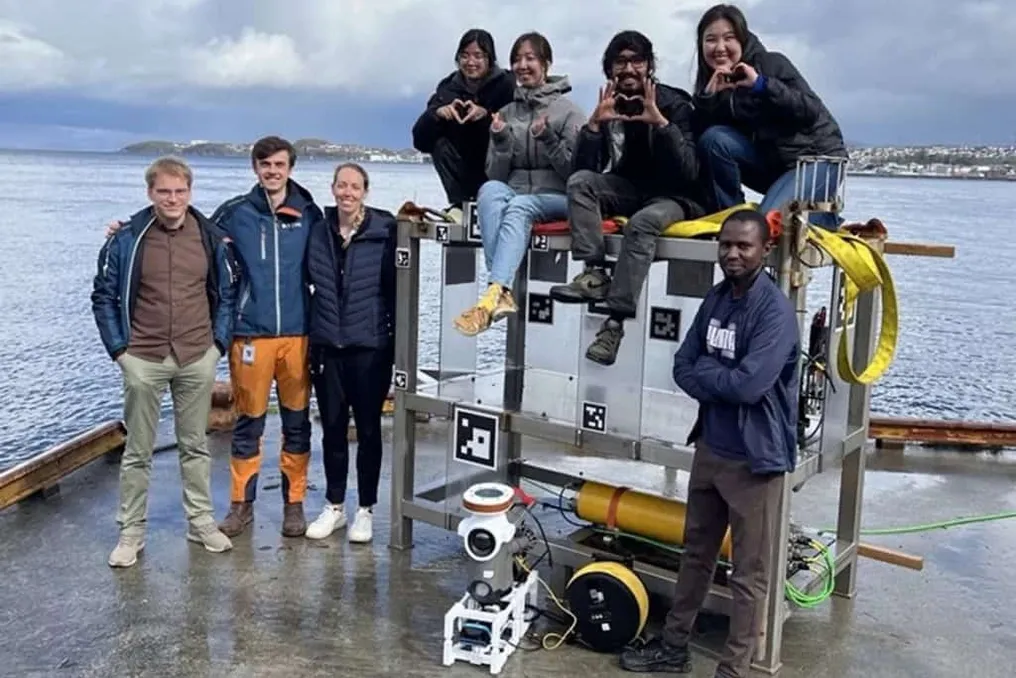
Researchers from the Norwegian University of Science and Technology have created an autonomous underwater vehicle system that can act as a 'supervisor' over structures located on the seabed. This technology was tested in real conditions and functions without the need for an onboard crew.
System Operating Principle
The equipment performs scheduled inspections of underwater installations, autonomously returns to a base located on the seabed, where charging occurs via induction and collected data is transmitted. The goal of the development is to enhance control over critical assets such as cables and pipelines installed in deep and remote areas.
Testing was conducted over four weeks of cumulative operation across two missions, achieving an automatic connection rate of 90%. However, the project still aims for complete reliability before being deployed without any direct supervision.
Monitoring Underwater Infrastructure
The development, conducted in Norway, arose from the need to monitor growing infrastructure on the seabed. This infrastructure includes intercontinental communication cables, oil and gas pipelines, and other elements vital to global energy and digital systems.