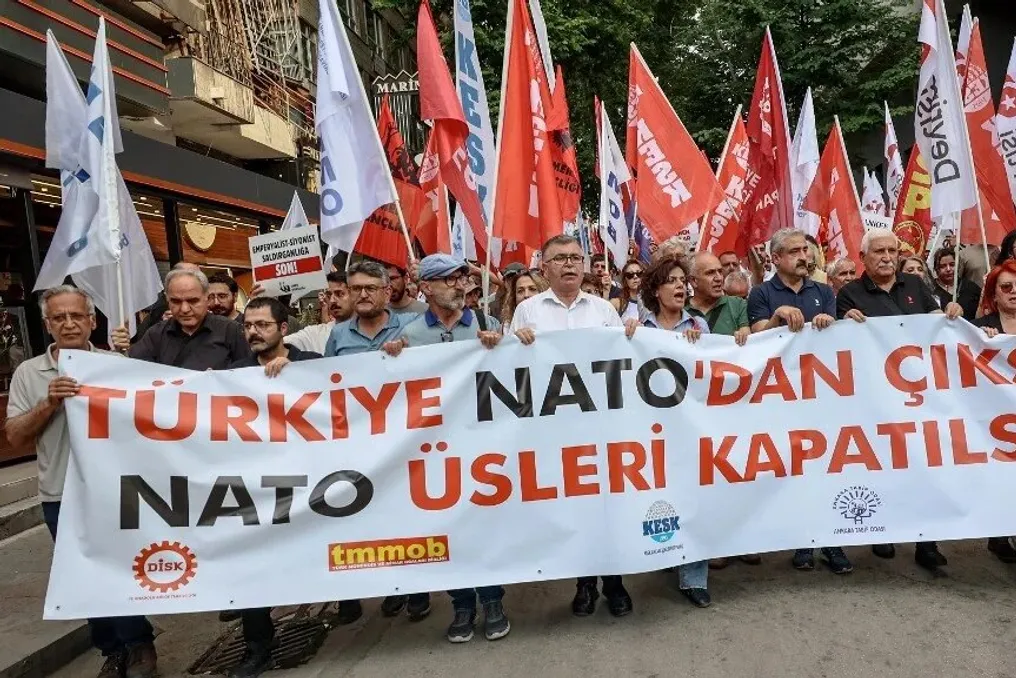
Human rights organizations condemned the ban on protests imposed by Turkey ahead of the NATO summit, as well as the mass arrests of hundreds of people as part of a large-scale crackdown campaign.
Restrictions and arrests in Turkey
Last week, the Ankara governorship announced a 13-day ban on all public gatherings across the province, starting Sunday. The reasons cited for this decision were 'national security' and security measures around the conference. As a result of this action, 225 people were detained.
Among those detained were alleged supporters of the leftist Revolutionary People's Liberation Party/Front (DHKP/C) and the Islamic State group. Other detainees included academic Emel Memiş, LGBTQI+ activist and journalist Yıldız Tar, representative of the environmental NGO Tema Nevzat Özer Foundation, independent union speaker Umut-Sen Burku Arıkan, and lawyers from the Association of Progressive Lawyers Semra Demir and Kursat Başfra.
Government and human rights reaction
The state news agency Anadolu reported that 178 of the 178 suspects taken into custody were officially arrested, while 34 people were released under judicial supervision. Amnesty International issued a statement condemning the ban and arrests as an 'unjustified infringement on the right to freedom of peaceful assembly and expression.'
Ester Major, Deputy Director for European Research at Amnesty International, stated that 'all overly broad and disproportionate restrictions that impede the exercise of the right to peaceful assembly must be lifted.' Furthermore, she noted that NATO's decision to deny accreditation to some Turkish journalists and media outlets is a blow to press freedom, and called on NATO to change its stance to allow the excluded parties to cover the event.
Journalist access to the summit
The summit, scheduled for July 7-8, is expected to involve 32 leaders, including US President Donald Trump. Turkey has been a NATO member since 1952 and possesses the second-largest land army in the alliance. Leftist and some Islamist groups have long criticized Turkey's membership, arguing that it keeps the country under US dominance and suppresses socialist and anti-imperialist movements in Turkey.
Discontent with the summit in Turkey has intensified due to US support for the genocide in Gaza and US attacks on Iran. Dozens of journalists were denied accreditation for the summit, including representatives of reputable independent publications such as Cumhuriyet, Sozcu, Anka, T24, and Medyascope. On Friday, a number of media freedom organizations published a joint statement condemning NATO's decision to deny journalists access.
The statement emphasized that 'given NATO's own accreditation criteria, which list editorial independence as a core requirement, denying accreditation to publications defined by this quality is difficult to reconcile.' It also noted that 'if a state institution with a documented history of restricting press access played any role in this process, NATO risks allowing domestic media agendas to influence what should be an independent accreditation system.' Middle East Eye requested comments from NATO but had not received a response at the time of publication.