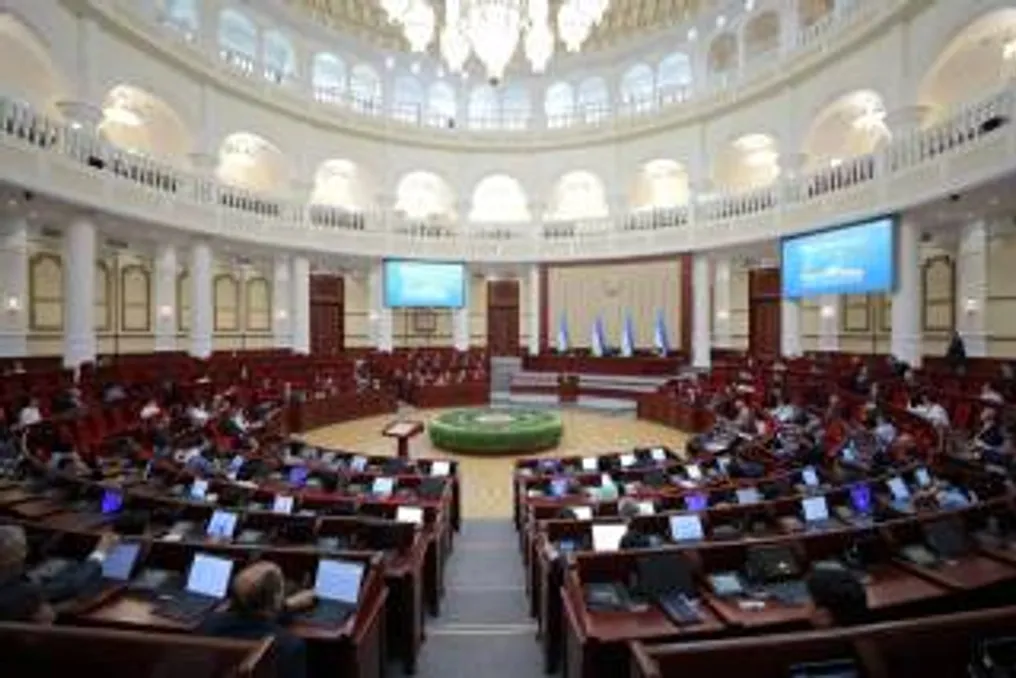
Various draft laws were considered at the session of the Legislative Chamber of the Supreme Majlis. Initially, a report from the Coordination Commission regarding the draft Constitutional Law 'On the Tashkent International Financial Centre' was discussed.
Constitutional Law on the Financial Centre
This Constitutional Law establishes the legal status, principles of operation, management system, and powers of the Tashkent International Financial Centre, as well as defining a special legal regime within the Centre's territory. Provisions were introduced regarding the application of the principles, legislation, and judicial precedents of England and Wales, provided they comply with the Constitution of the Republic of Uzbekistan and the decisions of the Financial Centre.
Furthermore, the legal status of the Centre's administration, the Department of Financial Services of Tashkent, and the Tashkent International Commercial Court was strengthened. The introduction of tax and customs benefits within the Centre's territory was also stipulated.
Clarification of Court Powers
At the general session of the Senate of the Supreme Majlis held on June 13 of this year, proposals were put forward for the further improvement of certain norms of the Constitutional Law, which were rejected. Special attention was paid to the need to revise the requirements for judges of the Tashkent International Commercial Court and clarify its powers, such as hearing cases on international arbitration and administrative-legal disputes, leading to a decision to improve the law.
As noted at the meeting, the proposals and comments made by the Senate on the law were comprehensively reviewed by the Coordination Commission, resulting in the further refinement of the norms of the Constitutional Law. The powers of the Tashkent International Commercial Court, the requirements for judges, the procedure for considering international arbitration cases, and the rules governing the special legal regime within the Centre's territory were clarified.
Deputies emphasized that the improved version of the Constitutional Law is an important legal basis for attracting foreign direct investment into the country's economy, strengthening cooperation with international financial institutions, and forming a modern ecosystem of financial services.
Agreement on the improved version of the draft law was reached by the Coordination Commission following the discussion.
Improvement of Veterinary Supervision
The draft law 'On Amendments and Additions to the Law of the Republic of Uzbekistan 'On Veterinary Medicine' in connection with improving state veterinary supervision' was also considered. It was emphasized that systemic work is being carried out to ensure food safety in the country and the delivery of safe products to the population, as well as to implement advanced international experience in veterinary medicine.
There was a need to create a guaranteed system for ensuring veterinary safety in the territory of the Republic of Uzbekistan and the safety of goods under the control of the state veterinary service, as well as to further improve state veterinary supervision and harmonize veterinary legislation with the rules of the World Trade Organization.
This draft law included changes aimed at defining the basic principles in veterinary medicine, clarifying the powers of the Food Safety Committee of the Republic of Uzbekistan in veterinary matters, and harmonizing the activities of state, institutional, production, and private veterinary services.
Mukaddas Akhmedova, a member of the Agrarian and Water Management Committee, stated that when adopting the draft law, special attention was paid to improving norms related to the production, processing, storage, transportation, and sale of goods under the control of the state veterinary service, as well as harmonizing terminology and standards in this area with the rules and regulations of the World Trade Organization. She noted that the adoption of this document will contribute to improving the system of ensuring veterinary and sanitary safety, and will ensure transparency in the implementation and control of the state veterinary service.
After discussions, the draft law was adopted by the deputies and sent to the Senate.
Strengthening Industrial Safety Requirements
Deputies considered in the first reading a draft law aimed at improving legislation in the fields of industrial, radiation, and nuclear safety. It was pointed out that the development of new industrial sectors and the introduction of high-risk technologies require further improvement of the legislative base.
Analysis of past incidents and accidents also dictates the need to strengthen safety measures, increase the responsibility of entities operating in this field, and reinforce preventive measures against offenses.
This draft law introduces amendments and additions to current legal acts aimed at improving the state supervision system and legal relations in the fields of industrial, radiation, and nuclear safety, as well as the use of atomic energy.
In particular, norms are introduced regarding liability for violating industrial safety requirements that result in medium or severe injury or death of a person, providing for criminal liability. Additionally, the Code of Administrative Liability establishes liability for violating the rules and regulations for the use of atomic energy.
The powers and legal status of bodies in several laws are also clarified. The draft law provides for a mechanism for applying financial sanctions to legal entities for violating rules related to the use of atomic energy, radiation, and nuclear safety, which is intended to increase the responsibility of entities and ensure compliance with safety requirements.
The discussion of the draft law at the meeting sparked lively debates. During the discussion, deputies asked the initiators of the draft law clarifying questions regarding the significance and relevance of the project, and expressed opinions, suggestions, and recommendations for its further improvement.
After the question and answer session, the draft law was adopted in the first reading.
Creation of the Title 'Communal Services Employee'
The next item on the agenda was the consideration in the first reading of the draft law on introducing the title 'Employee who has served the Republic of Uzbekistan in the field of communal services'. The main goal of this project is to recognize the many years of honest and effective work of communal services workers, enhance their prestige and social status, and support them materially and morally, stimulating high professionalism, responsibility, and dedication in the industry.
This document establishes the title 'Employee who has served the Republic of Uzbekistan in the field of communal services' based on the title 'Employee who has served the Republic of Uzbekistan in the field of communal, domestic, and trade services.'
As noted at the meeting, this draft law will support the professional activities of industry workers, expand opportunities to attract young and qualified personnel to the communal services sector, and improve the quality and efficiency of services in the communal services system.
The draft law was adopted by the deputies and sent to the Senate.
Changes to the Labor Code
The draft law 'On Amendments and Additions to the Labor Code of the Republic of Uzbekistan in connection with the implementation of international labor standards' was considered in the first reading at the initiative of a group of deputies. This draft law aims to sequentially incorporate the norms of ILO Convention No. 111, ratified by Uzbekistan, into national legislation.
According to this Convention, concepts of various forms of discrimination in labor and employment, including 'skin color' and 'political views', are introduced into the Labor Code. Furthermore, special attention is paid to issues of ensuring human dignity and value in labor relations, as well as introducing legal mechanisms to prevent sexual harassment in the workplace.
In particular, it is proposed to supplement the Labor Code with a new norm prohibiting sexual harassment in labor and employment. The proposed norm sparked active debate among deputies regarding the procedure for implementing liability measures for committing sexual harassment in labor and employment.
After heated discussions, the draft law was improved by the responsible commission based on the proposals and recommendations of the deputies. At the meeting, the draft law was adopted by the deputies in the first reading.