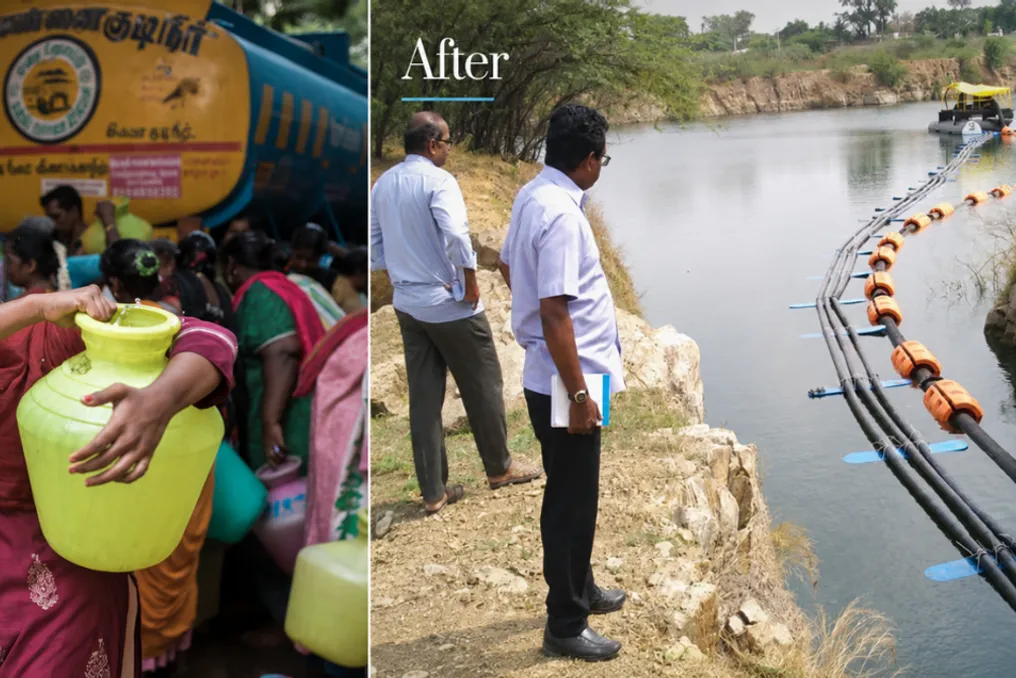
With the start of July, the first monsoon rains began in Delhi, following a period when residents in many areas experienced severe water scarcity. In May and June, with temperatures reaching 45–48 degrees Celsius, people were seen queuing at government and private tankers with buckets and pipes.
The problem of rainwater runoff
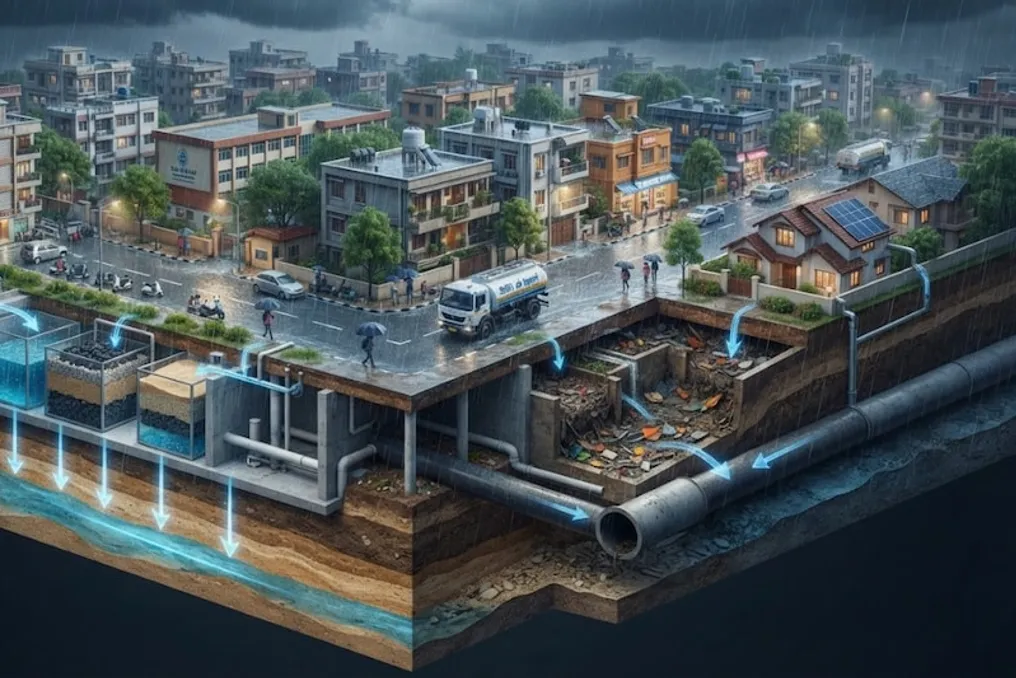
However, the situation has drastically changed: millions of liters of clean, fresh rainwater are flowing through dirty drainage ditches into the Yamuna River and leaving the city. This annual phenomenon is not a natural wonder or a disaster, but rather a reflection of serious systemic failures caused by government negligence, bureaucracy, and municipal authorities. Since this problem has existed for decades, an effective rainwater harvesting system has not been established.
Potential and reality of water collection
The total area of Delhi is about 1,486 square kilometers, and it receives an average of 611 millimeters of rainfall annually. If all this volume of water were directed into the ground or conserved, Delhi could save approximately 907 billion liters per year. This reserve would be enough for the needs of the entire population of Delhi for about 270 days. Although complete conservation of all precipitation is impossible, achieving a level of 40–50 percent would significantly benefit the city's residents.
Nevertheless, in practice, less than 5 percent of all this water penetrates the soil. More than 95 percent flows along the streets into drainage systems, causing flooding situations.
Contrast between demand and supply
During the summer period, the water demand in Delhi reached 1,200 million gallons daily from March to June. However, the Delhi Jal Board could only provide about 930–950 million gallons per day, resulting in a deficit of approximately 250 million gallons daily.
Another indicator shows that if 100 millimeters of good rain falls in one day and all this water is conserved, this volume would be enough to fully supply Delhi for 14 days.
Main causes of the problem
There are three main reasons for this problem. Firstly, there is disregard for regulations. Delhi has a requirement that all new buildings or structures over 100 square meters must have a rainwater harvesting system. However, out of approximately 17–18 million buildings, only 1–2 percent have this system operational. Most often, obtaining a certificate requires showing a hole on paper, which is then filled with earth and used for parking, without a reliable verification mechanism.
Secondly, state-owned installations do not function properly. Water collection systems installed in government schools, flyovers, and metro stations are in poor condition. These systems should be cleaned before the rains, but, as in this year, more than 60 percent of locations did not undergo such cleaning. As a result, upon the first rain, the soil clogged these reservoirs, and the water flowed down the streets instead of penetrating the ground.
Thirdly, there is no single responsible authority for water supply in Delhi. The Delhi Jal Board handles water supply and billing, MCD is responsible for cleaning small drains, PWD oversees the drainage systems of major roads, and DDA owns large city parks and open spaces. When flooding occurs during the rain, each department blames another, and the core issue gets lost.
Conclusions from official reports
According to a report by the country's largest state audit body, the CAG, an important conclusion was drawn: 51–53 percent of the water treated in Delhi is lost before reaching consumers due to leaks, theft, and damaged pipelines, whereas the acceptable loss rate should not exceed 15 percent. The CAG also noted that the Delhi Jal Board lacks a clear long-term water supply plan.
The impact of concrete on the problem
Another serious problem in Delhi is the widespread coverage of the city with cement and concrete. When rainwater falls on the soil, about half of it seeps into the ground. But when the same water hits roads covered with cement or tiles, 90 percent of it runs off without stopping. Parks, sidewalks, and streets in Delhi are almost entirely paved with tiles and cement, which prevents water from penetrating the ground.
Government actions
The Delhi government has initiated several major projects, including the construction of large ponds along Pushpa Road and the Yamuna River to retain rainwater and allow its infiltration into the ground. Furthermore, the restoration of about 250 old ponds, such as Bhalswa and Sanjay, has begun.
However, there is a significant shortcoming: all these works are being carried out on large government territories far from the city, while the main population of Delhi resides in areas like Samghan Vihar, Patel Nagar, Uttam Nagar, and Karol Bagh, where no local-level work is being done. Retaining water only along the banks of the Yamuna will not prevent groundwater rise in Karol Bagh. The problem will not be solved until water is retained in every neighborhood within that same neighborhood.
Proposals for solving the problem
A specialized body must be created that will bear full responsibility for water issues to eliminate mutual accusations between various departments. The inspection of water collection systems in large buildings should be conducted not only based on paper reports but also through manual physical audits, flow meters, and digital water meters.
It is also necessary to establish small retention pits in parks in every neighborhood so that the water remains within its own area and seeps into the ground. Additionally, when constructing new roads and sidewalks, tiles and blocks that promote water infiltration into the ground should be used.
Private tanker trade
A significant portion of Delhi's water supply comes from private tankers, but precise data on this sector is unavailable because the Delhi Jal Board only accounts for its own tankers. Private transporters illegally draw water from wells, the Yamuna, and sometimes from the board's supplies.
There is a dark side to this sector: complaints about theft from board wells, bribes to the police, and the operation of wells without permits are common. People prefer to buy expensive private water instead of waiting for government tankers, which fuels the growth of this business.