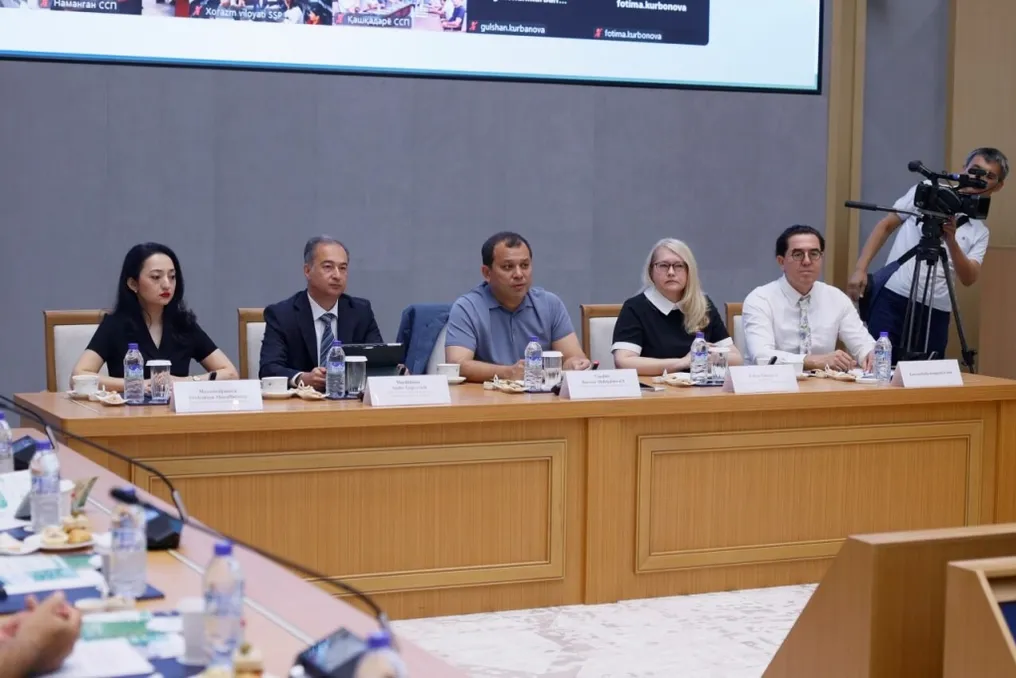
Entrepreneurs in Uzbekistan shared their problems arising from interaction with the state procurement system. During an open dialogue held on June 11 in Tashkent, 370 appeals were presented. Of these, 62 cases concerned financial losses, violation of suppliers' rights, and lack of transparency in procedures.
Analysis of Public Procurement Problems
At the first meeting of the Council of the Association of Participants of Public Procurement (AUPP), held on June 30, Marat Abidov, Deputy Chairman of the Council, presented the results of the analysis. According to him, most complaints are not related to ignorance of the rules or lack of participant training, but rather to the functioning of the system itself.
The Main Problem is Non-Payment of Contracts
The most critical problem voiced by entrepreneurs was the absence of timely payment for already completed state contracts. Suppliers who have fulfilled all obligations and delivered products often face situations where the state customer either refuses to pay or postpones payment indefinitely.
Marat Abidov cited an example where an entrepreneur fully executed a contract worth about 100 million soms but never received payment. He emphasized that this leads to direct financial damage to businesses and reduces the motivation of entrepreneurs to participate in public procurement.
The situation is particularly difficult for small and medium-sized businesses, as enterprises incur costs for raw materials, salaries, and logistics, and the lack of income puts them on the verge of ceasing operations.
Issues of Transparency and Competition
The second significant area of complaints was the lack of transparency in tenders and issues of fair competition. Many participants believe that the winner is determined before the official announcement of the procurement. Entrepreneurs point out that customers sometimes formulate technical requirements in such a way that only one pre-known company can meet them.
Furthermore, after submitting applications, the commission, according to market participants, draws up review protocols in a way that rejects the proposals of other participants for formal reasons. Abidov noted that such questionable protocols and artificially inflated requirements objectively limit competition, which risks the state purchasing goods at inflated prices.
Proposals for System Improvement
Both groups of problems indicate a general need to improve control mechanisms in the field of public procurement. Business insists not so much on changing the rules as on their uniform application to all market participants.
To solve the non-payment issue, it is proposed to consider such cases on a priority basis and implement a system that eliminates the possibility of unpunished delays in payments by customers. Regarding tenders, Abidov suggested conducting selective checks of procurements and analyzing protocols for artificial limitations on competition.
Importance of Business Trust
Despite the government implementing training programs and developing support measures for industry, discussion participants believe that these initiatives will not yield the desired effect without trust from entrepreneurs. Jakhongir Yunusov, Deputy Director of the Agency for Industrial Cooperation and Public Procurement, emphasized the need not only for support but also for the effective use of state funds.
In conclusion, Marat Abidov proposed holding such open dialogues between the state and business no less than twice a month, and also distributing all 62 appeals into thematic groups with assigned responsible executors to move from discussion to practical problem-solving.